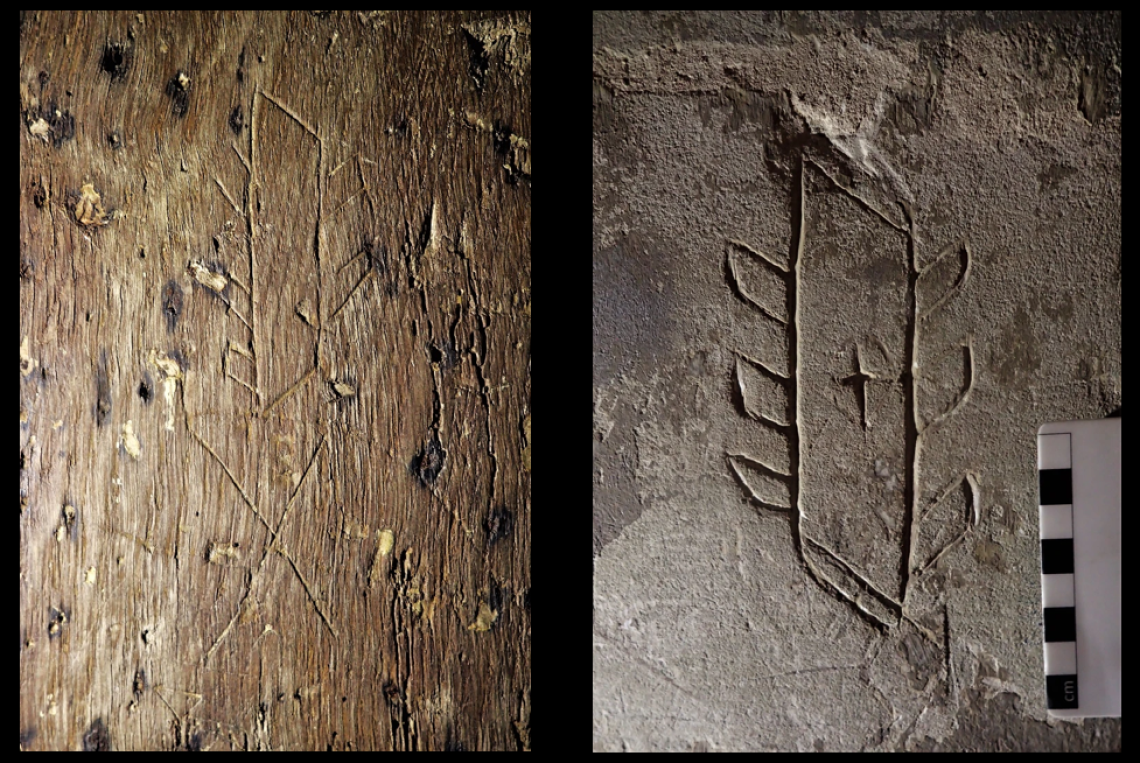
Some of the ideas discussed here will be expanded upon in my next Zoom talk, ‘Witch Bottles: Spirit Traps or Counter-Witchcraft Measures?’ on 13th June for Viktor Wynd’s Last Tuesday Society’ lecture, series, more details and links below. If you cannot make it on the night the ticket will allow you to watch it at a later date to suit you!
Four ‘Modern’ Witch Bottles: Variations On A Theme.
Reviewing a typology of Witch Bottles which spans almost 300 years, it is possible to see the changes which occur to their form, the combination of their contents and the chosen point of deposition over time. From their evolution we can infer that their new forms reflected a change to the intention, motivations and the predicted outcomes of the creator. Even if witch bottles appear to be a ‘distinctive tradition’ (i.e. superficially the same), they display great variation under examination. In folk practice, change over time is both inevitable and ultimately desirable.
Ritual customs can be defined as a practice whose intentions were to gain advantage or avert disaster by the manipulation of supernatural power. In terms of change, superstitious ritual often survived the religious beliefs that gave birth to it. Subsequently, the practice was reinterpreted in the light of current beliefs or adapted to relieve new fears (Merrifield 1987:xiii).
As the conceptual frameworks that underpinned their creation shifted during the transmission of the artefact from one region – or from one generation – to another – it subtly altered their deployment and composition. If Witch Bottles were indeed made by cunning men or wise women, they would have done so in response to the needs (and desired outcomes) of their clients. The clients, in turn, would have expected an element of ‘uniqueness’ to the artefact or a degree of ‘performance’ in the bottle’s creation.
In the past, folk artefacts were passed down informally and were produced in multiple permutations, subject to the same forces of conservative tradition and individual variation. At the same time, it is clear that ‘cultural units’ (such as Witch Bottles) would not have been passed along unless they had still retained some relevance to the user-group. There would have been no reason for the continued transmission of the artefact unless it had been imbedded with meaning beyond its form.
Ultimately, close examination of a phenomena which appears to have extended without dramatic change over long periods of time will reveal that they are not, in fact, ‘absolutely unchanging’ and that their relationship to other areas of culture will have shifted – in response – over time (Kiekhefer 2014).
– – – – – – – – – – – – – – – – – – – – –

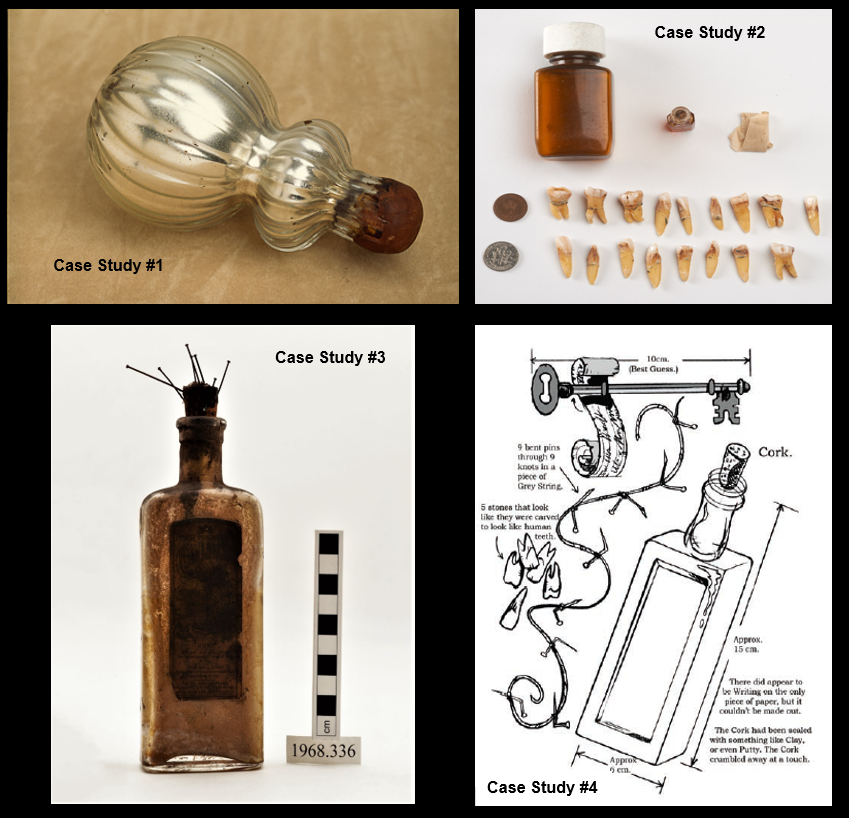
Case Study #1: Witch Trapped in a Bottle
It is rare in England to find an example whereby it is claimed that the spirit of a witch has been contained in a bottle. One such testimony is associated with a witch bottle currently curated by the Pitt-Rivers Museum in Oxford. The old lady from near Hove, Sussex who owned it until 1915 declared,
“ they do say there be a witch in it, and if you let him out there’ll be a peck o’ trouble.”
© Pitt-Rivers Museum 2020
– – – – – – – – – – – – – – – – – – – – –
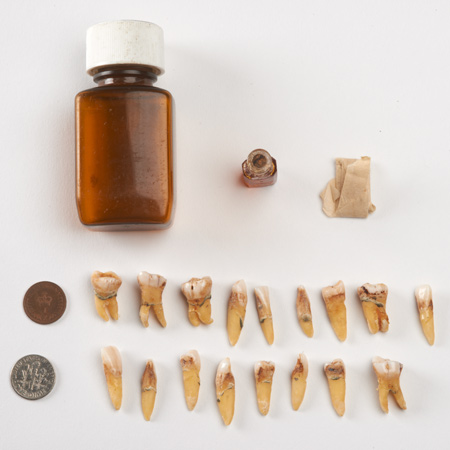
Case Study #2; Plastic Pills Bottle
The bottle was found on the foreshore of the Thames, containing slivers of metal, coins (the latest of which dates from 1982), a tiny bottle of oil of cloves- and a large number of human adult teeth. Whoever placed this into the river clearly believed in the power of ritual magic as oil of cloves is often used to treat toothache. It was concluded that the witch-bottler may have been pleading- or giving thanks for- relief from tooth pain.
© MOLA 2021
– – – – – – – – – – – – – – – – – – – – –
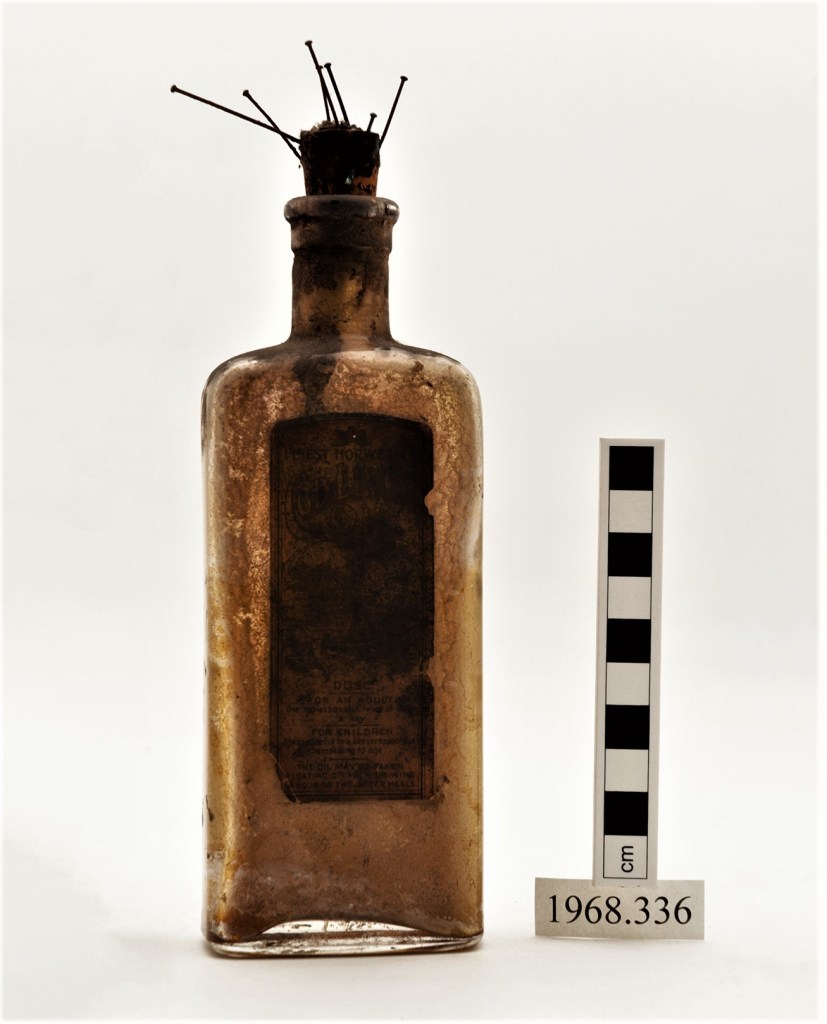
Case Study #3 The Padstow Witch-Bottle
This was found in the kitchen chimney of a Cornish cottage, a classic location for a witch bottle find. The vessel has been identified as a 19th century Victorian cod liver oil bottle. Under examination it was found to contain urine and had pins inserted into its cork – whereas formally in 16th/17th century examples the pins would have been inside the bottle
© Horniman Museum
– – – – – – – – – – – – – – – – – – – – –
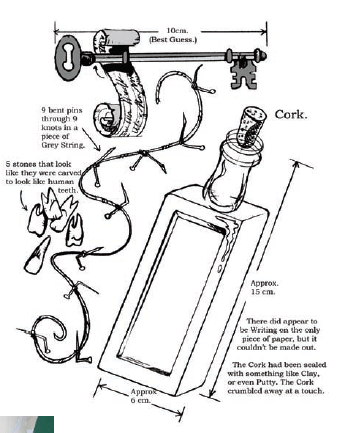
Case Study #4: 202 Brooklyn Road, New South Wales:
A late 19th century glass witch bottle was located in the subfloor, (adjacent to path to front door) of a timber cottage. It was wrapped in rag and contained a dead mouse, nine bent pins attached to a piece of string with nine knots, “teeth” made from stone and a piece of paper with illegible writing coiled around a key. The bottle was found around 2000. This object may have been a modern recreation of a traditional witch bottle.
© Ian Evans 2010
– – – – – – – – – – – – – – – – – – – – –
Bibliography
Evans, I (2010) Touching Magic: Deliberately Concealed Objects in Old Australian Houses and Buildings
Kiekhefer, R (2014) Magic in the Middle Ages. Cambridge University Press 2nd Ed (1st Edition 1989).
Merrifield, R (1987) The Archaeology of Ritual & Magic.’ BT Batsford Ltd.

 Ritual Protection Marks & Ritual Practices