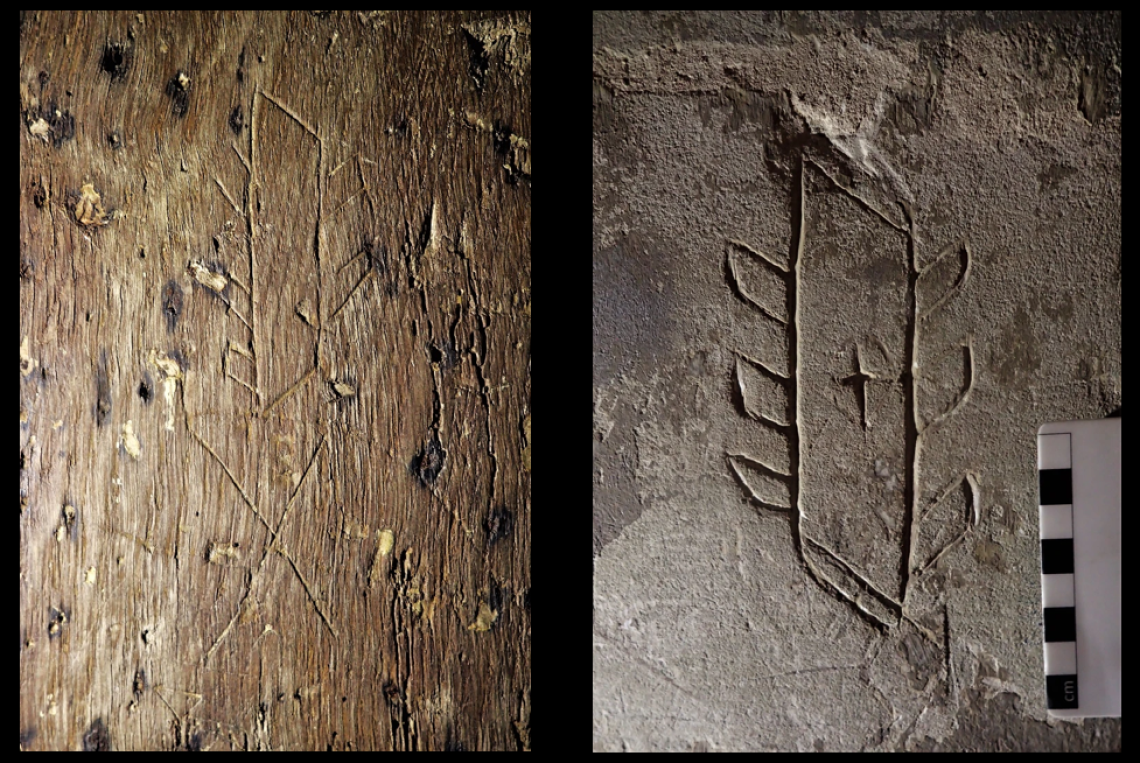
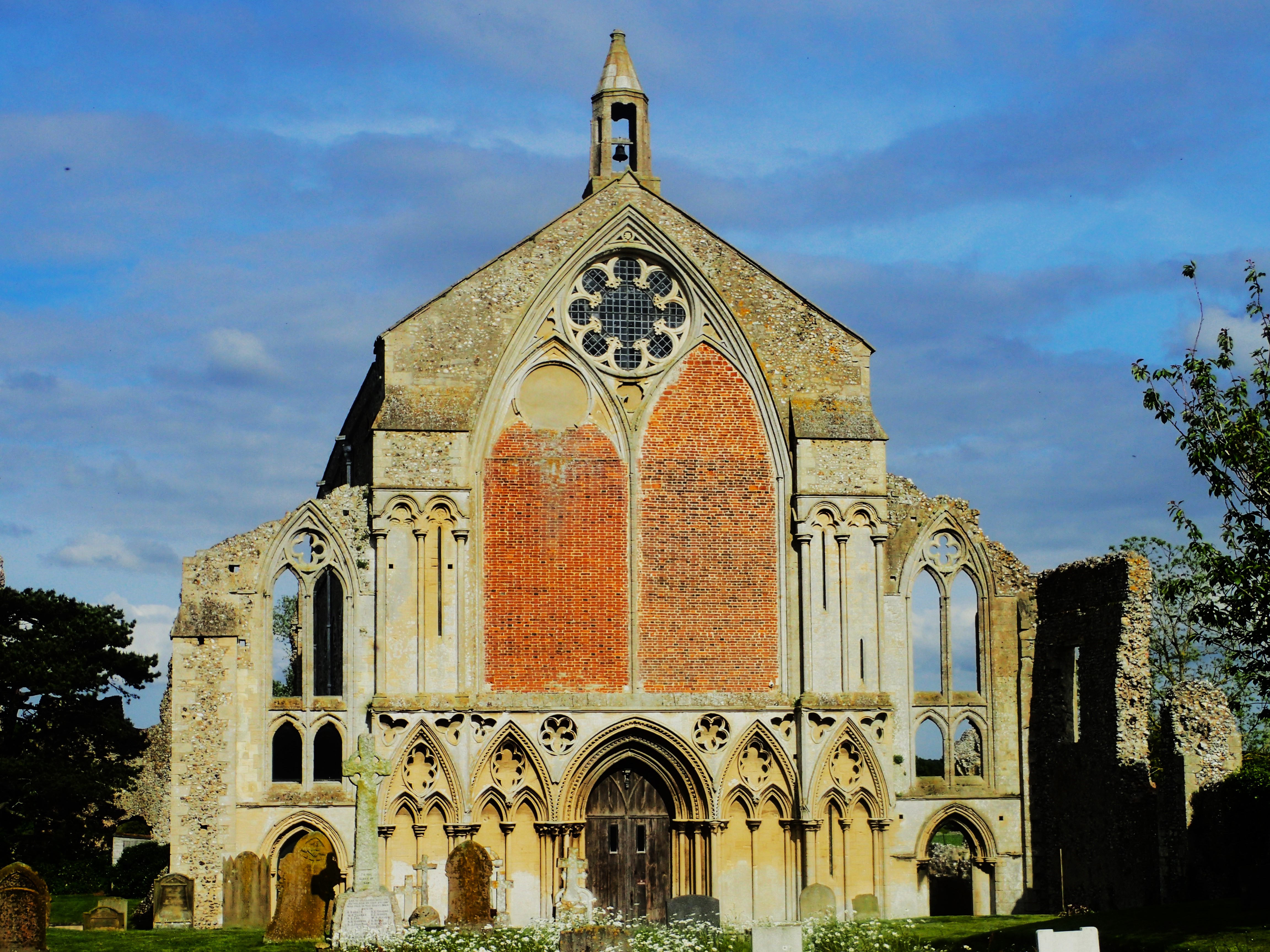
“I wish to be buried..before the Holy Image of Master John Schorne in the church at Binham” Richard Easingwold of Islip in his Will of 1508.
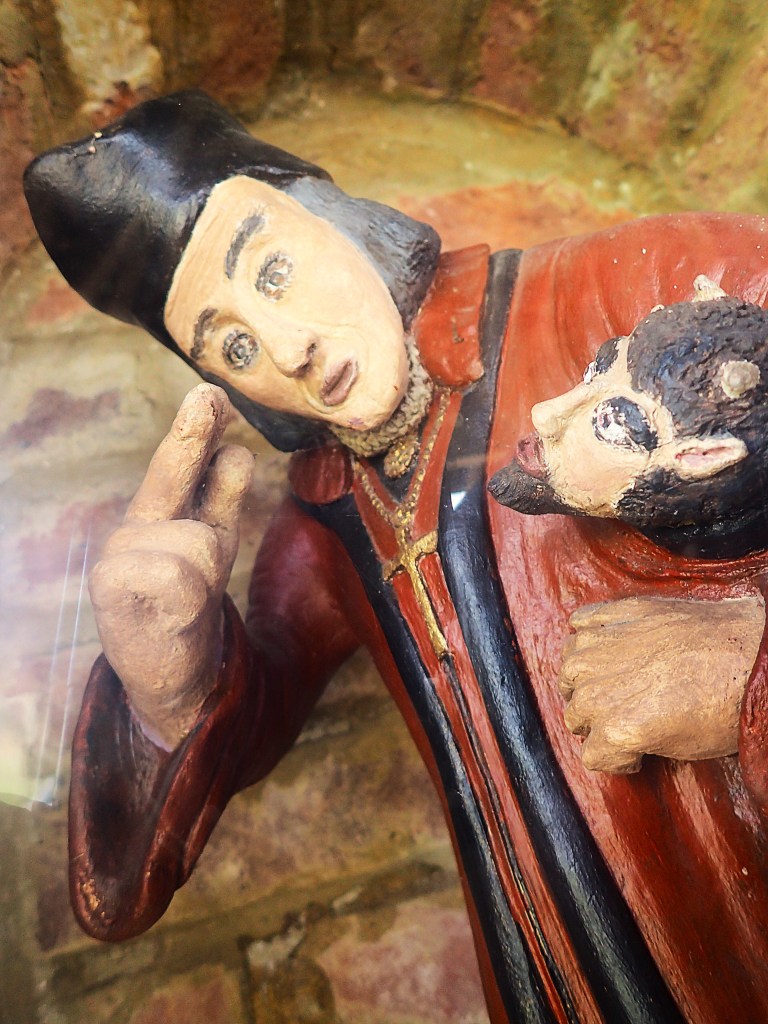
Photo: © W Perkins 2024
It is from fragments of documents such as these that the life – in fact the very existence – of this miracle-working folk saint has been reconstructed. Disparate records have been pieced together, much like a jigsaw without the full picture to work from!
After the death John Schorne in 1314, his tomb became a shrine and his shrine became a focus for pilgrimage – so popular, in fact, that it became the third largest after Canterbury and Walsingham. As his fame grew, his relics were ‘translated’ to help fund the construction of St George’s chapel at Windsor. Now, however, the ultimate fate of his bones is unknown.
A popular rhyme of the time went,
‘Sir John Schorne,
Gentleman Born,
Conjured the Devil into a boot…’

Prayers to John Shorne in the ‘Book of Days’ c.1430-50.
Image: © St George’s Chapel, Windsor 2024
A 15th century Book of Days, fragments of pilgrim badges recovered from the River Thames, devotional architecture at the locus of his shrine at North Marston in Buckinghamshire, damaged rood screen panels and fragments of wall paintings have all been utilised to document the rise of the cult of Sir John Schorne.
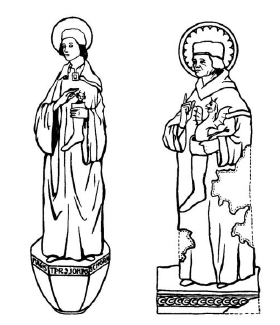
Image: © Bryant 1901.
John Schorn’s ‘Territory of Grace’ had spread to the east of England, particularly into those areas affected by the presence of indigenous malaria along the coast. His miraculous cures had included those for the ‘ague,’ which made him a low-level plague saint of sorts.
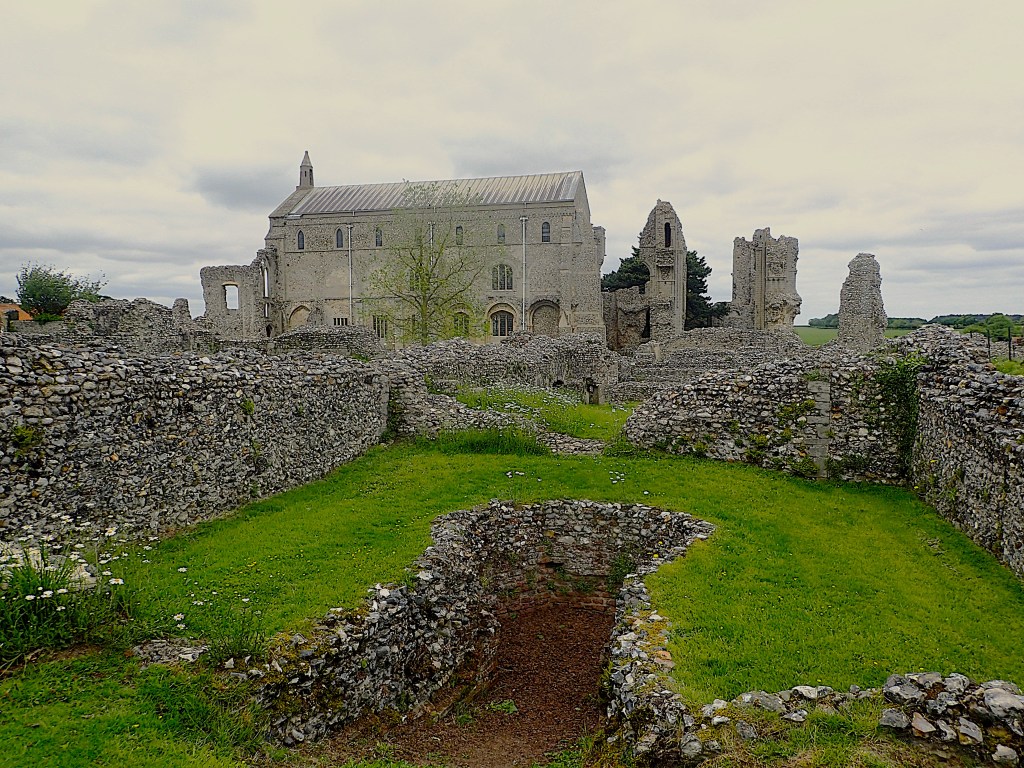
Photo: © W Perkins 2024
Binham Priory was located squarely within this region of malaria-ridden wetlands, less than 7km from the coast. It was founded as a Benedictine house by Peter de Valoines, nephew of William the Conqueror as the ‘Priory of St Mary and of the Holy Cross’ in 1091 (Hundleby 2004). Following the Dissolution, only the nave was retained to act as the parish church.
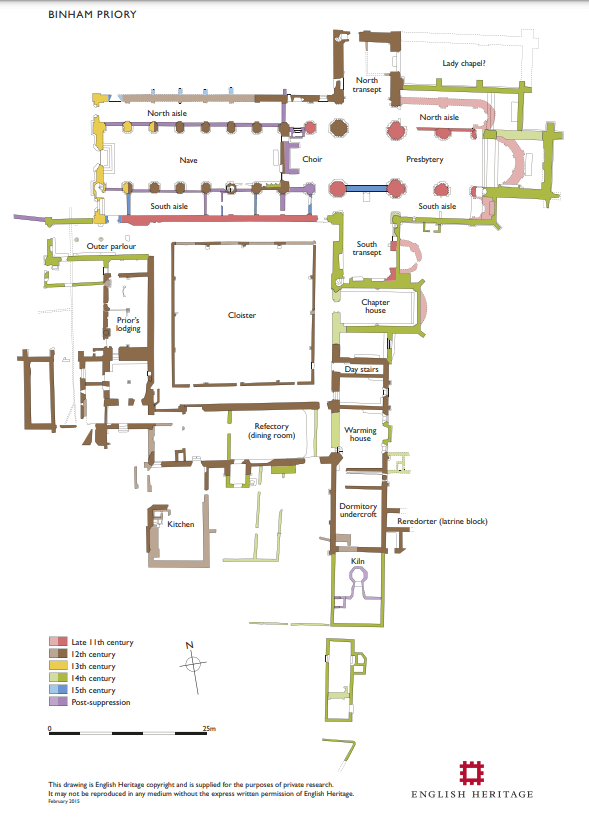
Plan: © English Heritage 2015
The shrine to John Schorn must have been established at Binham sometime before Easingwood’s request but its precise location within the Holy Cross church is unknown (BP 2024).


Sadly, the shrine was removed or, more likely, destroyed during the Dissolution of the Priory in 1539.

Photo: © W Perkins 2024
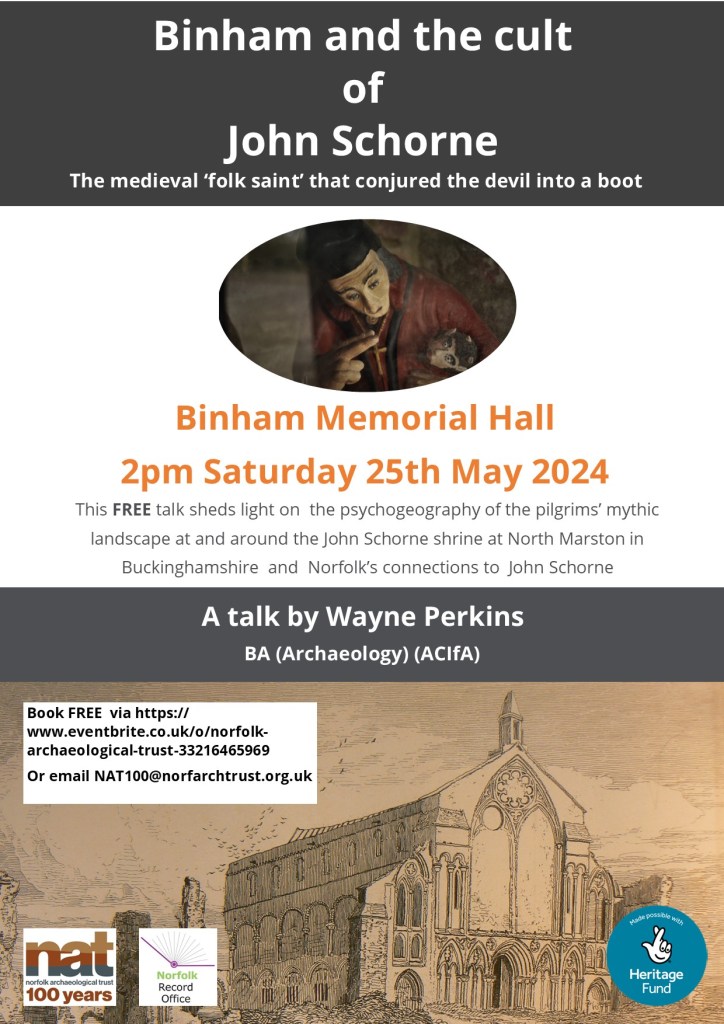
Last year I was invited to talk on John Schorn at Binham for the Norfolk Archaeological Trust as part of the NAT 100 celebrations. It was during my time there that I was told that fragments of the shrine had been discovered during a past excavation at the site. It would appear that a the remains had been gathering dust in a box in a storage facility, no doubt one that looked like the final scene from ‘Raiders of the Lost Ark.’ I am currently seeking the whereabouts of these fragments….
An up and coming online talk will cover the above research in much more detail –

Wayne Perkins
London, July 2025
Binham Priory
https://binhampriory.org/
English Heritage
https://www.english-heritage.org.uk/visit/places/binham-priory/
Hundlebury, A R (2004) The Priory Church of St Mary & the Holy Cross & the Monastic Precinct, Binham, Norfolk. Binham Parochial Council.
Norfolk Archaeological Trust (2025) Binham Priory
Norfolk Heritage Explorer
https://www.heritage.norfolk.gov.uk/record-details?MNF2081

 Ritual Protection Marks & Ritual Practices