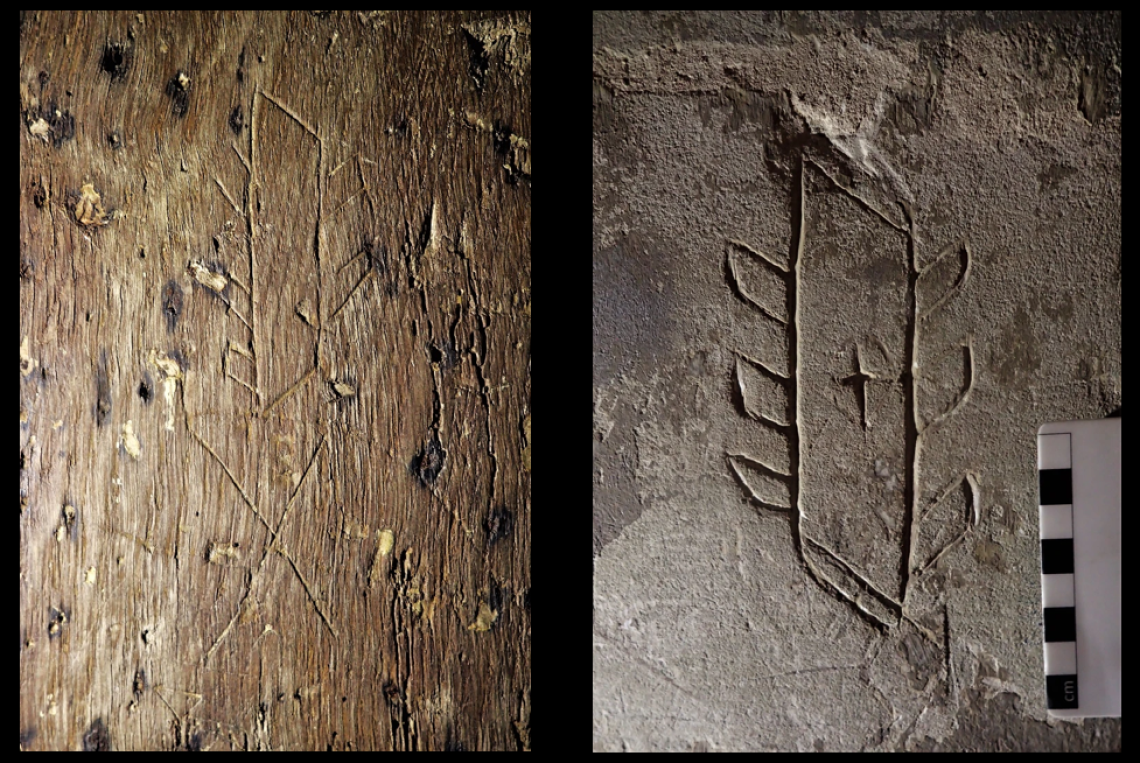
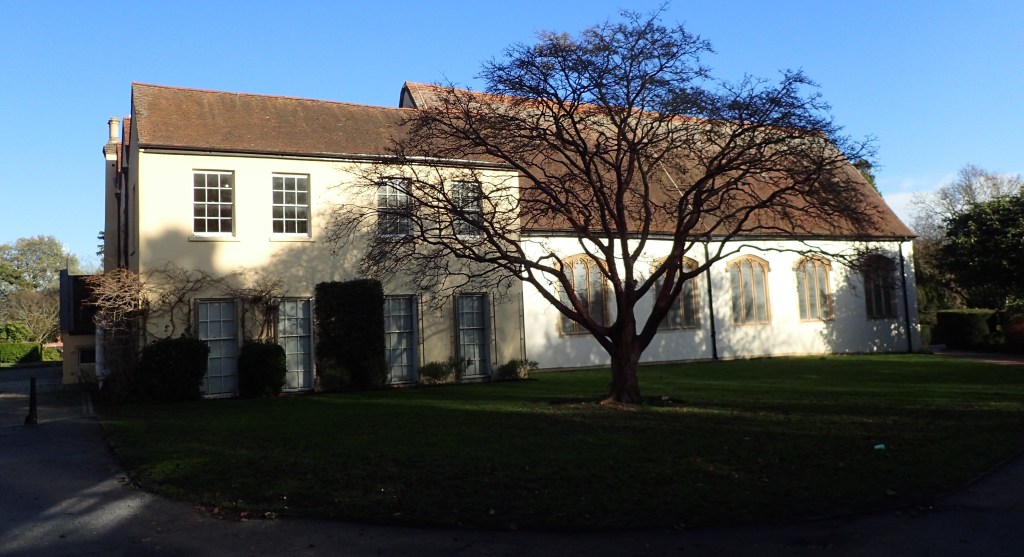
Apotropaic marks have been found both within the Priory’s ecclesiastical buildings and the later private residence adapted from the West Range
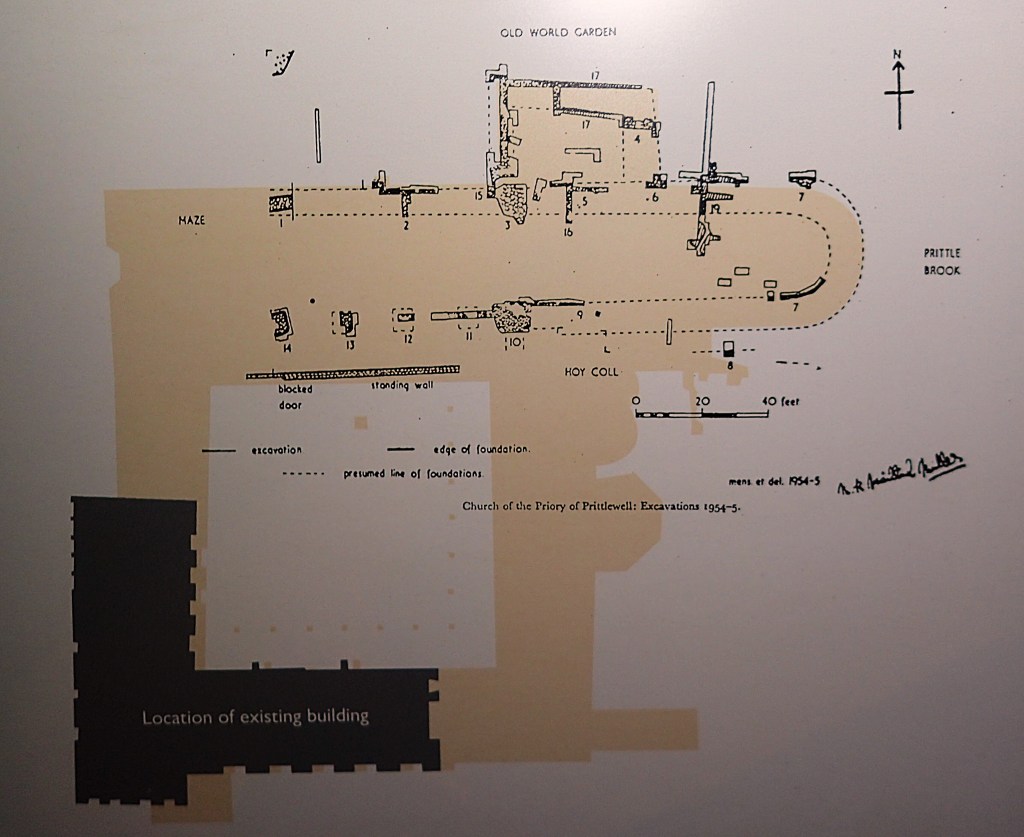
Prittlewell Priory was founded in 1180 by the Clunaic order of St Pancras of Lewes, East Sussex, dedicated to St Mary (Historic England 1998). Its construction had been preceded by a wooden Saxon church (later rebuilt in stone) immediately to its north of which only the partial remains of the south wall are still standing.
Prittlewell was held in 1086 by Swein of Essex in demesne as a manor of 7½ hides. The record also notes pasture for 12 pigs, pasture for 200 sheep, and a church. The priory is first noted in a confirmation of the possessions of Lewes Priory (Sussex) by Ralph, Archbishop of Canterbury dated 1121, in which it is said to have been granted to Lewes by Robert, son of Swein (CRSBI 2026 ).
Like many other priories it did not escape scandal, with prior William de Aurvergnet accused of corruption in the 14th century, until a coup was instigated by the monks of Lewes to oust him.
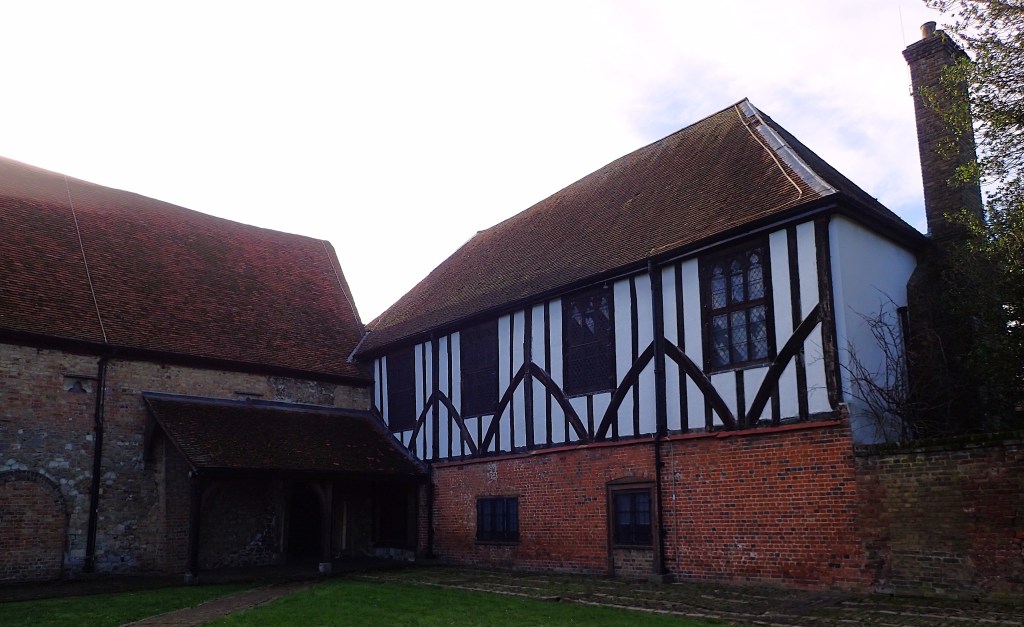
Refectory
The north wall of the Frater (refectory) is the only survival of the original priory’s masonry construction and the building has been restored and re-built several times. The impressive 15th century roof inside the refectory has survived, comprising King post trusses and moulded tie-beams (RCHME 1923). The West Range and the Cloisters were all added during the 15th century before its Dissolution in 1536 when it passed into private hands.
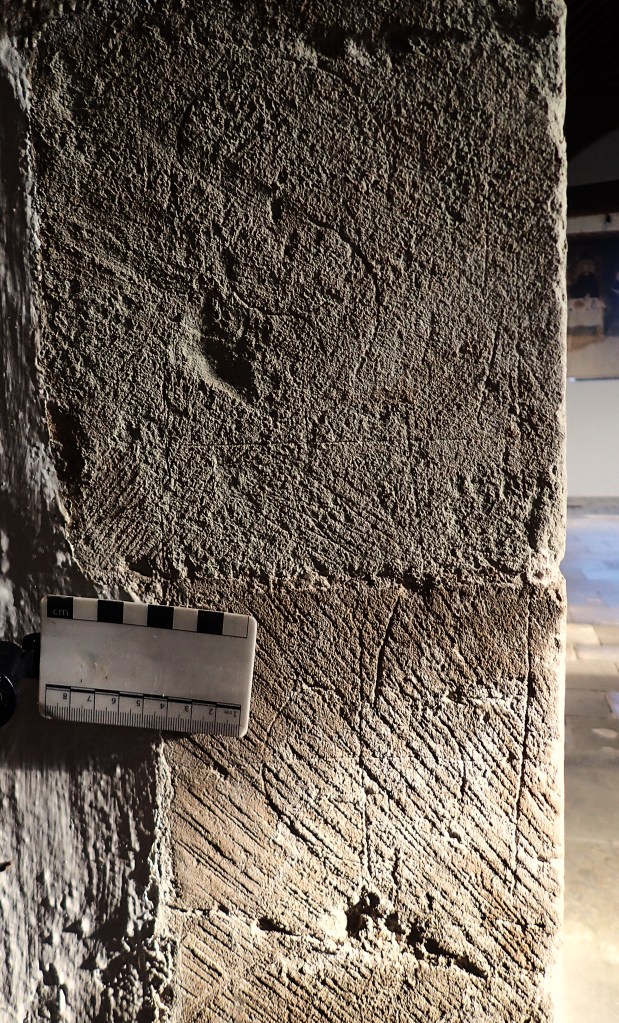
It was sold to Thomas Audley (the Lord Chancelor’s brother) then in 1546 to Richard, Lord Rish; then in 1678 to the Earl of Nottingham, before it came into the possession of the Scratton family who converted the West Range into the family home (Historic England1998).
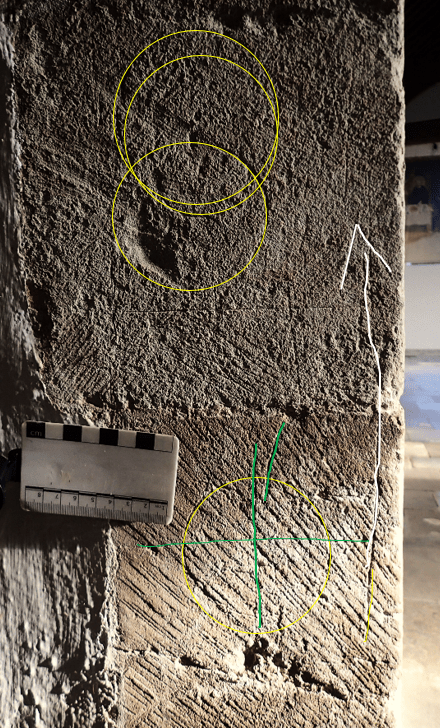
Apotropaic or devotional graffiti?
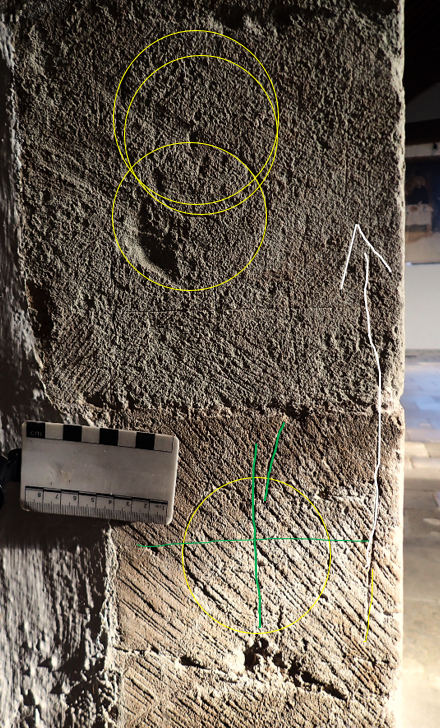
A preliminary survey found a number of compass-drawn circles around the interior of the surviving 12th century door in the north wall of the Refectory. Its exterior displays chevron and dog tooth Romanesque decoration, although it has been subject to restoration in the past (CRSBI 2026). The combination of restoration and the delamination of the original stonework meant that no graffiti was discernible on the exterior of the door.
As for the graffiti on the interior, it is possible to suggest that the circles may have been intended to be devotional in nature. It is possible that they were inscribed whilst blessings were made; acting like a prayer wheel or focus for devotion. One might therefore place them in the category of ‘holy sign’ rather than ‘apotropaic’ but is evident that they would have retained the power of apotropaism. Arranged around around the doorway and created with the blessing of the instigator, they would have been seen to have held a ‘protective’ element as the individual reinforced their belief through the action of making. For a deeper discussion about compass-drawn circle motifs, see my article, ‘Return to the Source’ (Perkins 2022).
What is interesting however, is that such graffiti should be found in what was a ‘closed’ order and access by members of the laity would have been greatly controlled. It asks the question, then, who would have made the marks?
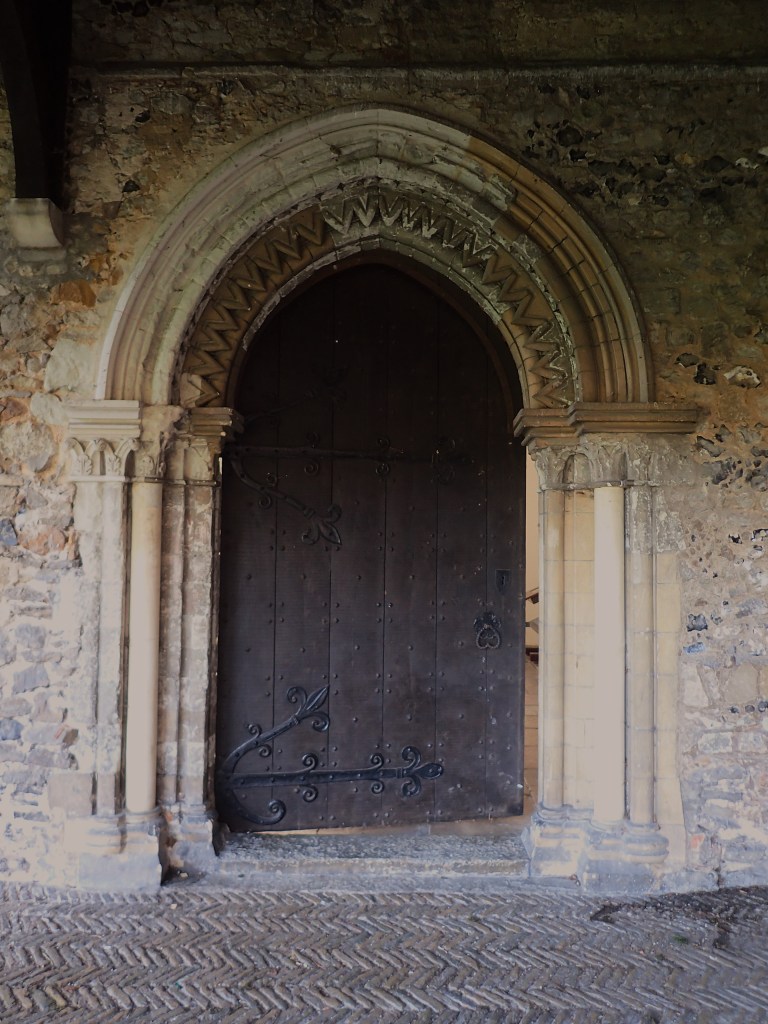
Plague arrows
There are also two ‘plague arrows’ on the door jamb – one more boldly cut than the other, a motif which is often found around thresholds. I have suggested that the motif developed as a ‘shorthand’ for the anxiety surrounding the threat of the Black Death in the 14th century. Plague arrows have been discussed at length in a previous article, ‘Shoot That Poison Arrow’ (Perkins 2024 ).
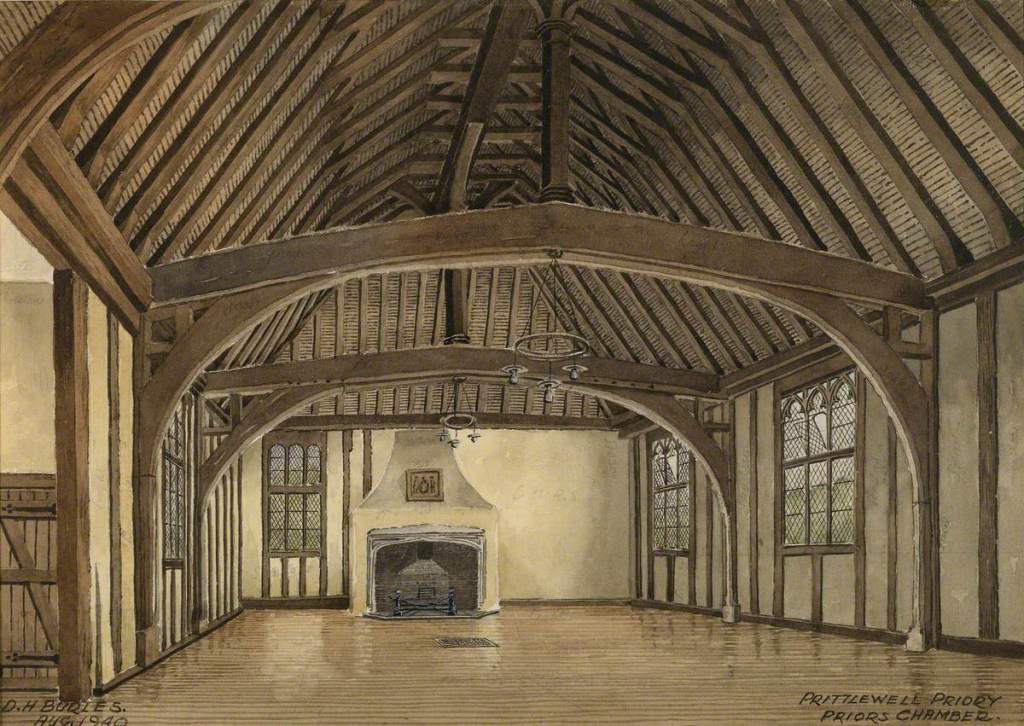
David Henry Burles (1866–1942) Beecroft Art Gallery. Image: © Southend Museums Service.
Dating graffiti is always a difficult proposition and it is not clear when these motifs and devices were added to the masonry. There is little evidence for paint of plaster within the cut marks which sometimes provides a clue to their age.
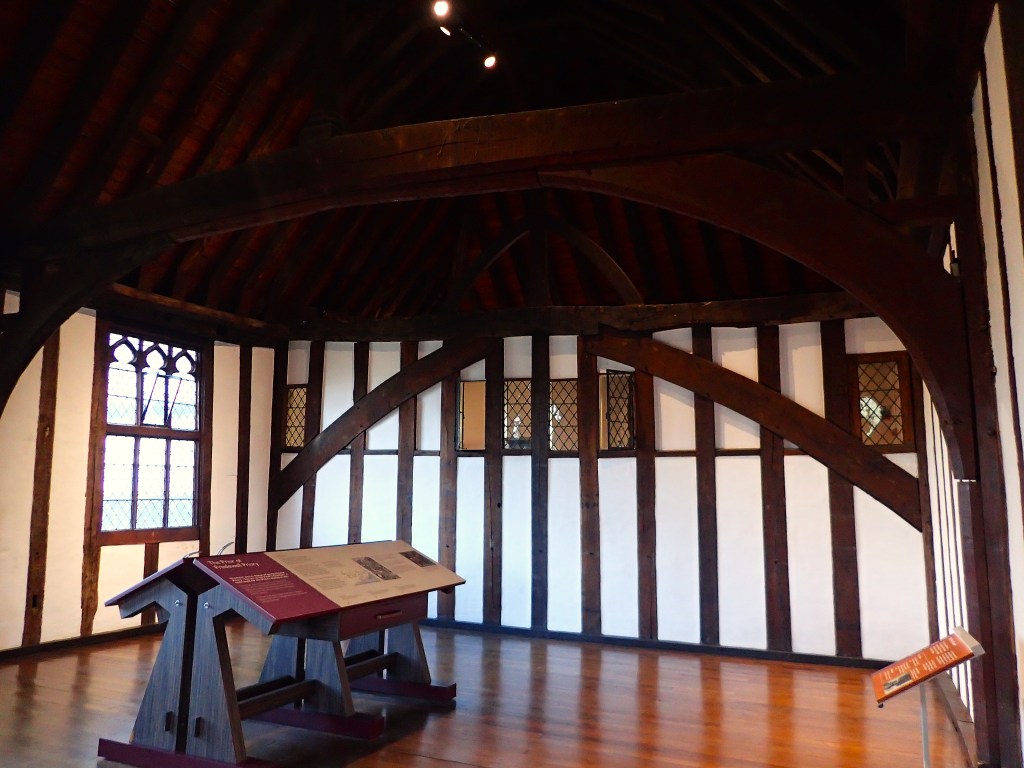
Due to the number of restorations, alterations and the addition of paint/plaster it did not seem – superficially at least – that there was much more graffiti to be found on the masonry elements of the building.
Ritual taper burn marks
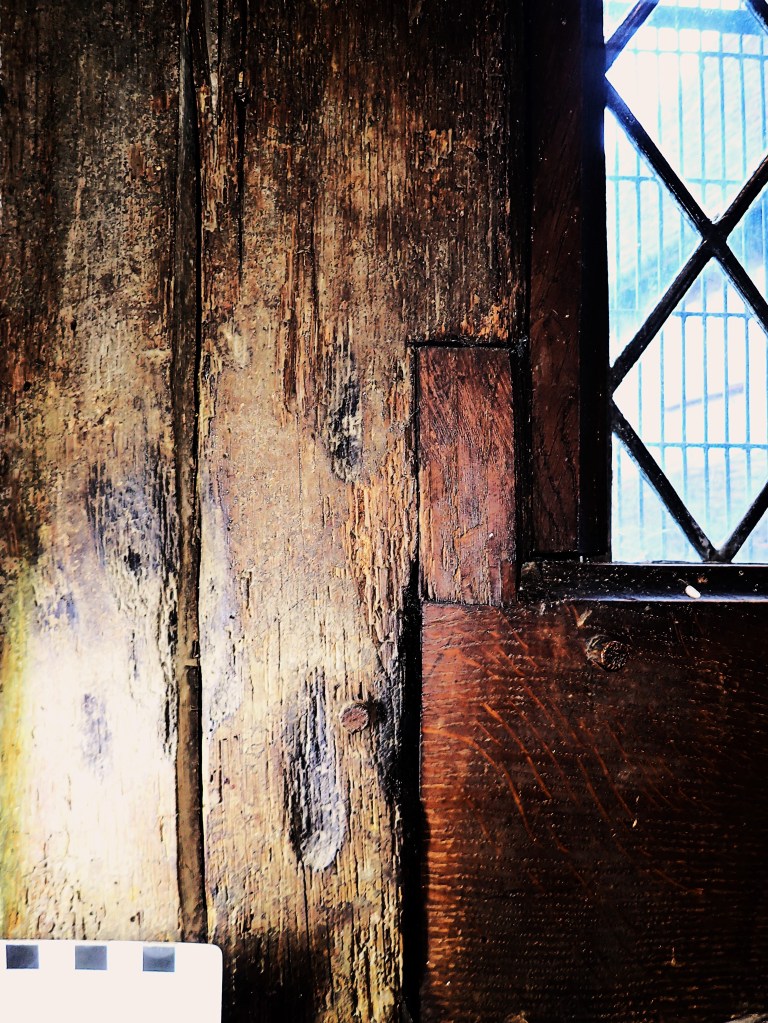
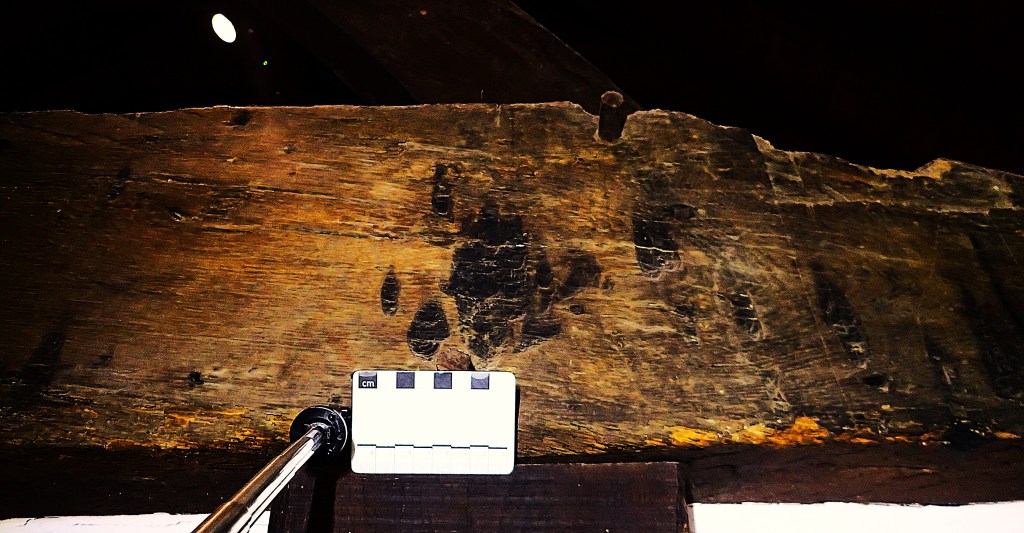
However, a large concentration of ritually-applied taper burn marks were recorded in the West Range. The burn marks may have a securer provenance, date-wise, although only within a broad temporal-range. From examples recorded from elite residences elsewhere, it is likely that these were added post-Dissolution and when the West Range had become a private residence.
The ‘Witch Craze’ in Europe & Sympathetic Magic
The West Range was added in the 15th century, both before the Dissolution and peak of the ‘witch craze’ in Europe during the 16th and 17th centuries.
Several solitary (or grouped) ritual taper burn marks were recorded from around the Prior’s Chamber wherever the original timber studs or wooden elements survived. However, an accretion of taper burn marks were recorded on the collar tie-beam that would have once been in the owner’s private quarters or bed chamber.
No marks appeared on the later replacement timbers!
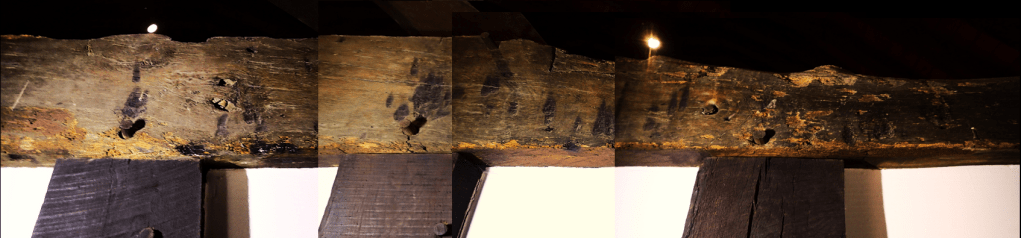
Archaeologists are now generally agreed that the phenomenon of ritual taper burn marks can be explained in terms of both an attempt to ‘inoculate’ the building against fire and also to act as an apotropaic device at the same time.
The creation of taper burn marks attempted to harness the power of sympathetic magic and the belief that it could harness the power of ‘imitation and correspondence’ – one that relied on either similarity,or on contact or contagion to be effective.
‘Anthropologists consider magical thinking a precursor to scientific thinking. It is indicative of a concern with control over nature through understanding cause and effect. Nevertheless, the methods of magic, however empirical, are not scientific.’
Robert Todd Carroll (2015)
A fuller explanation of the phenomenon of ritual taper burn marks and the use of sympathetic magic has already been published on this website, see ‘Incendiary Behaviour’ (Perkins 2022).
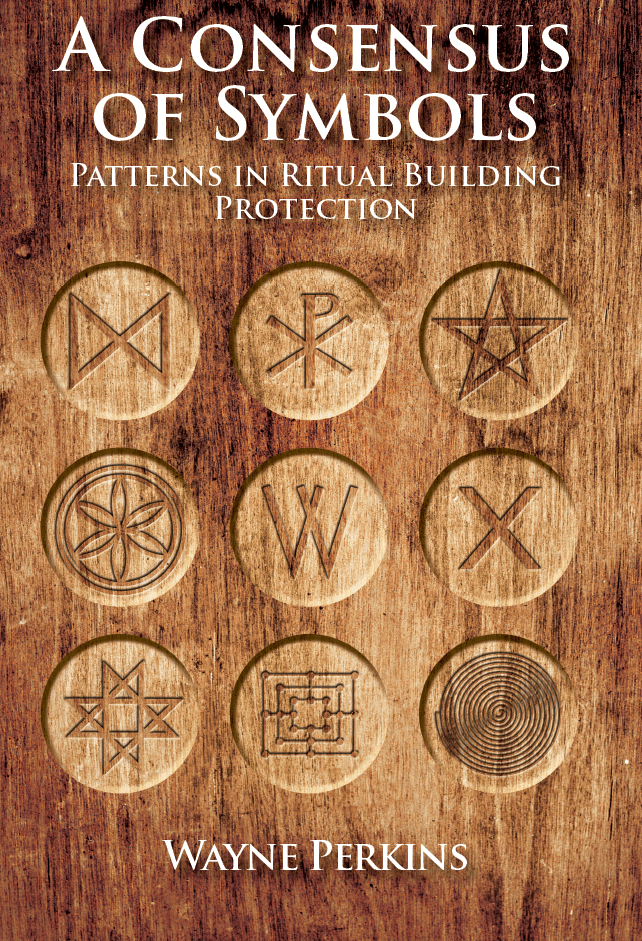
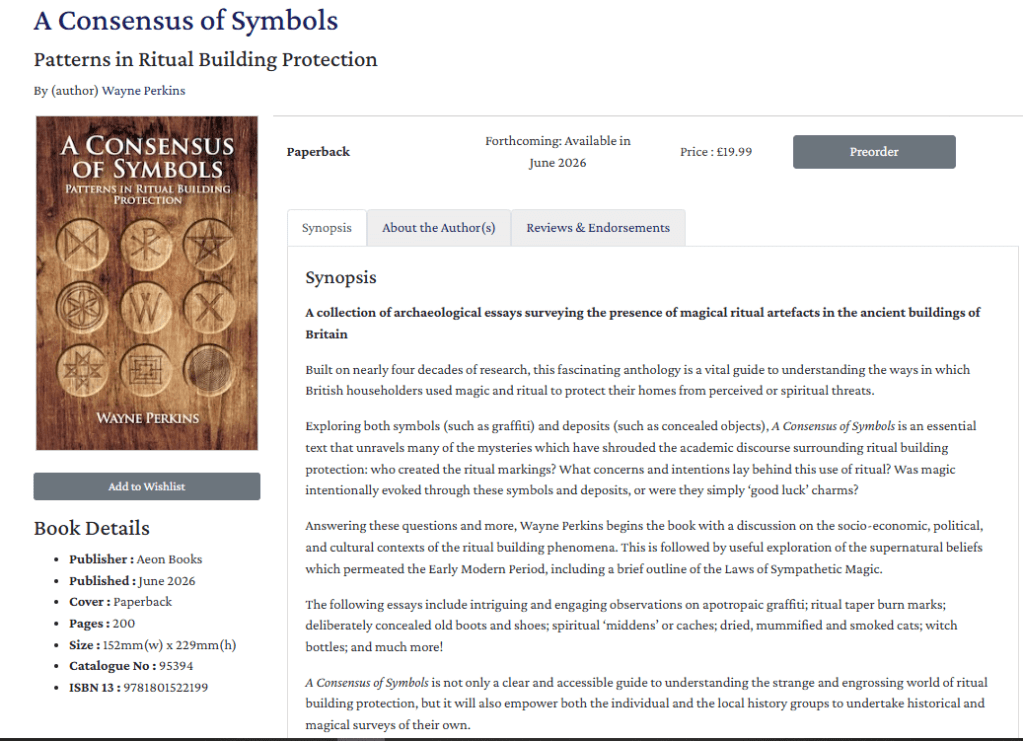
You can find out more about compass drawn circles and ritual taper burn marks in my forthcoming book, ‘A Consensus of Symbols: Patterns in Ritual Building Protection’ now available to pre-order!
References
CRSBI (2026) Prittlewell Priory
https://www.crsbi.ac.uk/view-item?i=16108
Historic England (1998) Prittlewell Priory
https://historicengland.org.uk/listing/the-list/list-entry/1112719?section=official-list-entry
Page, Round (Eds) (1907) ‘Houses of Cluniac monks: Priory of Prittlewell’, in A History of the County of Essex: Volume 2, (London, 1907), British History Online
https://www.british-history.ac.uk/vch/essex/vol2/pp138-141 [accessed 7 February 2026]
Perkins, W (2022) Incendiary Behaviour!
Perkins, W (2024) Shoot That Poison Arrow! Apotropaics to Counter the Plague
RCHME ( 1923)Prittlewell Priory
https://www.british-history.ac.uk/rchme/essex/vol4/pp109-114
Southend Museums
https://www.southendmuseums.co.uk/prittlewell-priory
Todd Carroll, R (2015) Skeptic’s Dictionary: Sympathetic Magic

 Ritual Protection Marks & Ritual Practices