
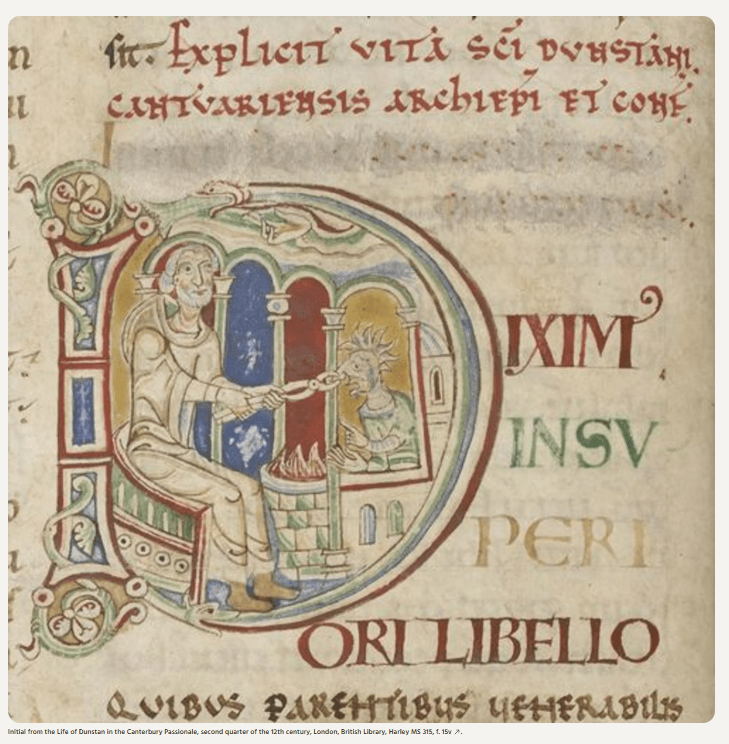
It seems that the legend of Dunstan was well in place by the 12th century, according to the illustration from the Canterbury Passionale where he is shown gripping the Devil’s nose with a pair of blacksmith’s tongs.
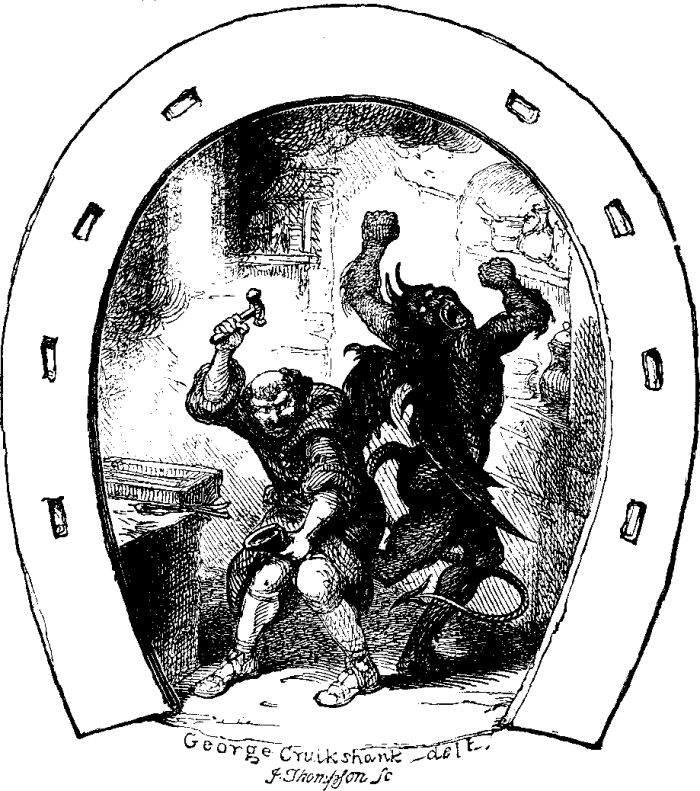
His legend records him also shoeing the Devil, which caused the Devil great pain due to his cloven hoof. Dunstan only let him go if he promised never to enter a house with a horseshoe above the door.
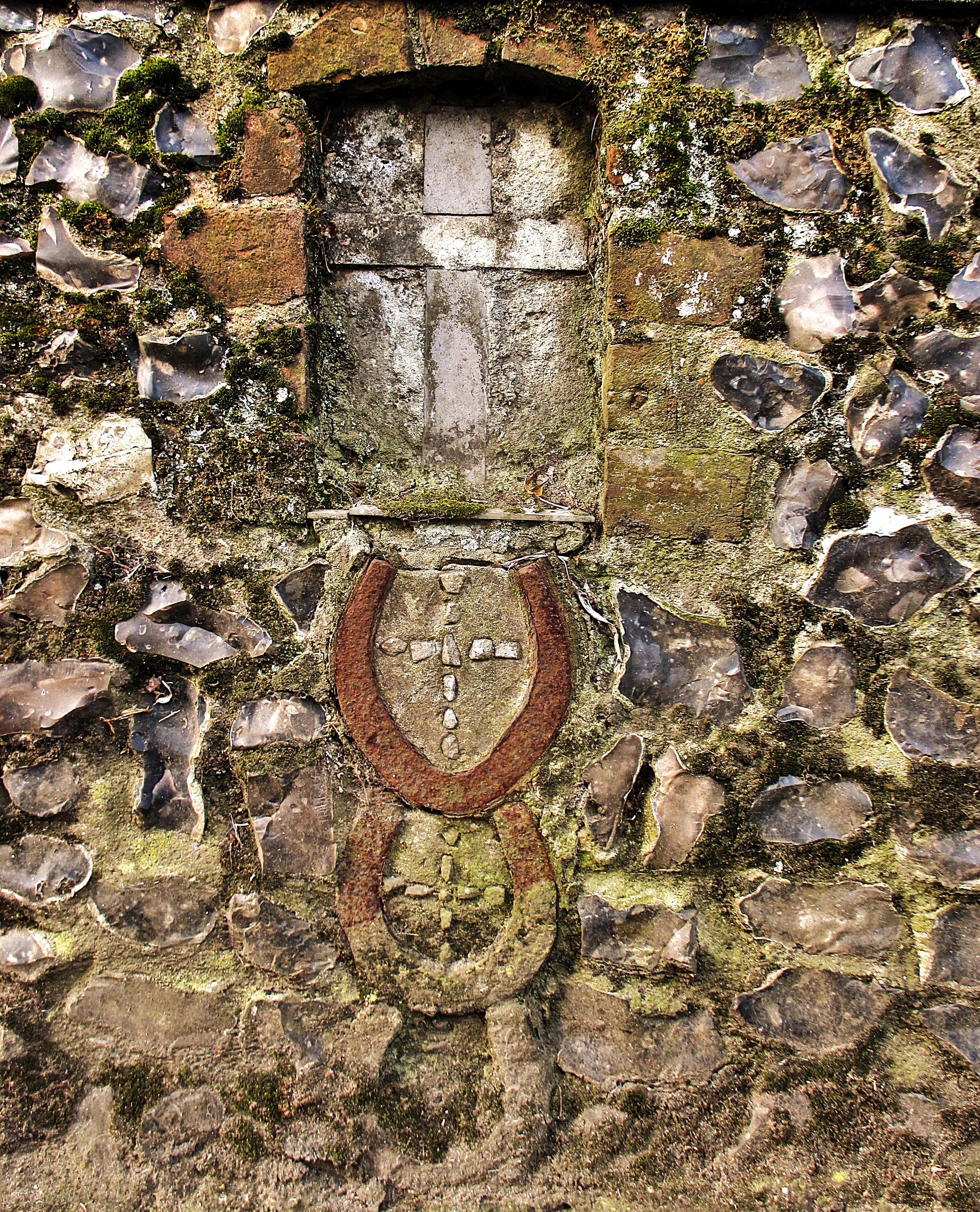
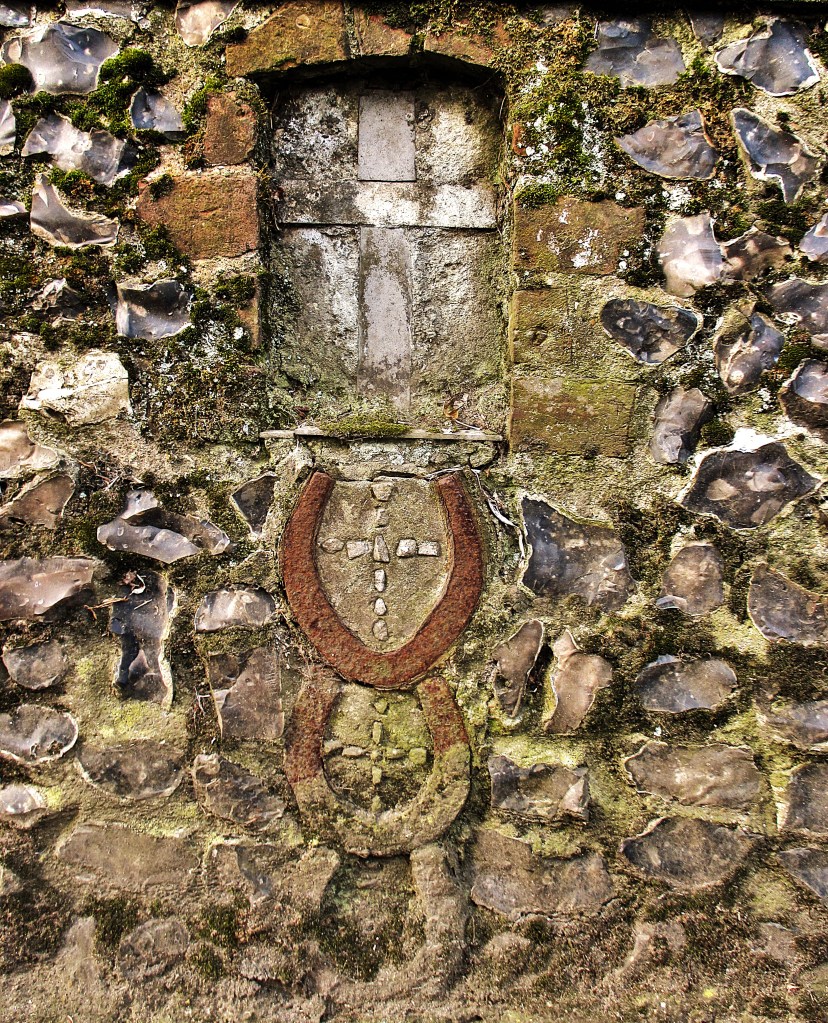
I was thinking about this on a recent visit to St Margaret’s-at-Cliffe in Kent where the rebuilt churchyard wall has reused various architectural elements to form crosses of various shapes and sizes. One features the interpolation of three horseshoes filled with cross ‘mosaics.’ Three, of course, is a magic number and part of the trinitarian formula and, as stated above, horseshoes (or rather the iron they were made of) were thought to repel witches, fairies and other evils spirits. Triple-lock protection.
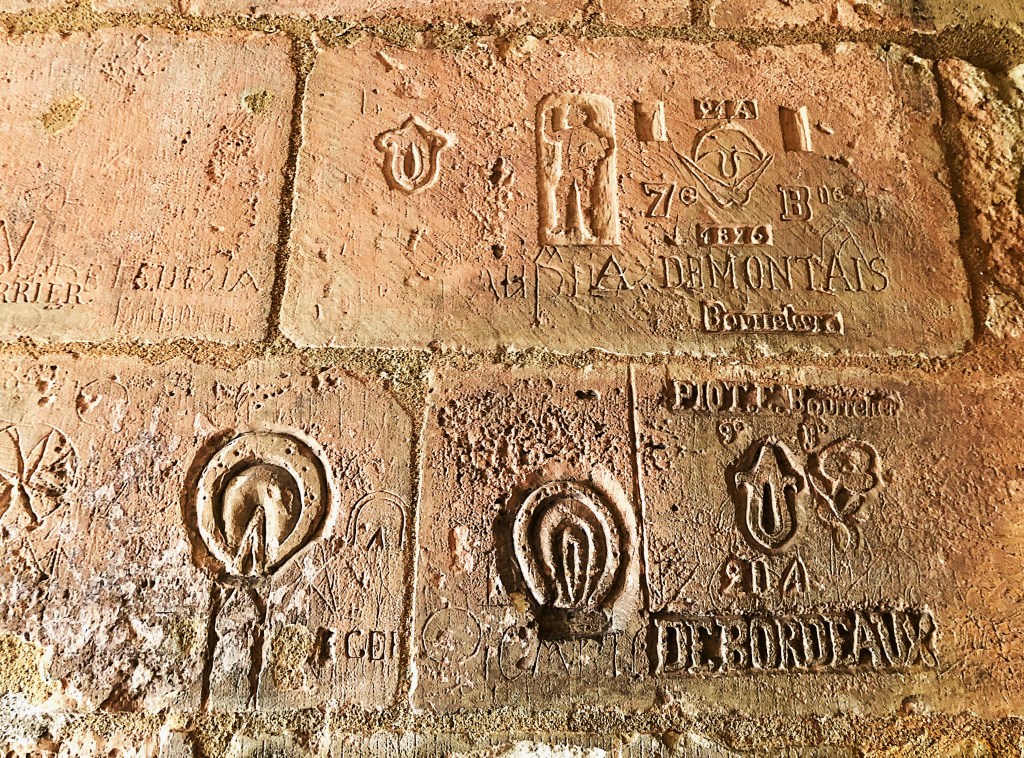
Horseshoe graffiti is quite rare in England but more common in France. These ‘horseshoe’ designs below have been adapted into stylised vulvas in La Tour de la Lanterne, La Rochelle, thereby doubling the apotropaic benefit.
Now, since the wicked fiend’s at large
Skippers, and housekeepers, I charge
You all to heed my warning
Over your threshold, on your mast
Be sure the horse-shoe’s well nailed fast
Protecting and adorning
The True Legend of St. Dunstan and the Devil, by Edward G. Flight,1871
Wayne Perkins May 2026
Further reading
Dunning, A (2016) An Anglo-Saxon ‘Renaissance Man’: St Dunstan Meet St Dunstan, the remarkably multi-talented Anglo-Saxon scholar, artisan and reluctant bishop. Blog series Medieval Manuscripts, British Library.
Flight, E G (1871) The True Legend of St. Dunstan and the Devil. Illustrated by George Cruikshank
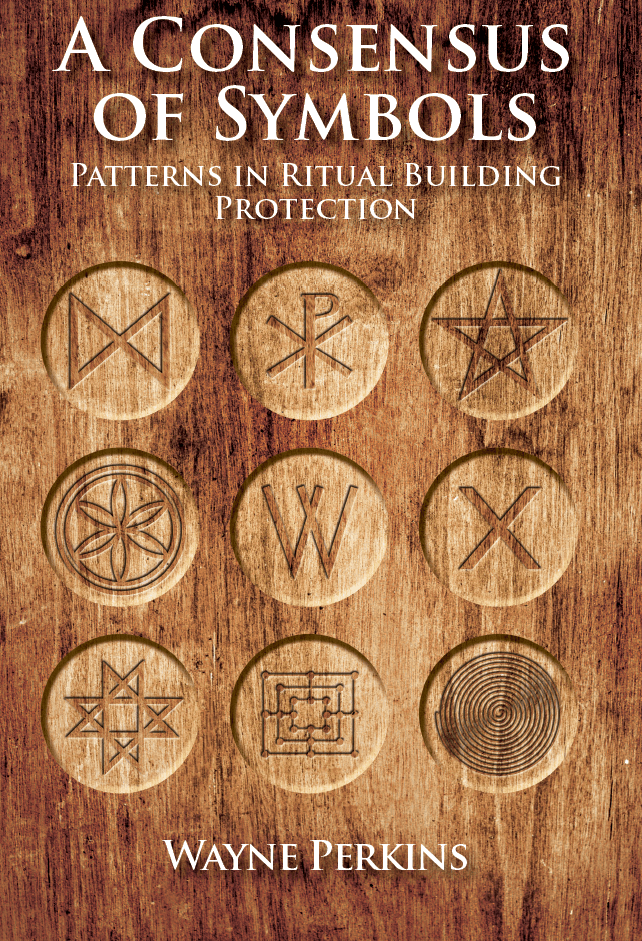
Coming soon!

 Ritual Protection Marks & Ritual Practices