
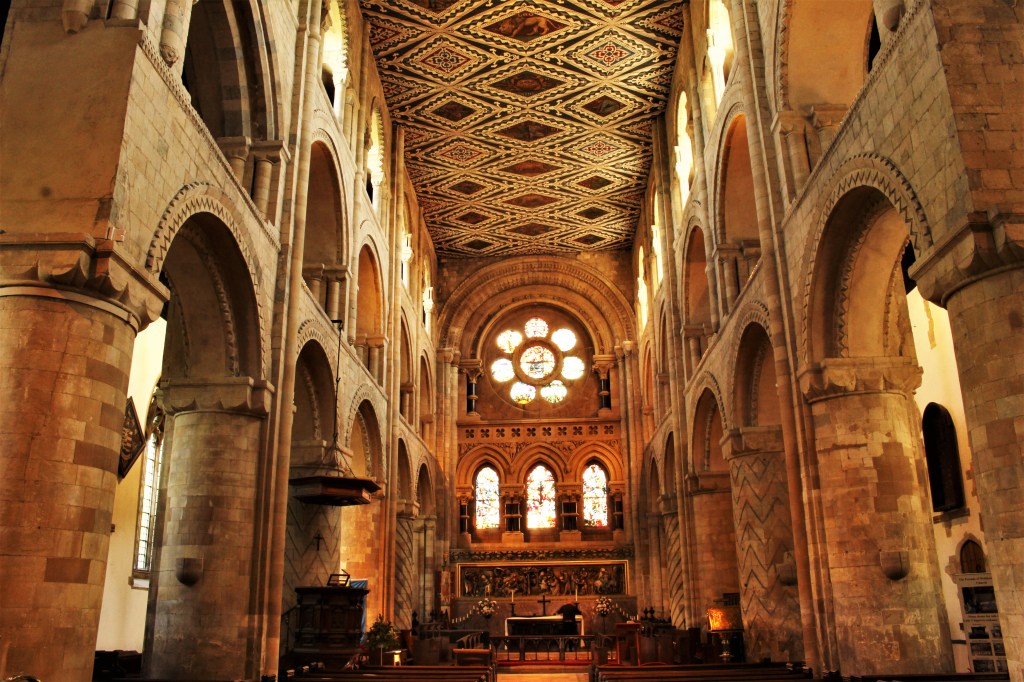
One had a lucky escape from the walls of Waltham Abbey..the other one, not so much!
I am of course, not being entirely serious. the first was a cat which had indeed entered a space of its own volition (and rescued from a house in the town of Waltham Abbey), whilst the other may not have had a choice – and was inserted into the walls of THE Waltham Abbey!
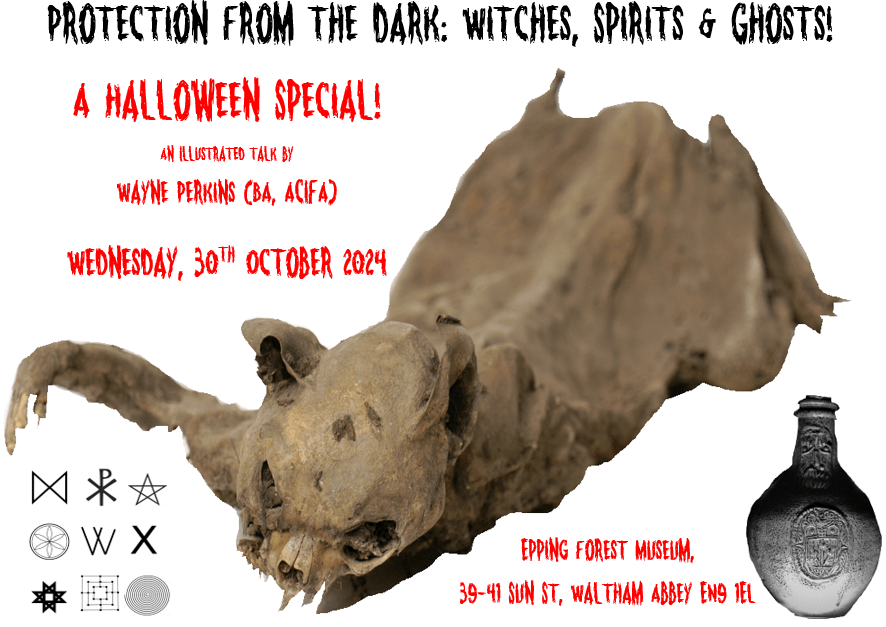
Having had a chance to see ‘Abby’ close up at the Epping Forest District Museum during my talk, I became convinced that she was a ‘real’ mummified cat. She is one of the rare breed (pun intended) of mummified cats recovered from an ecclesiastical rather than secular building

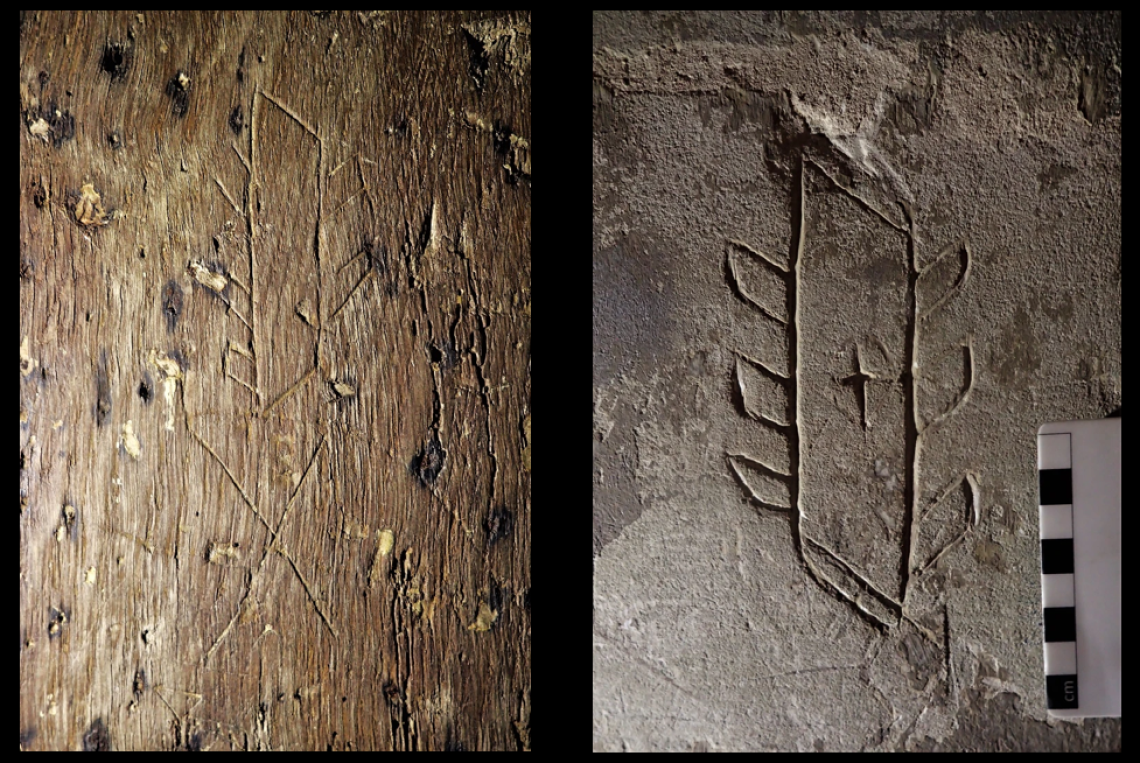
The phenomenon of dried or mummified cats intentionally immured within within wall cavities or voids of old buildings is but one component of ritual building protection.
Prosaic explanations have long been dismissed. In some instances, the cats had been posed into hunting scenes, ‘pegged’ into place, affixed with wire or inserted into the wall cavity ‘post mortem’ – which allowed for ‘pre-rigor-mortis’ posing and placement.
In many 16th-17th century houses they may have been immured to act as guardians of the home but whose prey may have been ‘spiritual’ vermin.
In the Early Modern Period, witches were thought to work their evil by the means of familiars, often in the form of lesser animals. In the imaginations of the witch-hunters, cats had become associated with the supernatural.
Wayne Perkins
(BA, ACIfA)
November 2024

 Ritual Protection Marks & Ritual Practices