
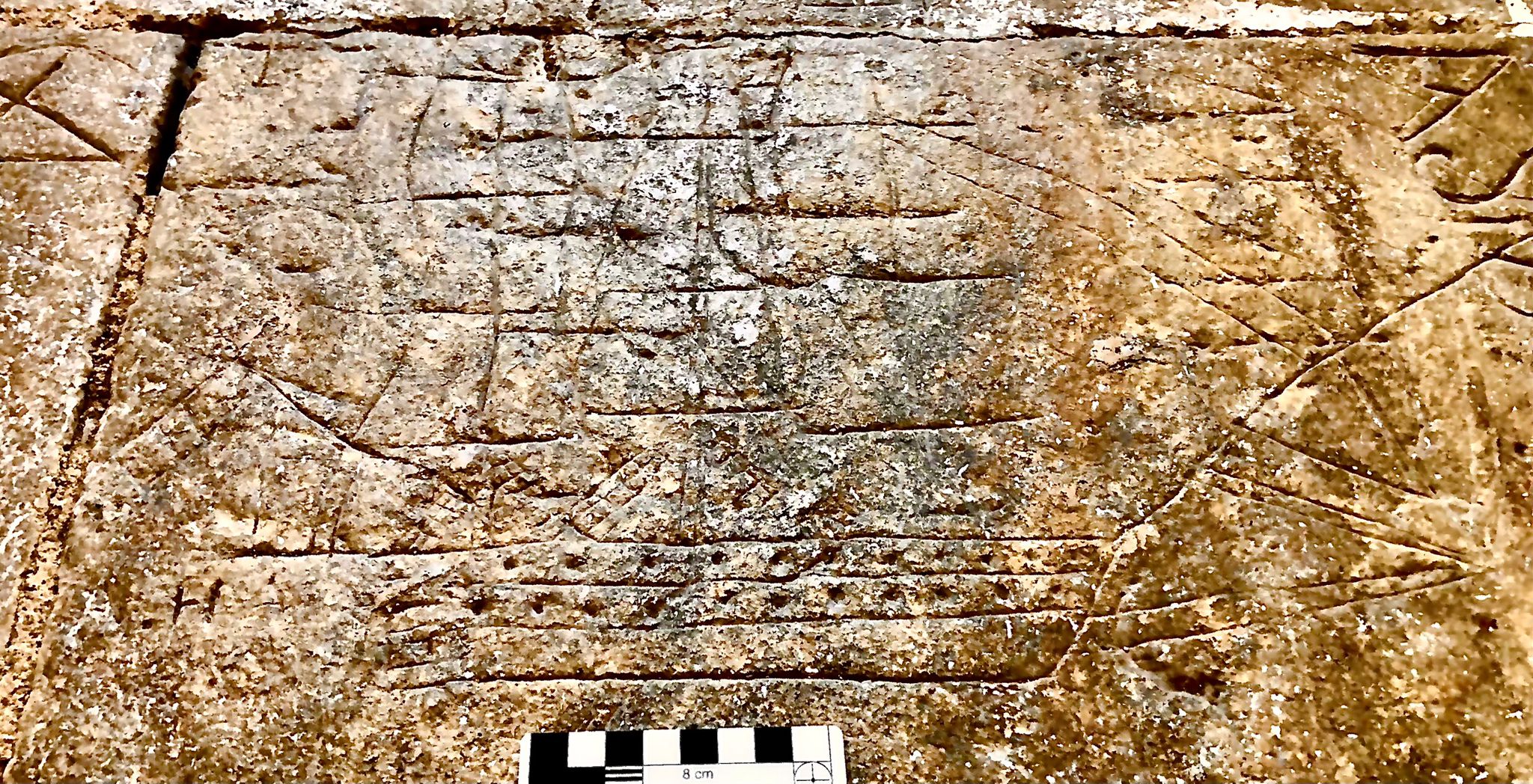
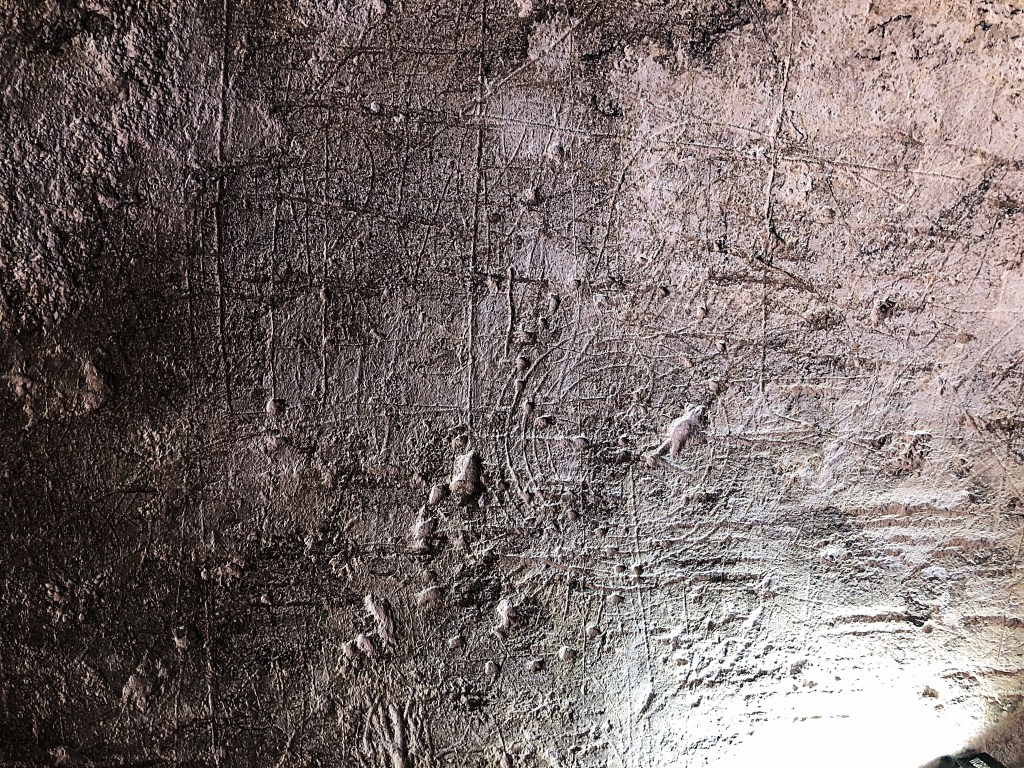
Within the confines of Le Donjon, Niort, a whole range of graffiti motifs, initials and textual panels have been attributed to the imprisoned seafarers of the 18th and 19th centuries. Some of the testimonials cut into the walls carry the names of the individuals responsible for the graffiti as well as the dates of their capture.
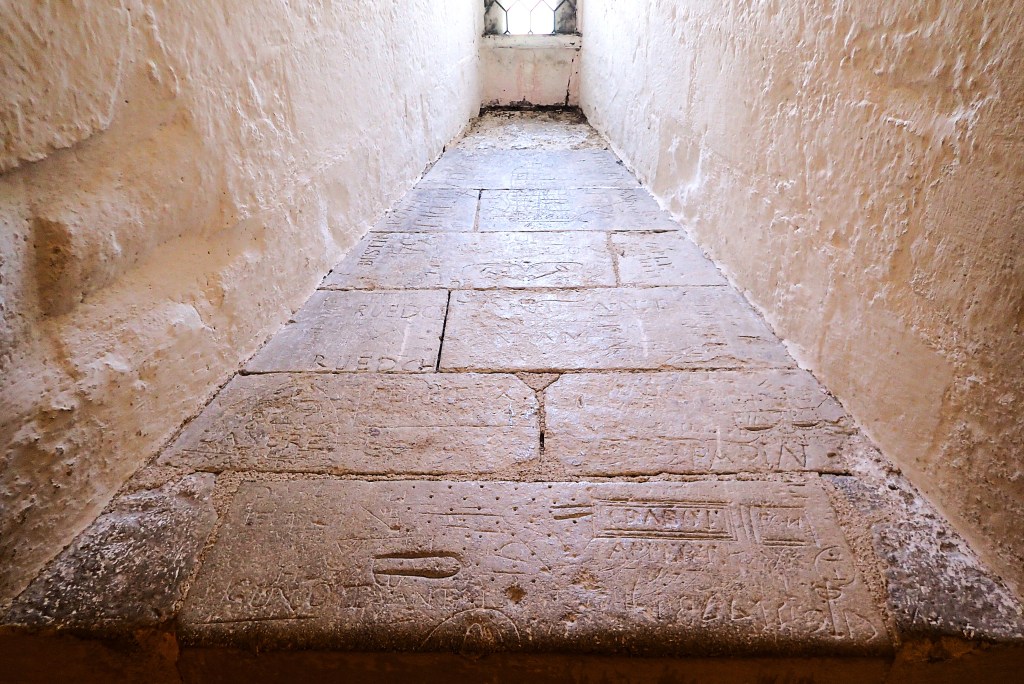
Photo: © W Perkins 2026
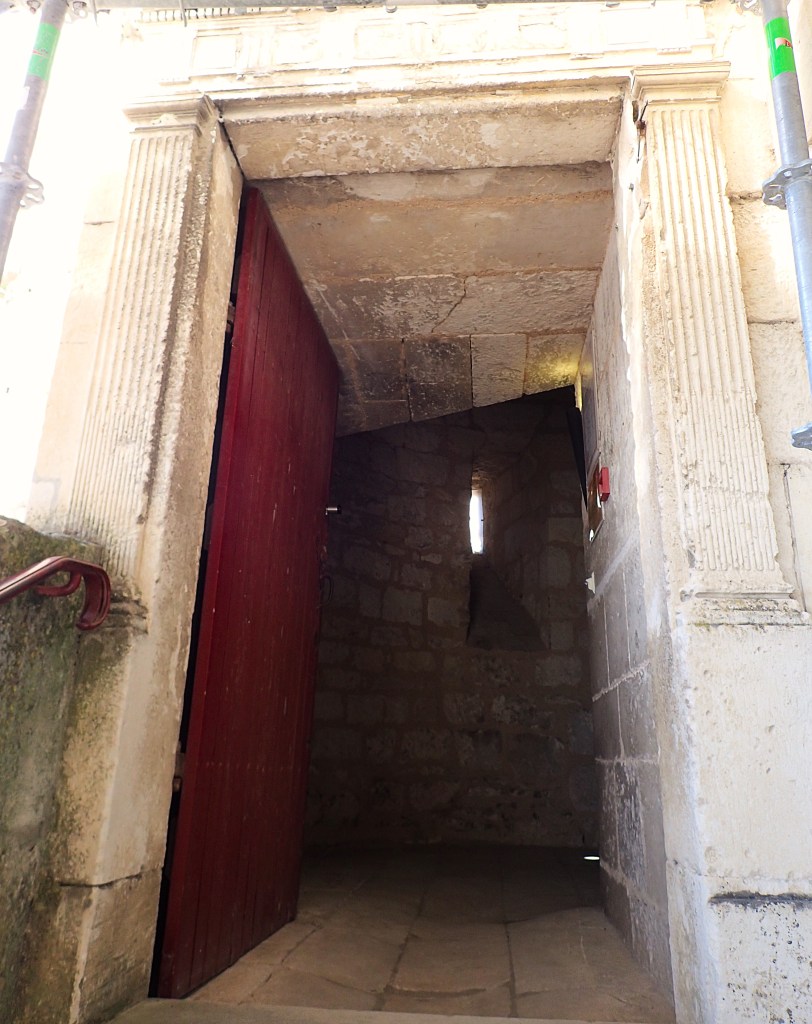
Le Donjon
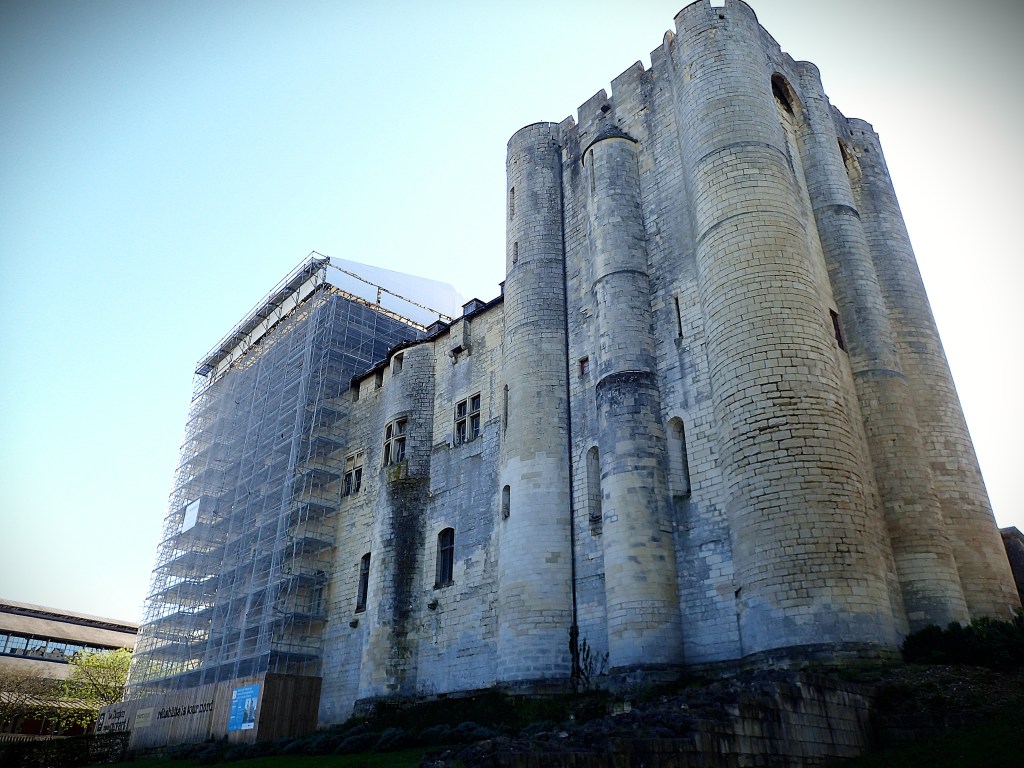
Le Donjon in Niort is composed of two medieval square towers linked by a curtain wall, which was roofed to form a residence in the 13th century. During the 18th and 19th centuries it was used to imprison captured English, Dutch and Spanish seafarers. Some of the rooms posses graffiti which attests to their stay…
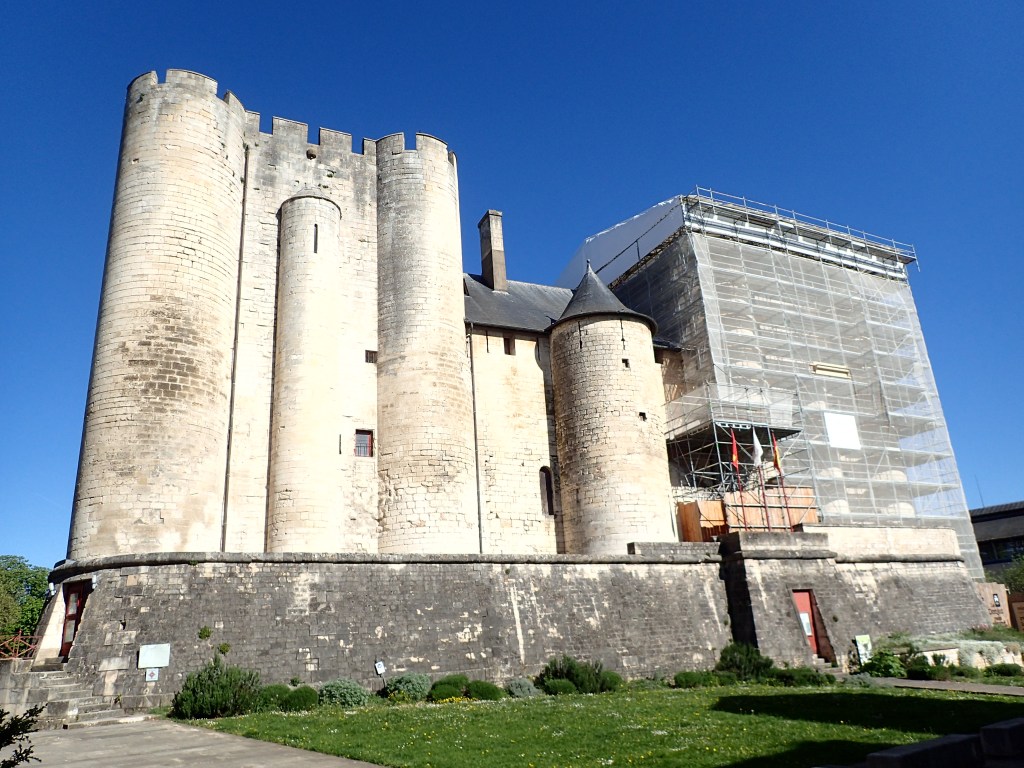
The castle was begun c.1180 by Henry Plantagenet II who extended his kingdom over western France following his marriage to Eleanor of Aquitaine (NMP 2026). The castle was completed under Richard the Lionheart c.1189-99. It is believed to have been built upon an earlier Merovingian stronghold (GSI 2026).
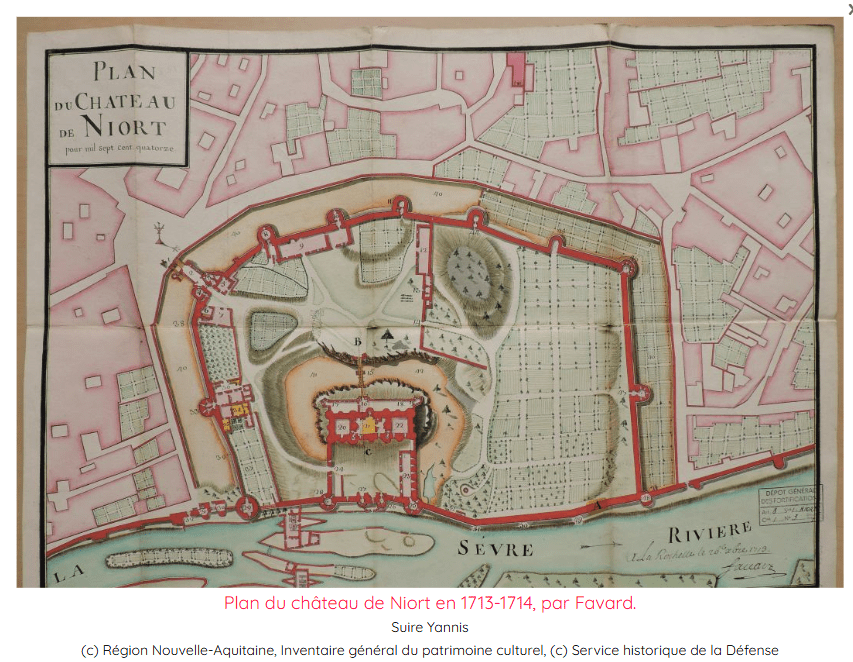
In the 13th century Niort was besieged and taken by the Poitevin Lords but by 1224 the castle had returned to the English side (NMP 2026). It changed hands a number of times during the Hundred Years War (1337-1453). In the 15th century it was ‘modernised’ when the windows were enlarged and fireplaces added (Baudry 2011).
It was damaged during the Wars of Religion (1562-1598) and during the 18th century became a prison for captured seafarers (Baudry 2011). In 1749 the north tower collapsed; the stability of which remains an issue up until today.
Mason’s Marks
A range of mason’s marks are present on some (but not all) of the stonework both inside and outside the building. In France – as is the case elsewhere in Europe – medieval buildings often display a more comprehensive set of mason’s marks than in England. This was due, in part, to the Continental Lodges having drawn up registers of mason’s marks at a far earlier stage than their English counterparts. However, blocks with marks are still in the minority when the fabric of the building is viewed as a whole.
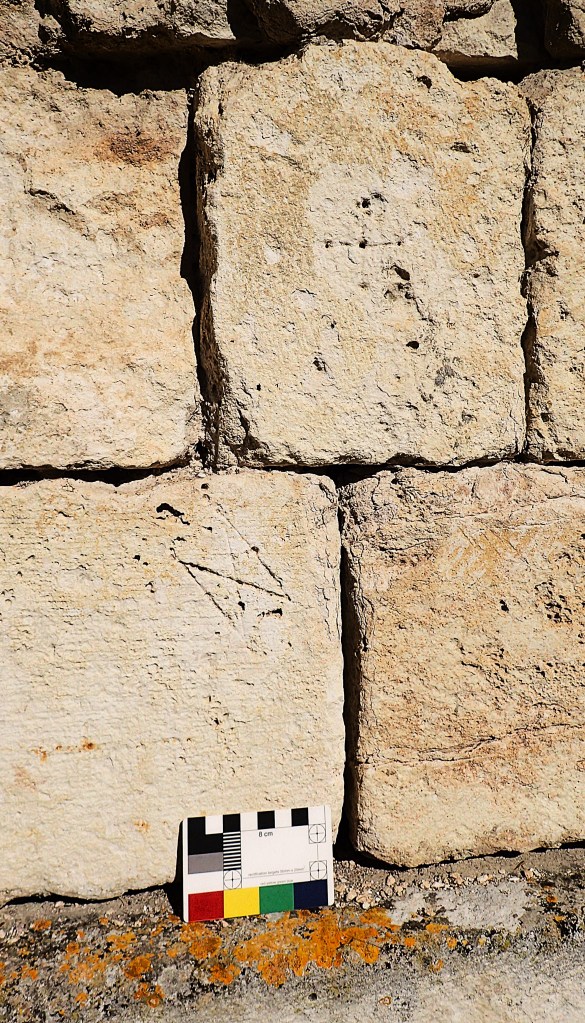
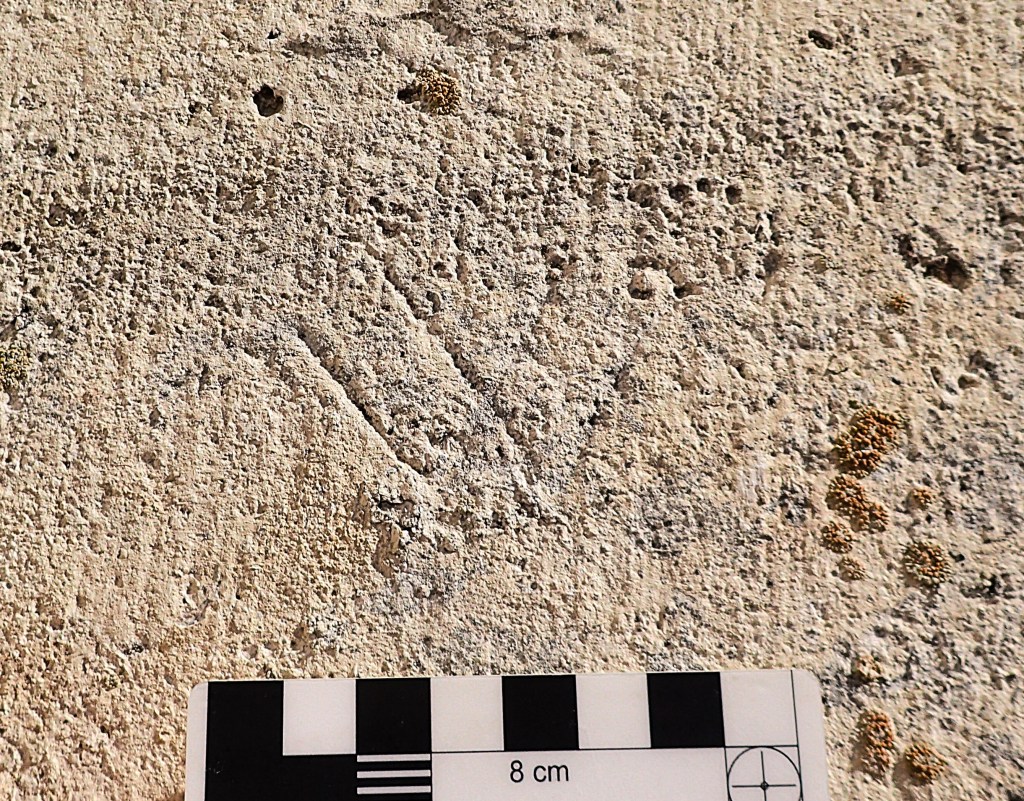
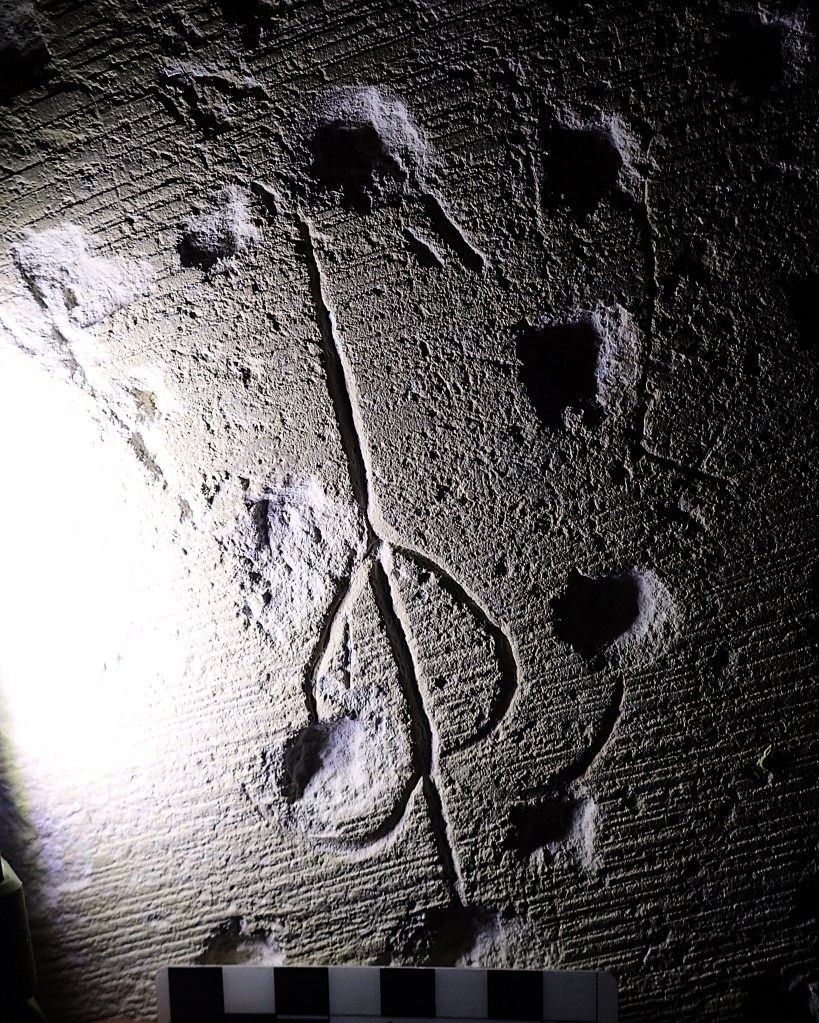
Photo: © W Perkins 2026.
Prisoner Graffiti
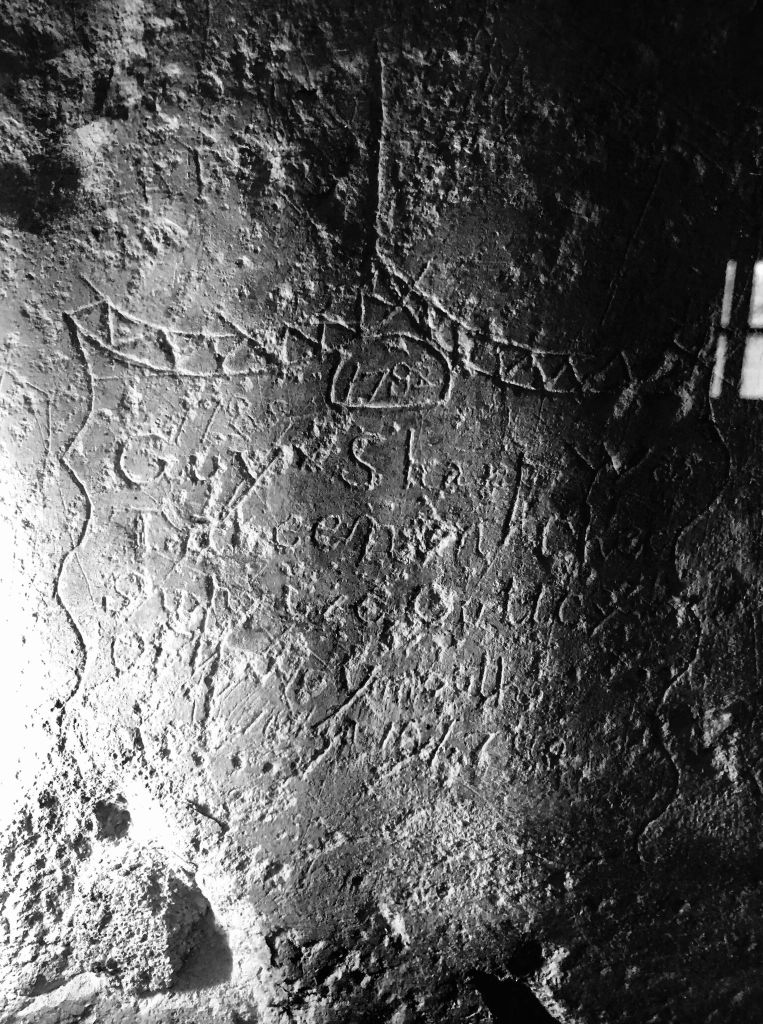
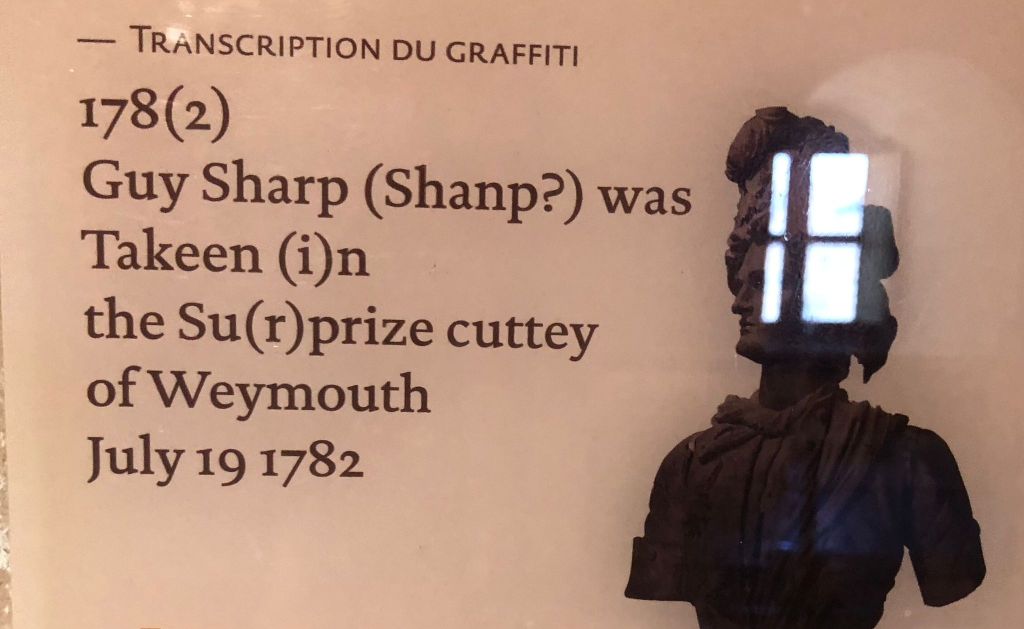
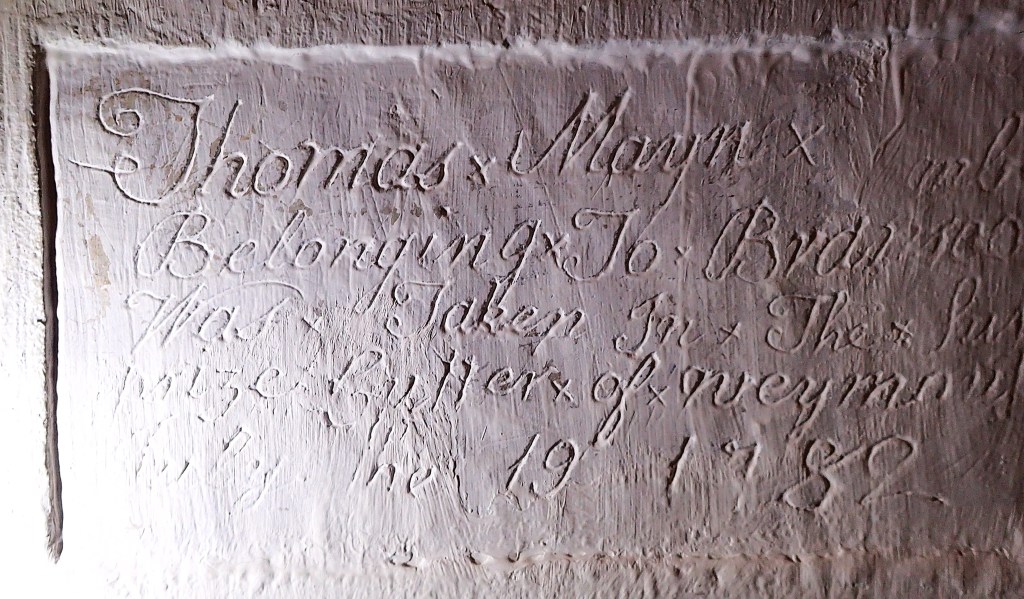
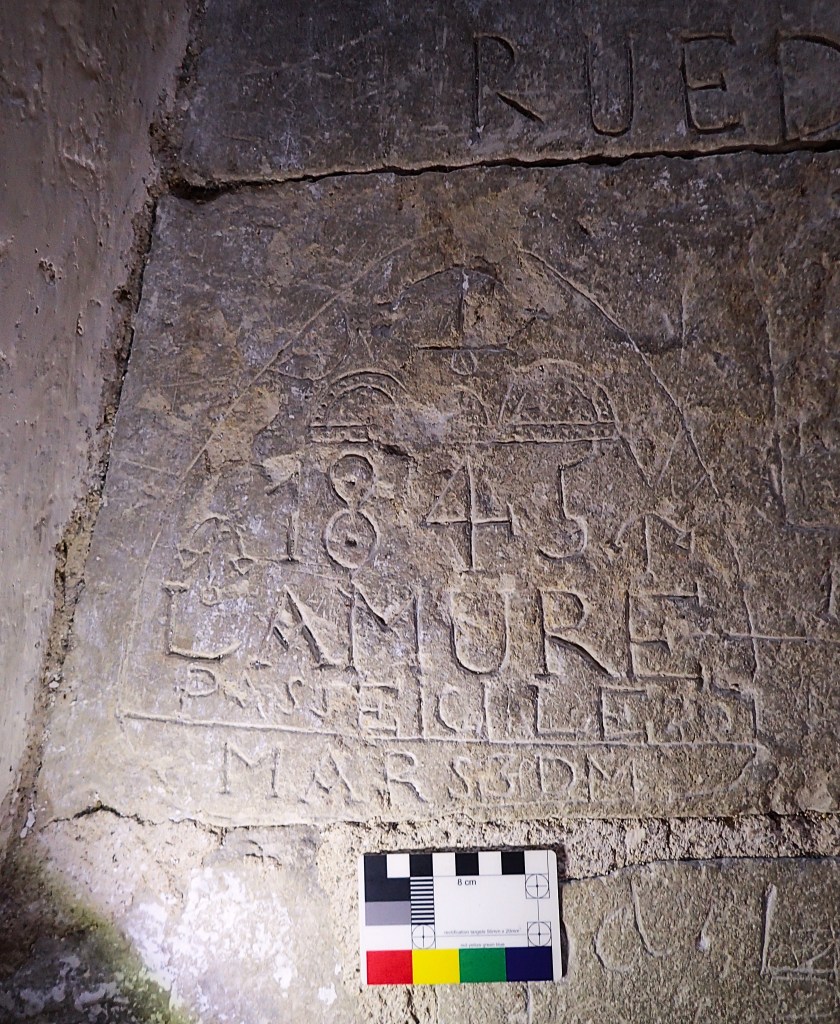
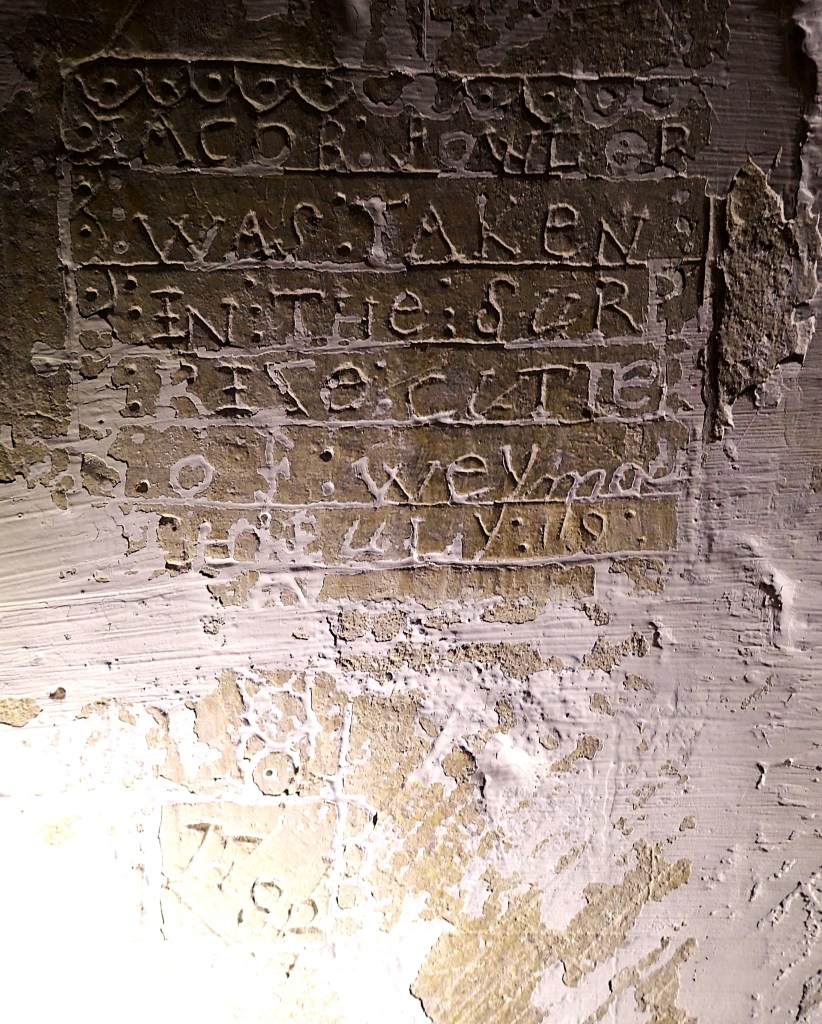
Photo: © W Perkins 2026
Ship graffiti
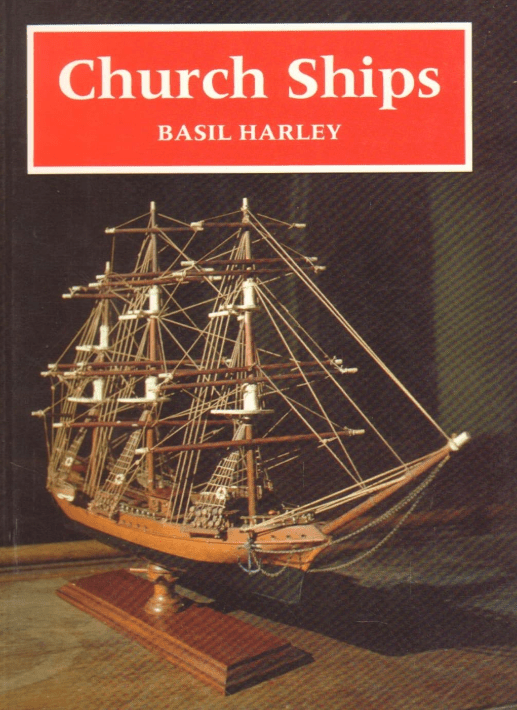
The image of the ship loomed large in the medieval imagination. Ship graffiti has long been recorded in ecclesiastical settings and was originally thought to be restricted to coastal towns and something undertaken only by maritime communities. However, with an increase in graffiti surveys across England, it was clear that ship graffiti was just as often made in land locked locations, throwing up problems of interpretation. Further, the tradition of churches preserving ship models had slowly disappeared during the 20th century and most have been cleared out of most churches.
Whilst there is nothing wrong with interpreting ship graffiti as little more than communities simply recording the world around them, significant work on the subject of ship motifs has suggested that there was also deeper, more symbolic association between seafarers, their boats and their church. No one has written more on ship graffiti than Matthew Champion,
“The marked and demonstrable concentration of ship graffiti at coastal sites certainly suggests a strong link between the graffiti and maritime communities, implying that the graffiti had meaning and function that was highly relevant to these communities. However, the presence of so many newly discovered examples at sites far removed from the sea would also suggest that the meaning and function went beyond the localized settings of coastal churches” (Champion 2015a: 350).
In the past, going to sea was a dangerous and life-threatening endeavour. The link between ship graffiti in a church (sometimes accompanied by religious iconography or Latin text) presents the possibility that the ships may have been votive in nature. In a study of the ship graffiti in St Thomas’ church in Winchelsea, East Sussex, the investigators concluded, “…. the inscribing of ships in St Thomas could have been a means of spiritual protection and a devotional practice – the giving of a votive offering in an act of prayer – that, at least in Winchelsea, cut across different communities of practice and social groups” (Dhoop, Cooper & Copeland 2015:10)
The concept of ship images acting as votive offerings has long been recognised throughout Europe. The most obvious manifestation of ‘votive ships’ can still be seen in over 900 examples of small model ships, of various antiquity, that can be seen today exhibited in the churches of Denmark (Champion 2015b :11).
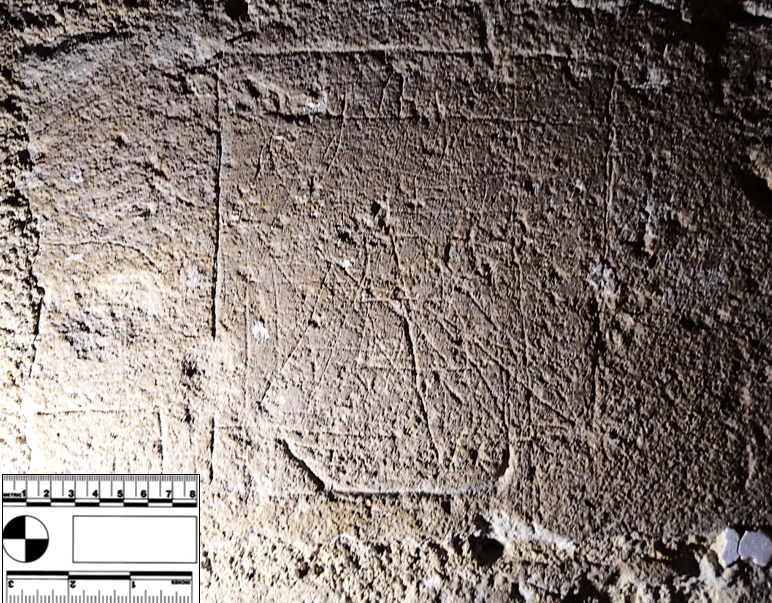
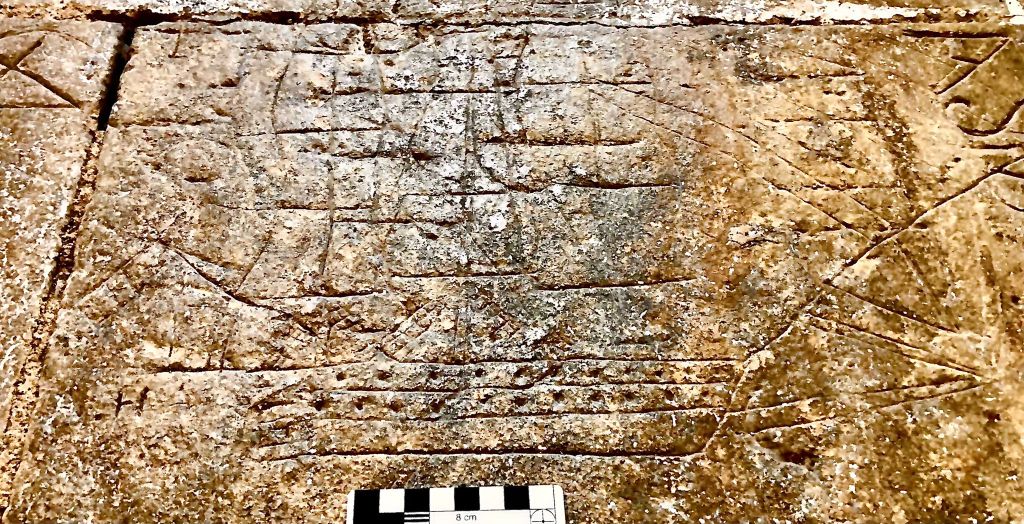
Pornographic (?) Graffiti
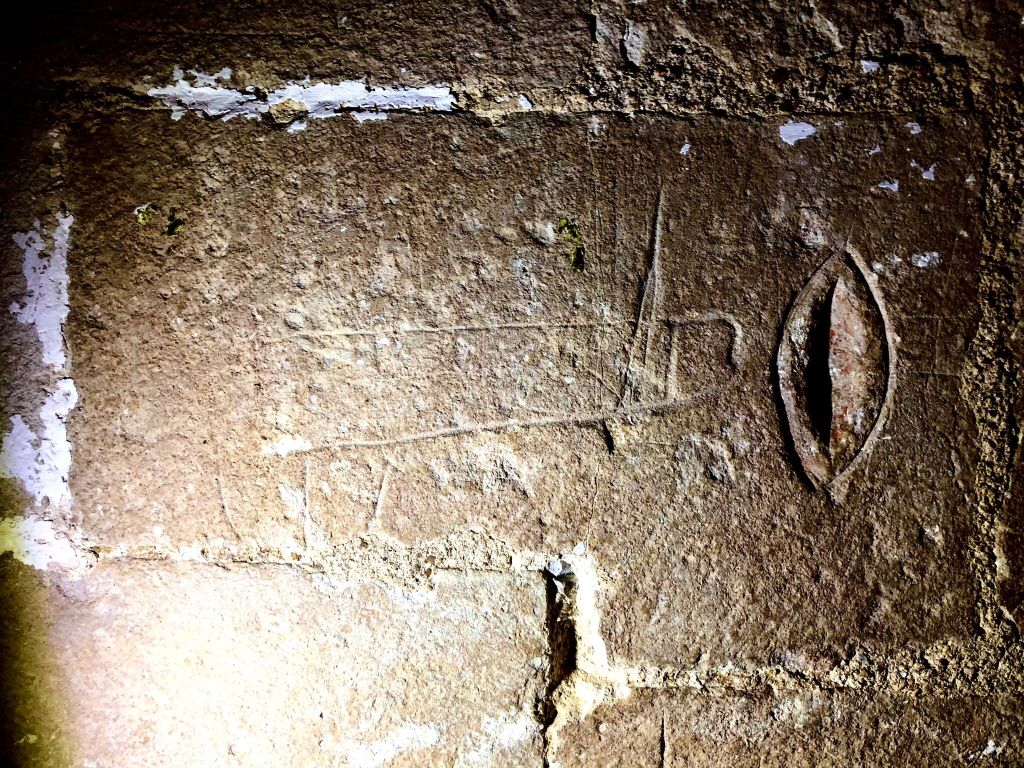
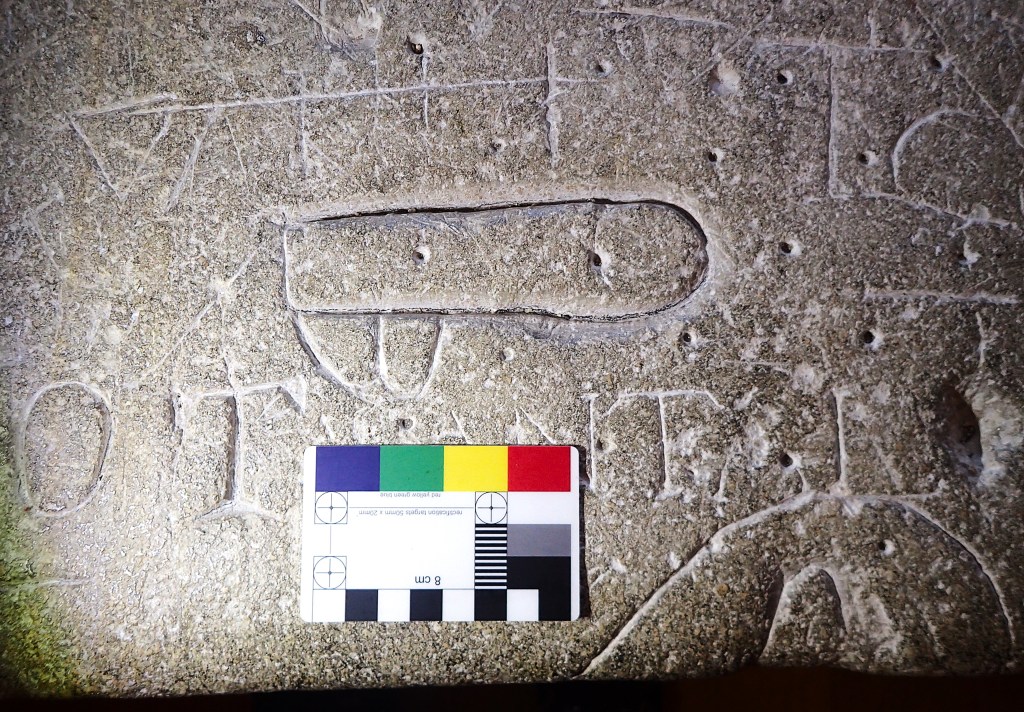
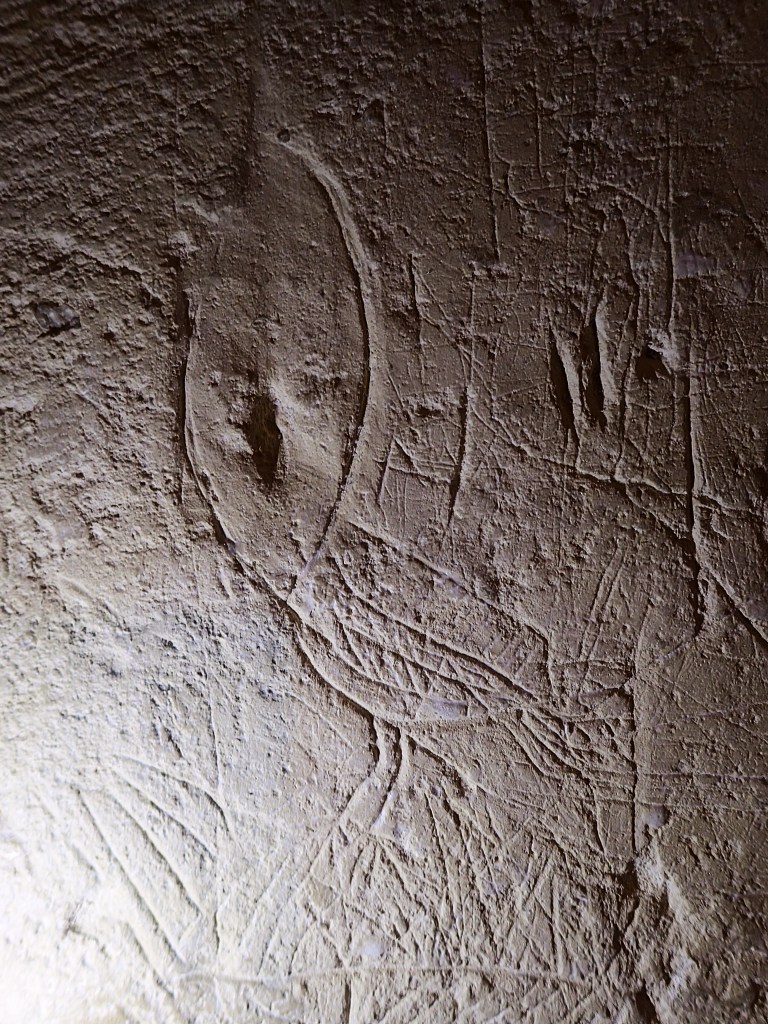
A number of depictions of the female and male genitals – potentially intended to act as pornographic imagery were found during the survey which may be a manifestation of the imprisoned sailor’s mindset at the time of their incarceration! The motifs were highly stylised and the same forms repeated at different locations.
Apotropaic Graffiti
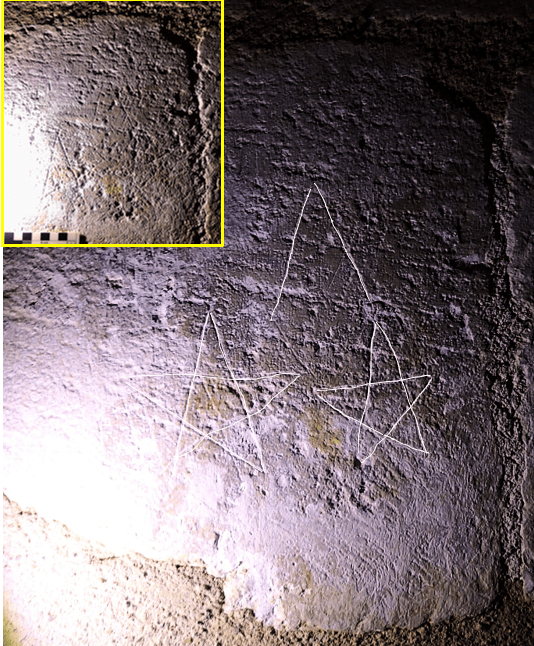
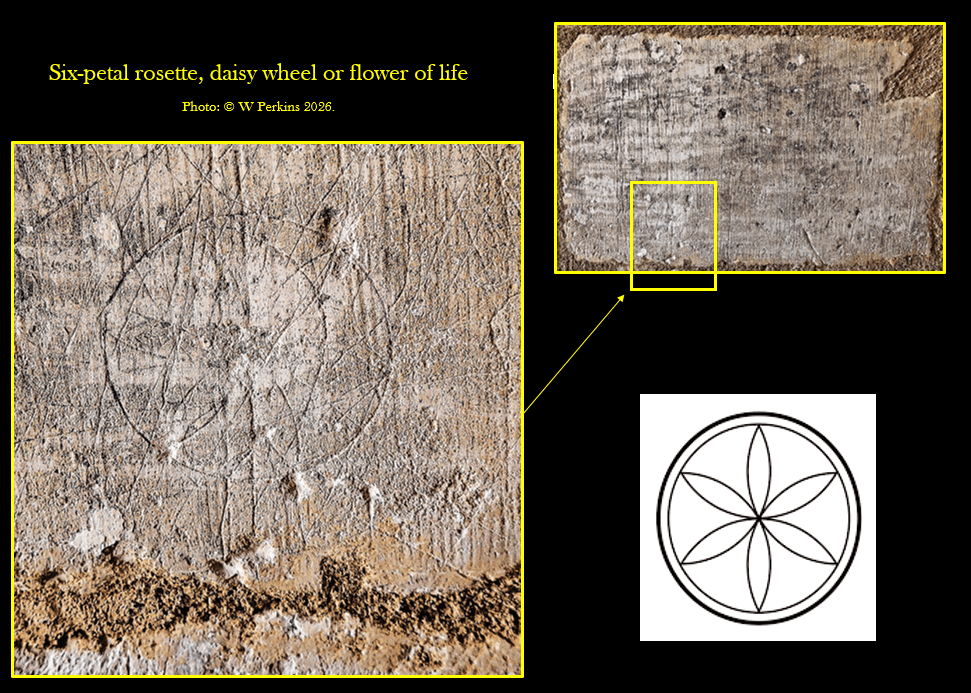
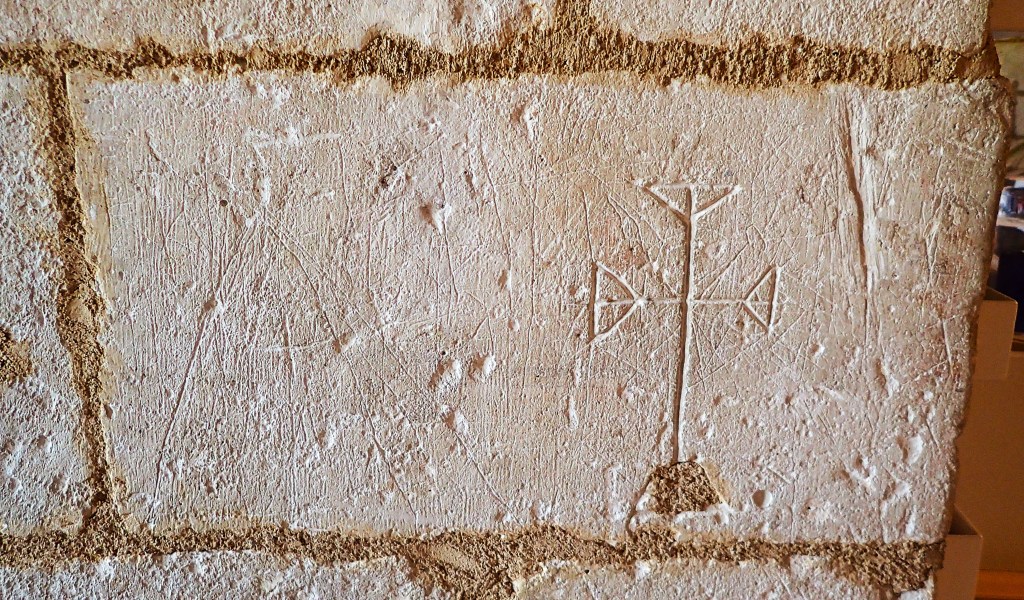
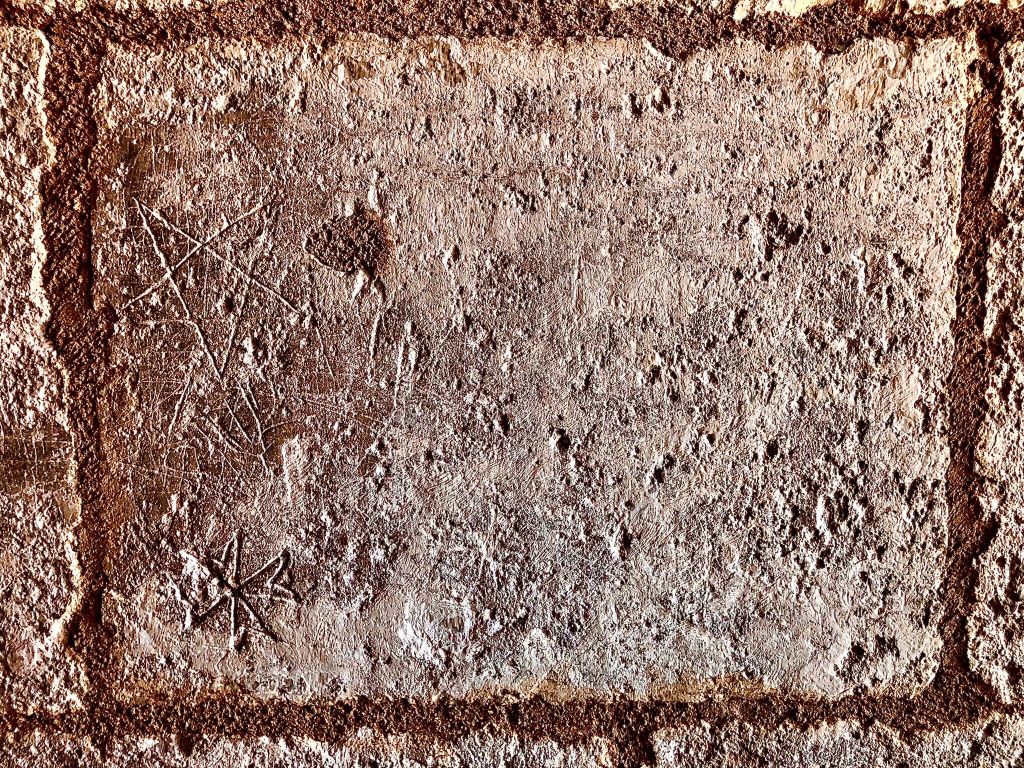
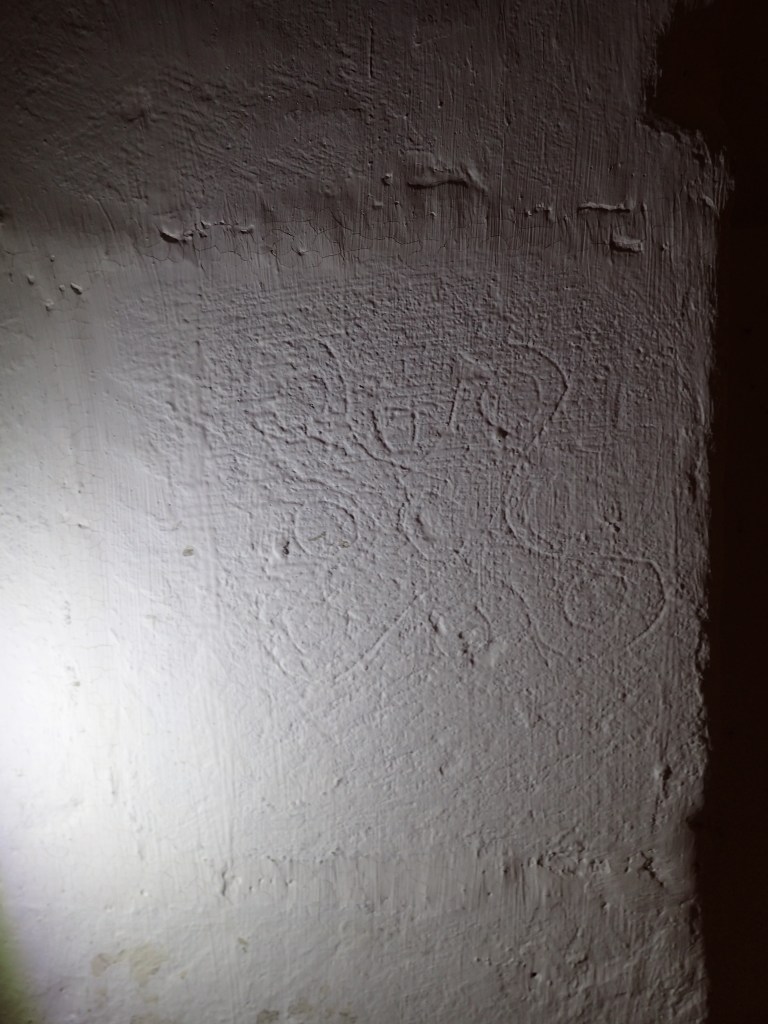
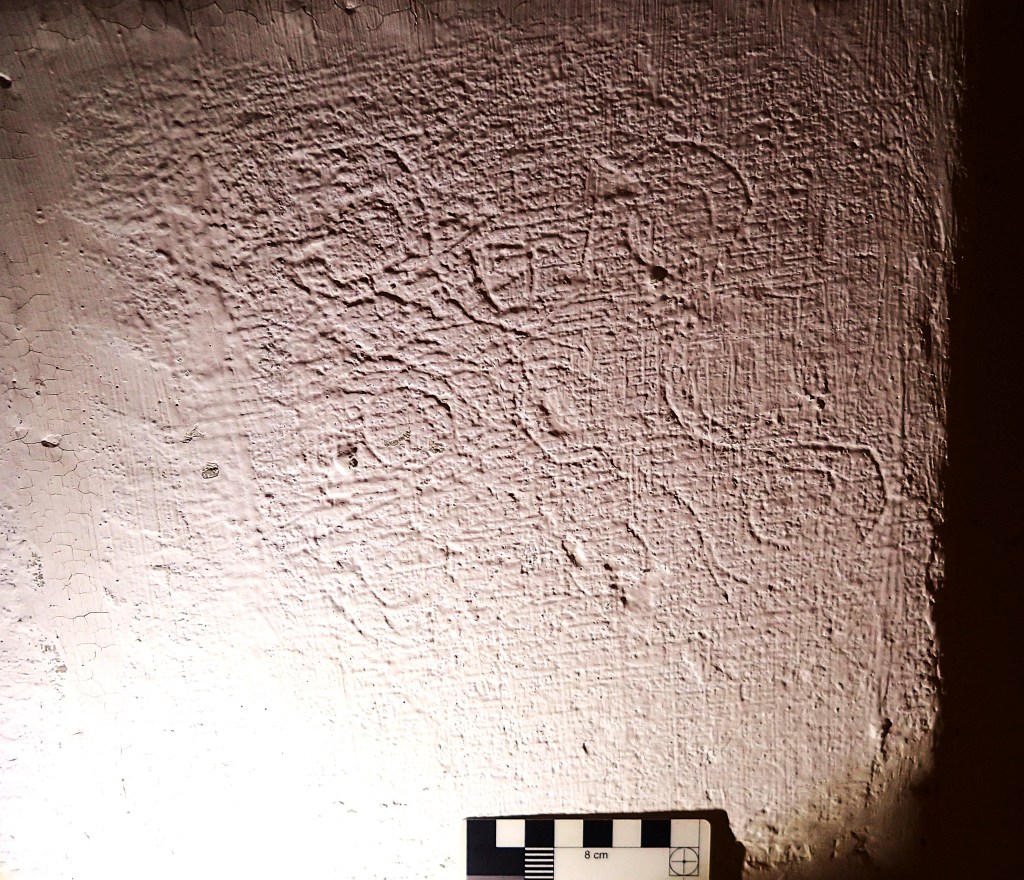
During the preliminary survey, only a few of the marks recorded in the castle could be apportioned to being apotropaics. Most were five-pointed stars (or pentangles), recorded either singly or in groups of three. Several examples of compass drawn circles of various types were logged, most of which appeared to have functioned as apotropaic devices (Perkins 2022a). Furthermore, several examples of devotional motifs were present.
Summary
For the author, during the survey of prisoner graffiti a number of easily recognisable themes arose, reflecting the concerns of the imprisoned seamen. Many of the same themes were evident when a visit was made the following day to the Tour de la Lantern in La Rochelle on the coast. Like Le Donjon, this early form of lighthouse was also pressed into service as a prison for captured seafarers in the 18th and 19th centuries and the resulting corpus of graffiti is much greater in extent.
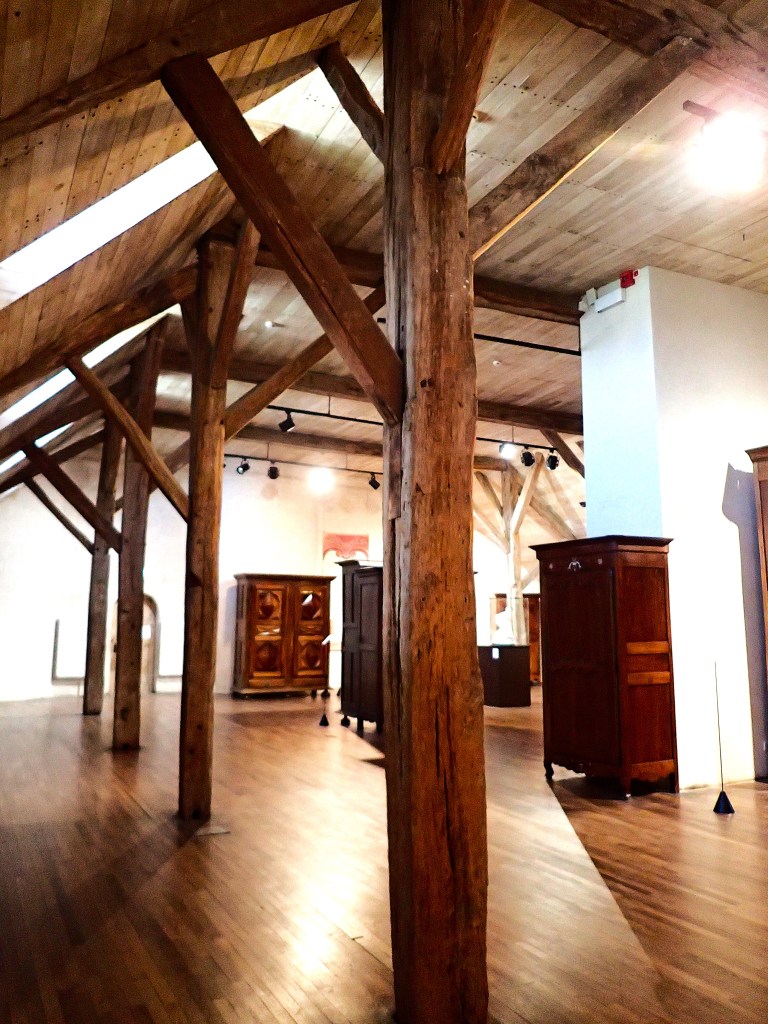
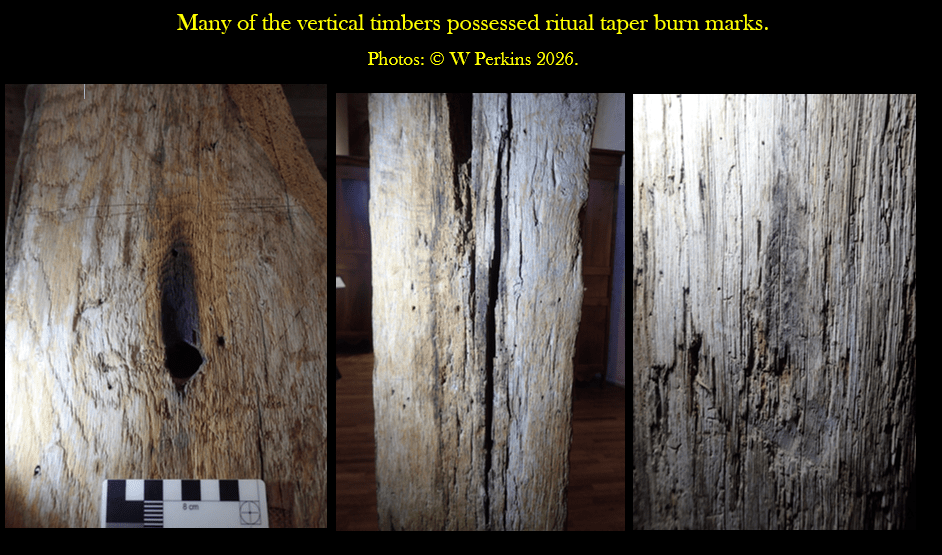
In this context, the role of the potential apotropaic graffiti was unclear, especially as it had been subsumed by such a high quantity of prisoner’s marks and drawings. However, other ritual activity in the building was recorded, as evidenced by the deliberate taper burn marks found on the timber in the castle. The two acting in partnership support an apotropaic interpretation for some of these specific motifs.
Wayne Perkins April 2026

Further reading:
Baudry, M P (2011) Le Donjon.
Champion, M (2015a) Graffiti Survey Record St Nicholas Chapel, Kings Lynn, Norfolk: The South Porch. Analysis & Interpretation, client report for the Churches Conservation Trust.
Champion, M (2015b) ‘Medieval Ship Graffiti in English Churches: Interpretation and Function’ in, Mariner’s Mirror 101:3, 343-350.
Dhoop, T., Cooper, C., & Copeland, P. (2016). ‘Recording and Analysis of Ship Graffiti in St Thomas’ Church and Blackfriars Barn Undercroft in Winchelsea, East Sussex, UK’ in, International Journal of Nautical Archaeology, 45(2), 296–309. https://doi.org/10.1111/1095-9270.12179
Grand-Sud Insolité (2026) Le Donjon de Niort, the work of the Plantagenets, and its museum
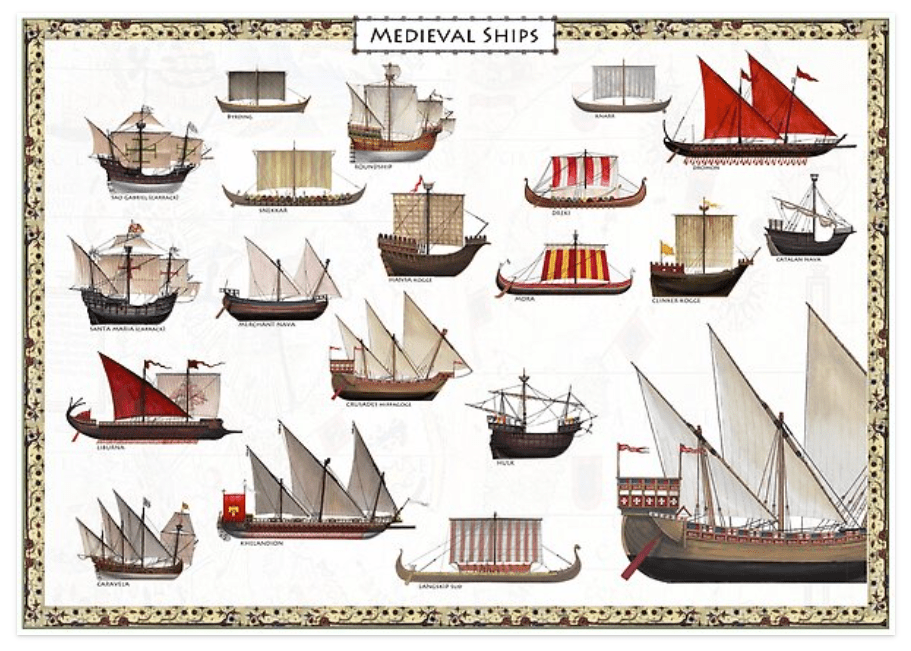
Naval Encyclopedia (2026) Medieval Ships
Niort Marais Poitevin (2026) Le Donjon
Perkins, W (2022a) Return to The Source
Perkins, W (2022b) Incendiary Behaviour