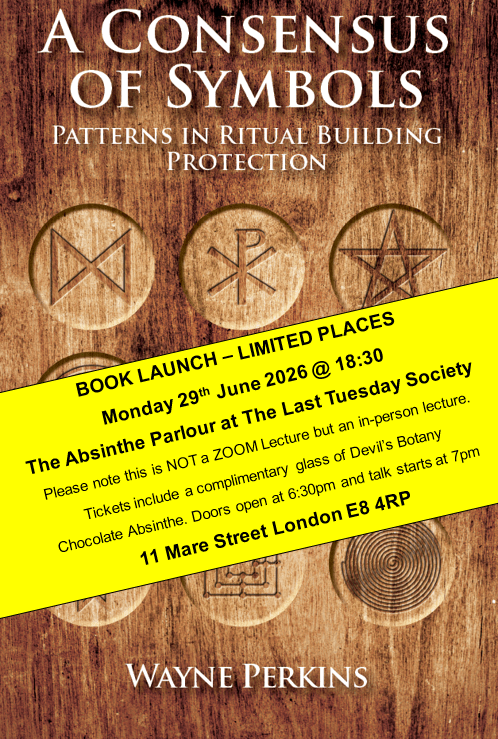
Published by Aeon Books in June 2026!
Look out for book launch events during the summer!*
Chapter 1: Introduction
Presented here, for the first time, is a synthesis of thirty-seven years
of research which addresses the phenomenon of ritual building
protection. It draws together the interpretations of a number of
academics from a range of disciplines. The purpose of this book is to
enable both the enthusiastic amateur and the seasoned archaeologist to
“read” the ritual markings and ritual deposits that are sometimes found
in the ancient buildings of Britain. This book aims to empower both the
individual and the local history group to undertake surveys of their own.
Ever since the publication of the landmark study on the subject, The
Archaeology of Ritual and Magic by Ralph Merrifield in 1987, academics
have both debated the veracity of his conclusions and added their
own contributions to the subject. It was, in many ways, a prescient
book which took a leap into the interpretative dark—no one else had
written anything quite like it before. He had proposed that, in the past,
householders had employed a brand of “folk” or “popular” magic to
protect their homes from a number of perceived spiritual and supernatural
threats. He illustrated a range of objects which he believed had
been deliberately concealed within the voids of the buildings to counter
such a threat. To this he added examples of charms and curses that had
been secreted into the structures of timber houses. He offered a number
of interpretations to explain the deposits which he believed may have
been undertaken to avert the evil eye and to ward against ghosts, spirits,
and the effects of maleficium (Merrifield, 1987, pp. 120–136).
Dating evidence has shown that the creation of many of the ritual
deposits recovered from buildings had, in some cases, been undertaken
over long time periods, sometimes spanning several centuries.
The earliest examples date from the late Middle Ages but the practices
appear to peak during the Early Modern period c. AD 1550–1800. The
“spike” was of interest to Merrifield as it occurred at the height of the
European “witch craze”. This apparent concurrence lent weight to
the idea that the deposits may have been related to the contemporary
anxieties of the day. During this period, fear of the supernatural may
have been foremost in the mind of the populace, which had led to them
taking countermeasures against such perceived threats.
In some instances, the deposits comprise deliberately concealed
boots and shoes as well as large caches (or middens) of worn, patched
clothing. In other cases, some form of elaborate preparation had been
necessary, such as in the mummification and post-mortem posing of
immured cats or the concoction of ingredients required for the successful
creation of a witch bottle. These were all “covert” deposits which were
dependent upon the non-disclosure of their deposition for their success.
Central to this is the suggestion that ordinary folk were undertaking
ritual acts which they believed harnessed the perceived power of
sympathetic magic. The key point for archaeologists is that each of
these acts in the past would have left an archaeological trace, detectable
through the multidisciplinary approaches of buildings archaeology,
when subjected to the same scrutiny as one would give to “ordinary”
deposits. Physical traces in the archaeological record are used to infer
the purpose and motivation for a past action.
One question has remained: who made the marks or created the
deposits? The homeowners themselves were capable of conducting
themselves in such a way as to better harness “good” luck. Tradesman—
be it carpenter or mason—had access to many of the voids and inaccessible
areas of a building during construction and renovation.
Sometimes, it is possible to see the fingerprints of the wise woman or
semi-literate cunning man engaged by a homeowner in the charms and
spells. Counter arguments have asserted that many deposits may have
been the result of commonplace acts done with no conscious “magical”
intention whatsoever. Was the creation of the deposits and deployment
of apotropaic symbols simply considered to have propitiated good
“luck” in a more general way? This book aims to offer some answers to
those questions …
Wayne Perkins
London, December 2025
Chapters include –
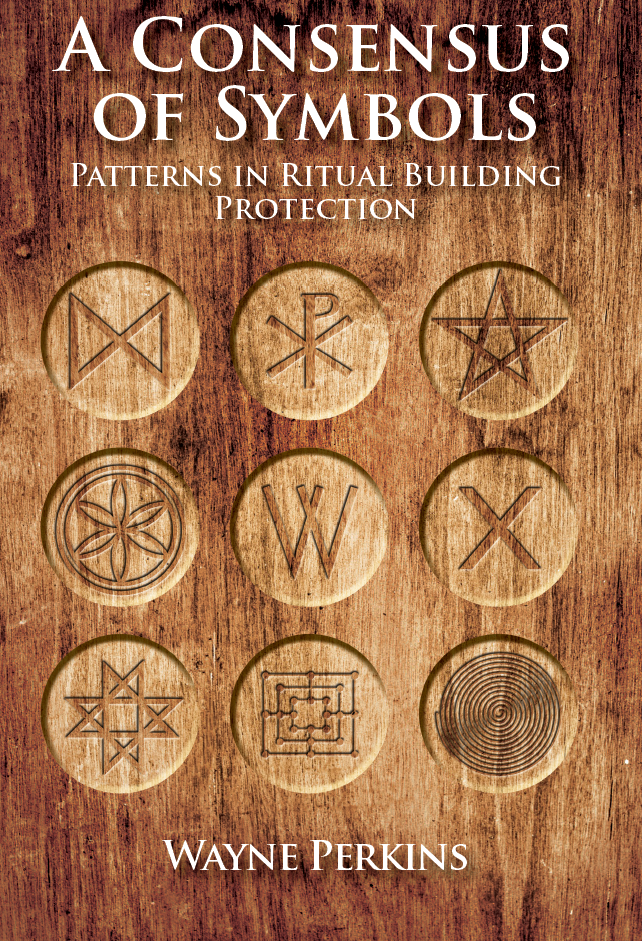
Apotropaic Graffiti
The use of occlusive, deflecting or protective motifs & ‘holy’ signs
Ritual Taper Burn Marks
The deployment of pyro-technology as a form of inoculation against fire & as protection from invasive spirits
Deliberately Concealed Old Boots & Shoes
Worn footwear concealed in buildings – from single shoes to groups or ‘caches’
Spiritual ‘Middens’
‘Generational’ caches of deliberately broken objects & worn garments concealed within the voids of old buildings
Dried, Mummified & Smoked Cats
Intentionally immured acts posed into dioramas
Witch Bottles
Anthropomorphic ceramic jugs repurposed as magical objects
The book contains a discussion on the socio-economic, political & cultural context of the phenomena. This is followed by a chapter on the supernatural beliefs which persisted into the Early Modern Period c. AD 1450-1800.
A brief outline of the Laws of Sympathetic Magic, known as the ‘Doctrine of Correspondences’ is included, which explains the ‘mechanism’ by which people believed that their actions would be efficacious.
A discussion follows as to who made the deposits and scrutinises the evidence for the possible culprits – from tradesmen to Cunning Folk and Service Magicians.
The final chapter outlines the conceptual construct of the ‘household’ as a symbolic as well as a physical entity and how that drove agency among householders to take measures to counter external threats.
Pre-orders here –
Aeon Books