
The Church of St Peter, South Weald. Grade II* Listed No.1297216
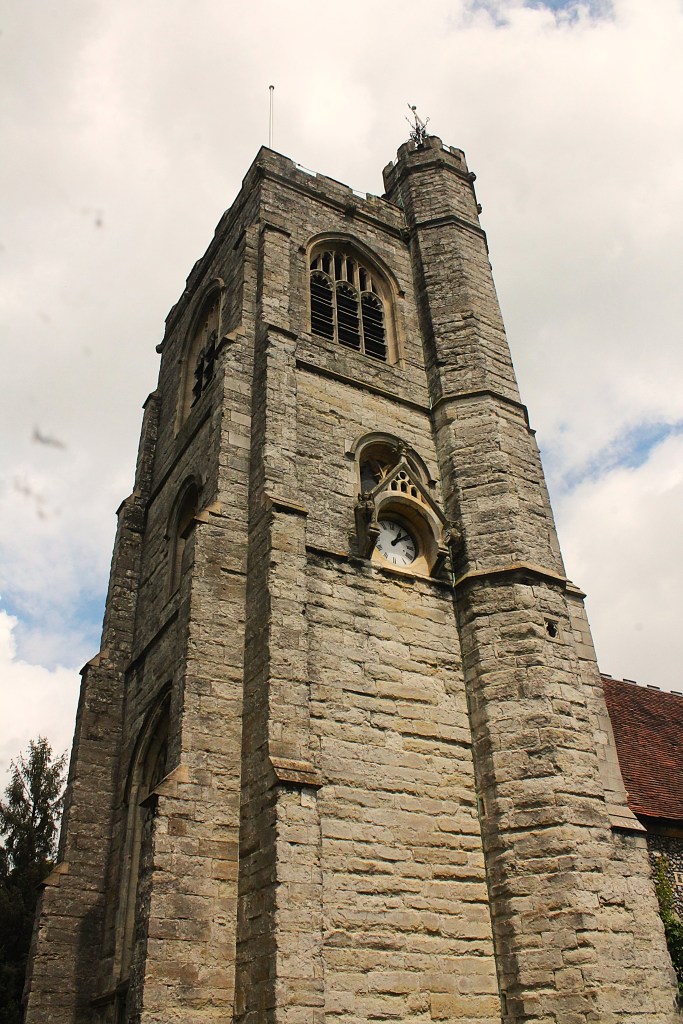
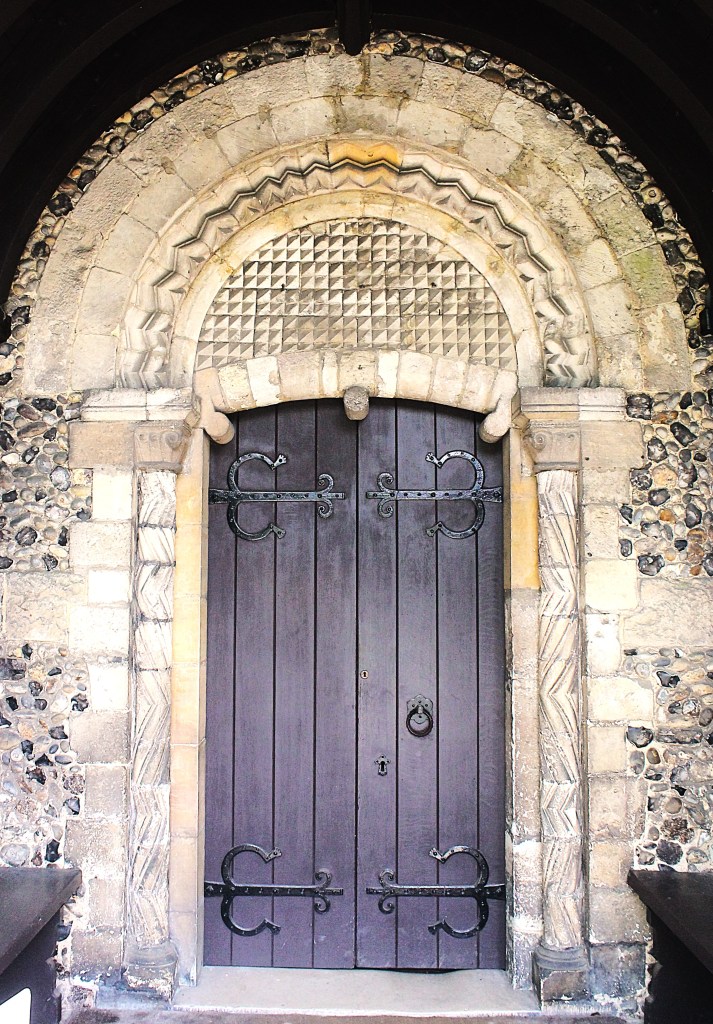
At St Peter’s, the present south aisle was the original church itself, comprising the nave chancel, built in the 12th century. Dating to around the same time, the impressive Romanesque south doorway, presents a tympanum with chip-carved diapering; the jambs each have a shaft with chevron fluting, voluted capitals, modern abaci and moulded bases (RCHME 1921, CRSBI 2026). The church was expanded to its present, larger layout in the 13th century and the tower was added in the 15th (Historic England 2026).
A manor of 2 hides was held by the canons of Holy Cross, Waltham in 1066, which was reduced to 1½ hides by 1086, the lost half hide being in the hands of Geoffrey de Mandeville. The Holy Cross manor became known as the manor of South Weald. From 1275 the advowson of St Peter’s was held by the Bishop of London It contained the village and the church, and remained with Holy Cross until the Dissolution (CRSBI 2026).
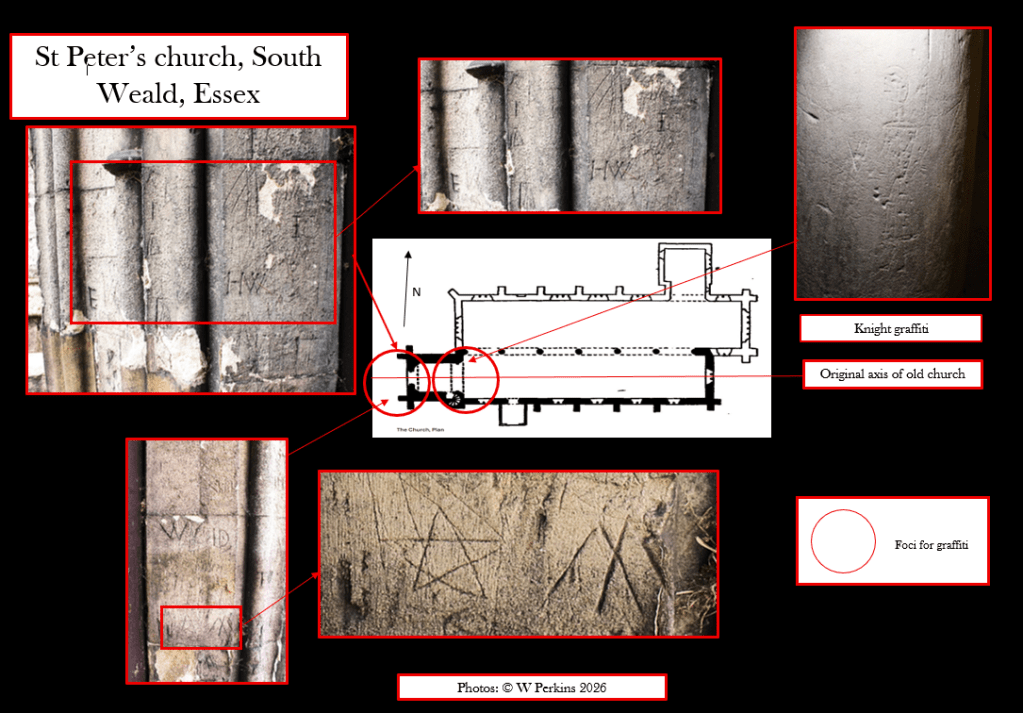
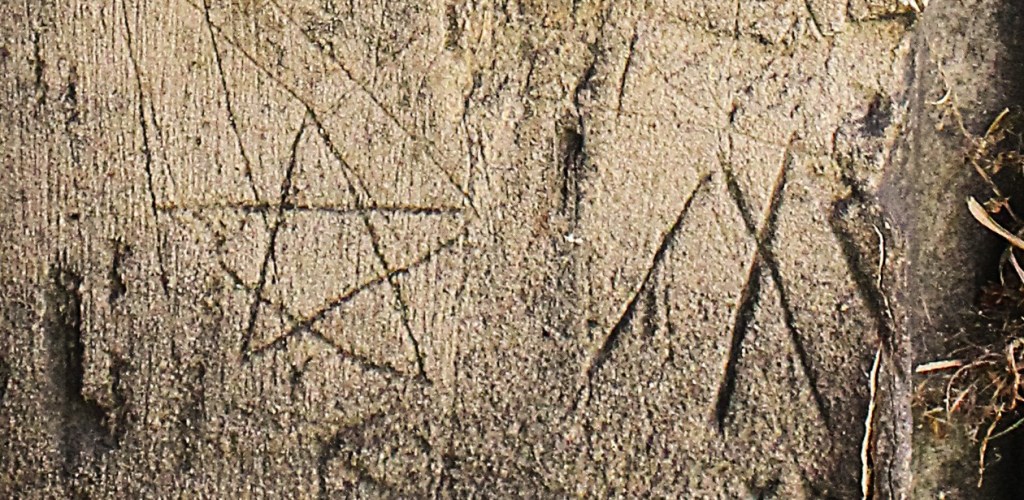
A brief survey recorded a variety of graffiti which had survived around the base of the tower both inside and outside, on the tower arch and around the exterior of the west door. It included the ubiquitous initials and dates, figurative graffiti and several examples of apotropaic graffiti including pentangles, plague arrows and Marian marks.
Interior (Tower arch)
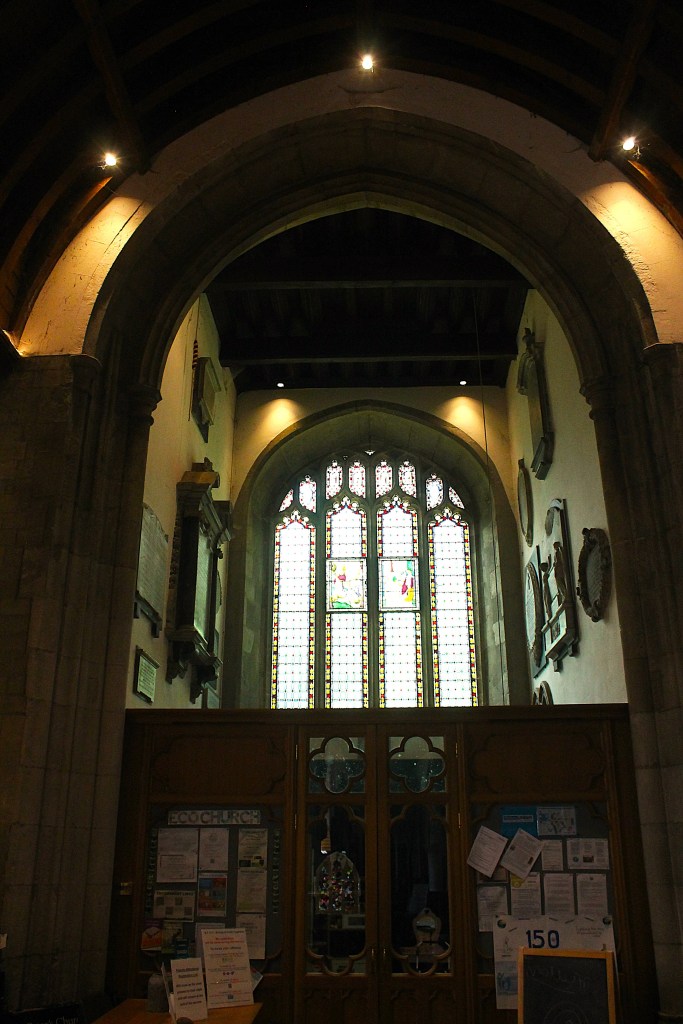
Plague arrows.
I have written on the subject of plague arrows in 2024, a link to that article can be found below.
Arrow graffiti when rendered in its simplest form as three straight (or almost straight) lines converging on a point – has often been overlooked within the corpora of medieval graffiti. Firstly, they have often been misinterpreted; thought to be the ‘positioning’ marks made by the stone mason, secondly, they have been interpreted as simply representing an arrow as a weapon or thirdly, that, due to the often crude or rudimentary rendering, they were of little import to be simply ignored (Perkins 2024).
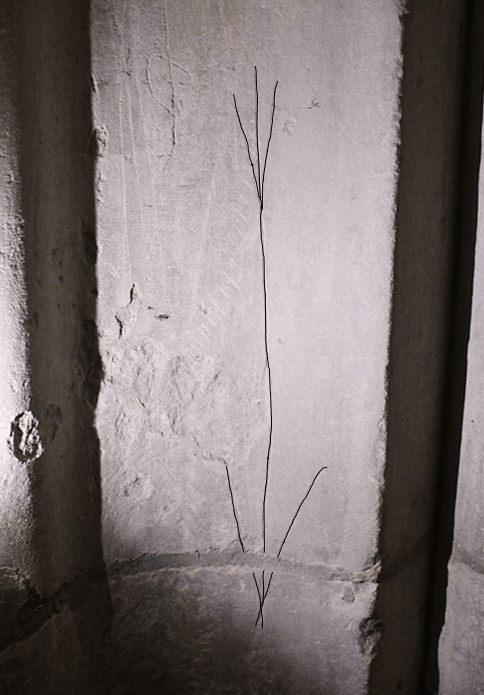
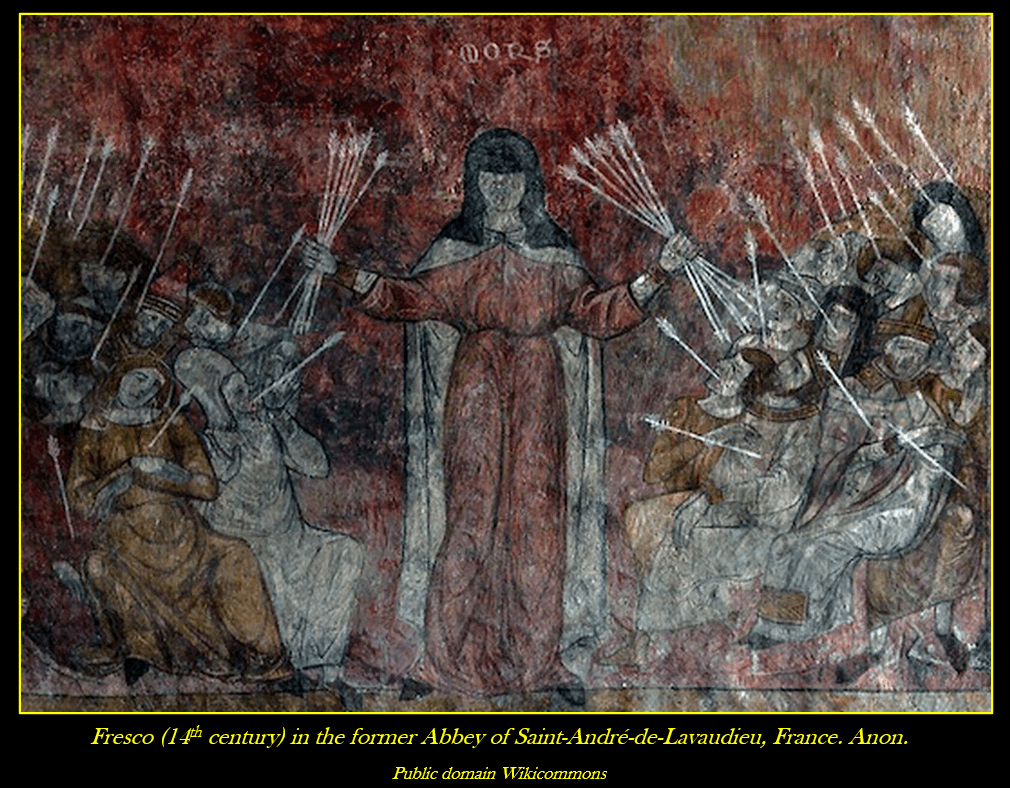
Whilst placing the pragmatic interpretation of the arrow motif as an item of weaponry to one side for the moment, it may have embodied more significant, symbolic connotations for the maker. In ancient times, the common metaphor used for the plague was the arrow. It was not seen merely as a depiction of a weapon but was a form traditionally invoked to represent a carrier of disease, especially the plague. At some point in the past, the metaphor for a hail of plague arrows was used to symbolise divine displeasure and one which had been employed since ancient times. When utilised in symbolic art, Medieval arrows are never ambiguous: they represent force and violent death in general, and martyrdom in particular (Perkins 2024).
Pentangle
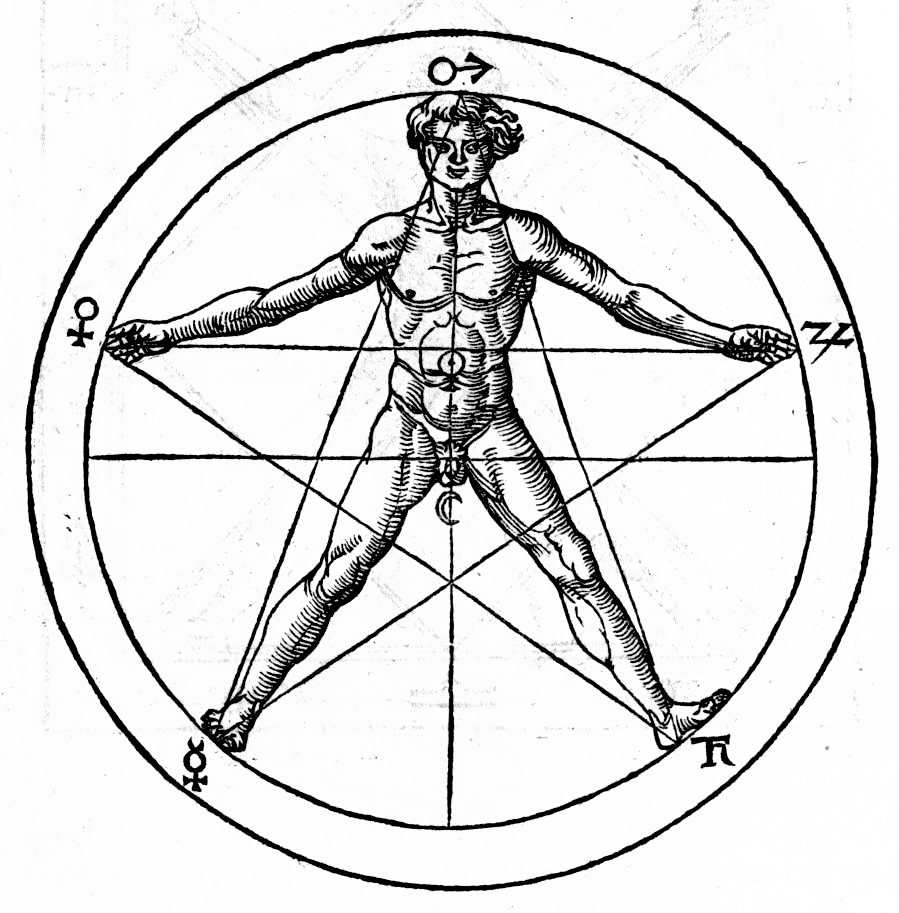
The pentangle (pentacle or pentalpha) is believed to have travelled from Mesopotamia of the third millennium BCE through the classical Greek and Roman worlds into Celtic Gaul by the 1st century BC. By the early medieval period, the protective qualities of the five-pointed-star (or ‘endless knot’) was harnessed by Sir Gawain to defeat the Green Knight (Champion 2015).
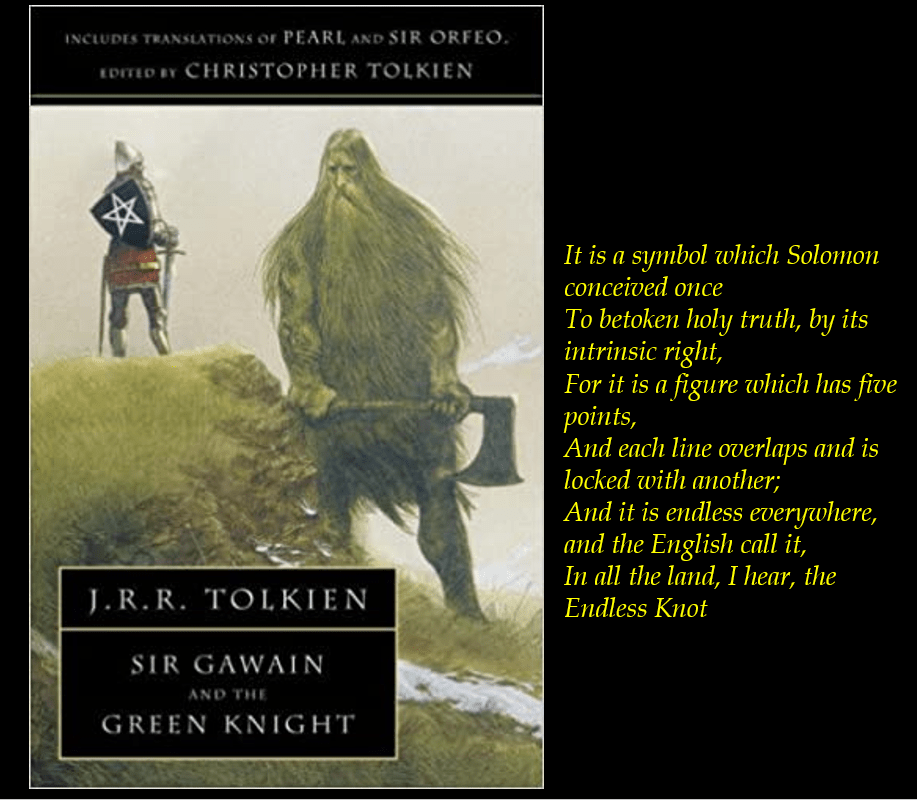
In Christian scared numerology, the symbol’s five points were seen to represent the five wounds of Christ (one in each hand and foot, one in the chest) , the five virtues of the knight and the number of the Joyful (taken from the Nativity), Sorrowful (from the Passion Cycle) and Glorious (includes the Resurrection, the Ascension, the Descent of the Holy Spirit, the Assumption and the Coronation of the Virgin) mysteries (Stemp 2010 :107).
Throughout the millennia, classical, Islamic, Hebraic, and Christian philosophers, theologians, mystics, alchemists, mathematicians, and scientists have contemplated the mystery, meaning, and influence of numbers. When the human form and the pentangle was overlaid, a natural realtionship was perceived that is reiterated in humans having five fingers, toes and five senses (Augé 2014: 166, 171).
Figurative graffiti
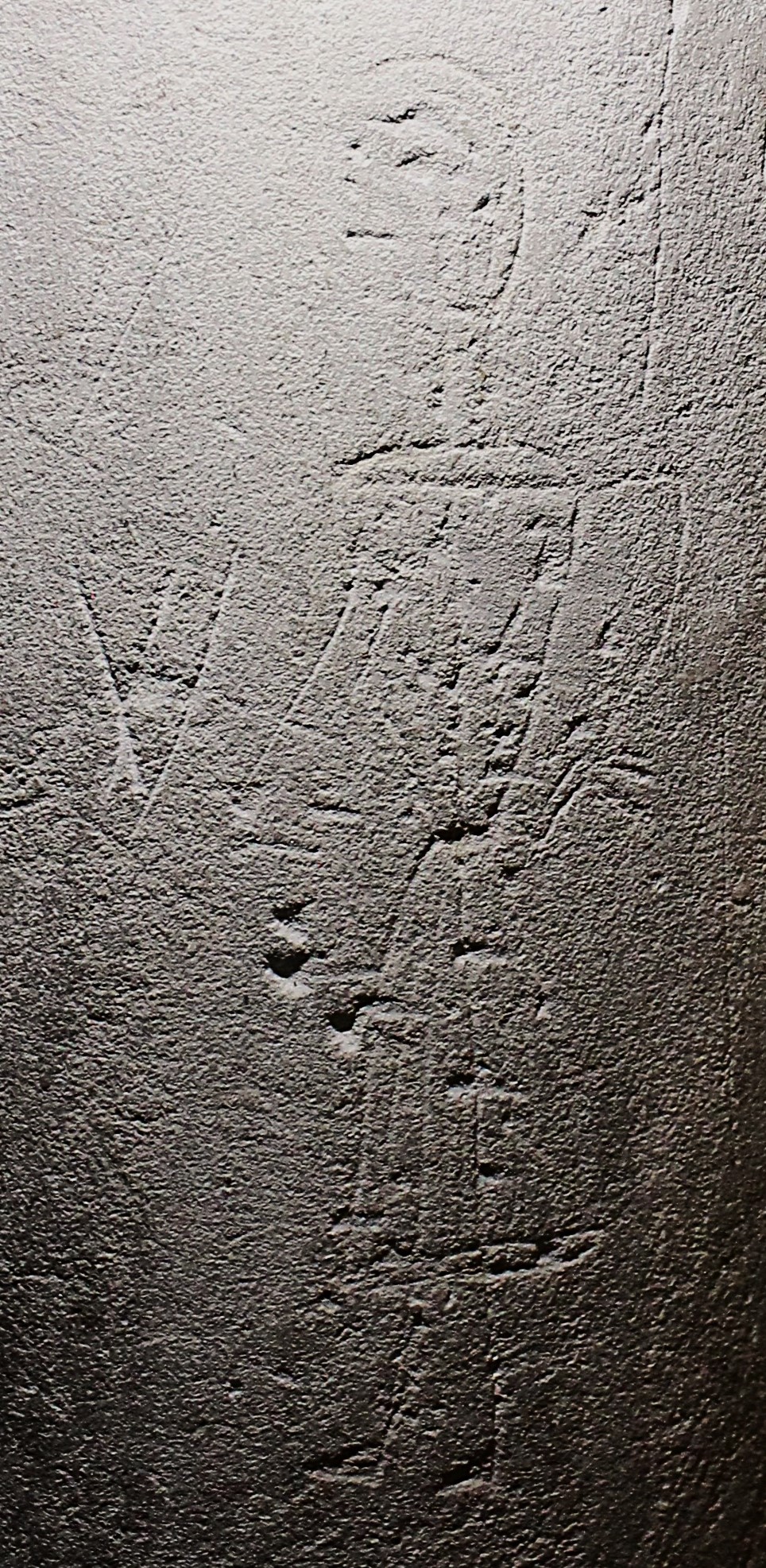
Examples of figurative art among graffiti corpora are relatively common and are often easier to interpret than some of the more enigmatic ‘abstract’ symbols often found carved into church masonry. That said, it is not possible to identify the motivation for their creation by the graffitist.
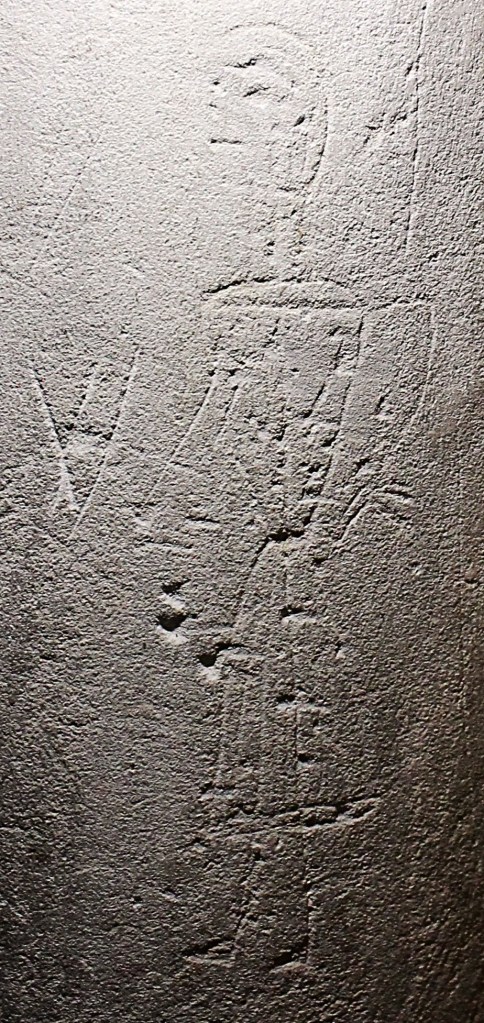
Sometimes there are tantalising clues in the apparel; is the line around the back of the skull meant to represent a hair style or the outline of a cap? Are the lines flowing down either side of the head hair or is it an ear flap? Frustratingly, many of these graffiti images were only ever partially executed or have been weathered or eroded over time. Quite often, many such images are, ‘stylised to the point of caricature’ (Champion 2015).
During his survey of the Kent churches, Tatton-Brown thought that, in some cases, the lines in the graffiti figures may have been preparatory drawings for later wall paintings. The idea that the graffiti figures represent outlines for future painted decoration was taken up by Scott (2018) during a survey of pictorial graffiti recorded in Rochester Cathedral. However, close examination of the graffiti in question showed that there was no evidence for ochre or paint caught within the grooves of the graffito. His study also made the argument that it was possible to see a ‘cohesive’ 13th century ‘figurative scheme’ among the Cathedral corpus at Rochester, which showed close affinities with those at St Mary’s and also at St Clement’s in Sandwich in the south-east England. The figures may have been done by the same artist whose sphere of influence may have stretched as far north as St Albans (Scott 2018).
The figure at St Peter’s does have something of the caricature about it. It seems to have a skull cap (or close-fitting helmet) and is possibly carrying a shield on its left arm. He may be clad in the long coat of chainmail associated with that of the Norman knight. The rendering of the image is rather naive and it is located quite low down on the pillar, so this may have been something done by a child.
Exterior: West Door
Marian Marks
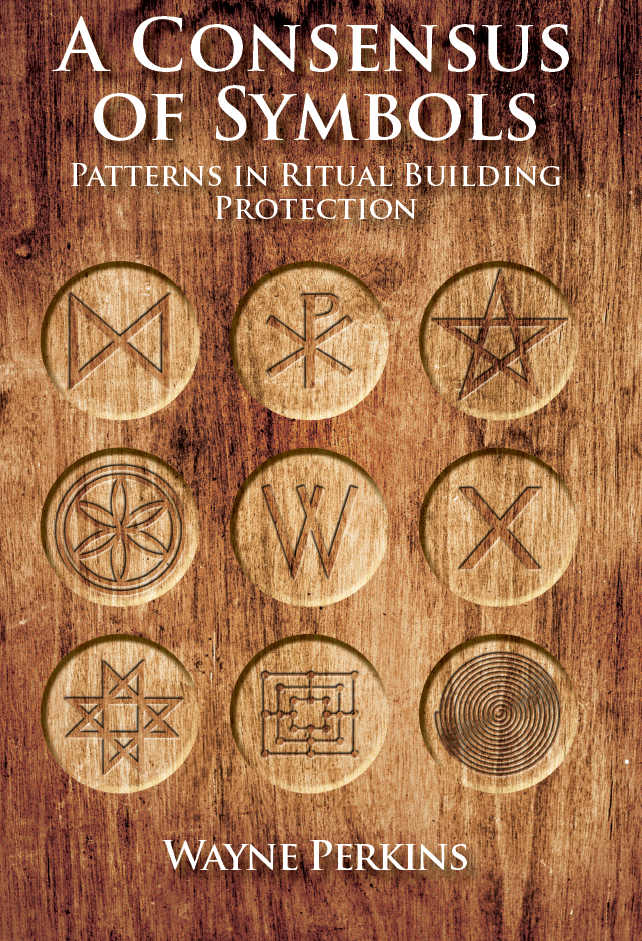
I have written at length on the Marian mark in my forthcoming book, ‘A Consensus of Symbols: Patterns in Ritual Building Protection,’ see below (2026).
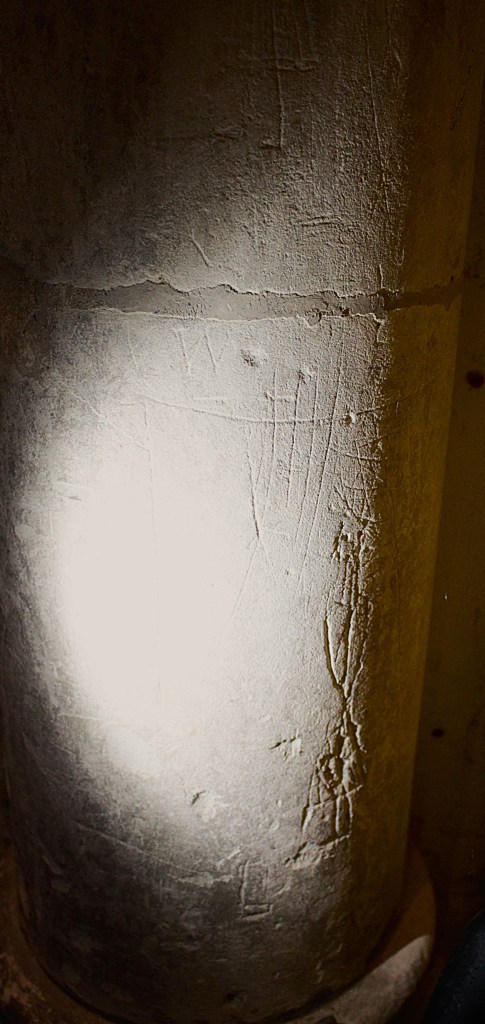
The Marian mark was first categorised as an apotropaic by Timothy Easton in the late 1990s. It was the result of his discoveries made during a series of archaeological building surveys in Suffolk in the East of England. He was the first researcher to notice the mark which had been repeatedly cut into the timbers of the sixteenth- to seventeenth-century buildings in that county. His meticulous recording of the structural timbers in the buildings revealed a patterning of repeating “VV” marks—often overlapping (or “conjoined”)—that had been cut into the wood with a carpenters’ rase knife. His short article, “Ritual marks on historic timber” in the Weald & Downland Magazine of 1999 alerted buildings archaeologists of the possibilities of apotropaic graffiti (Easton 1999, Perkins 2026: 21).
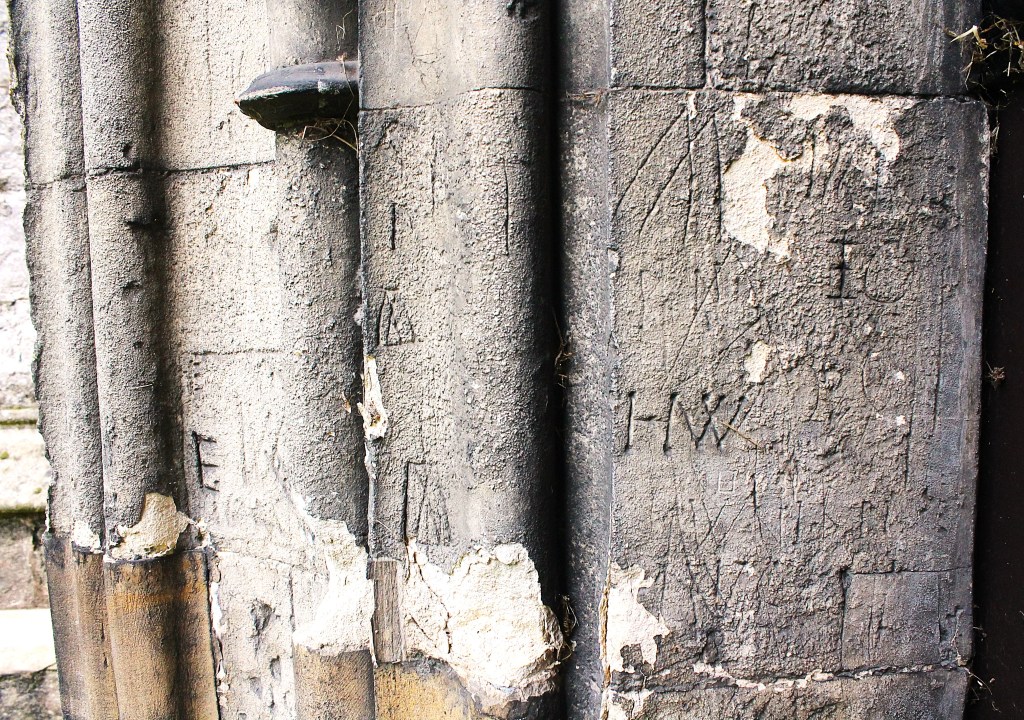
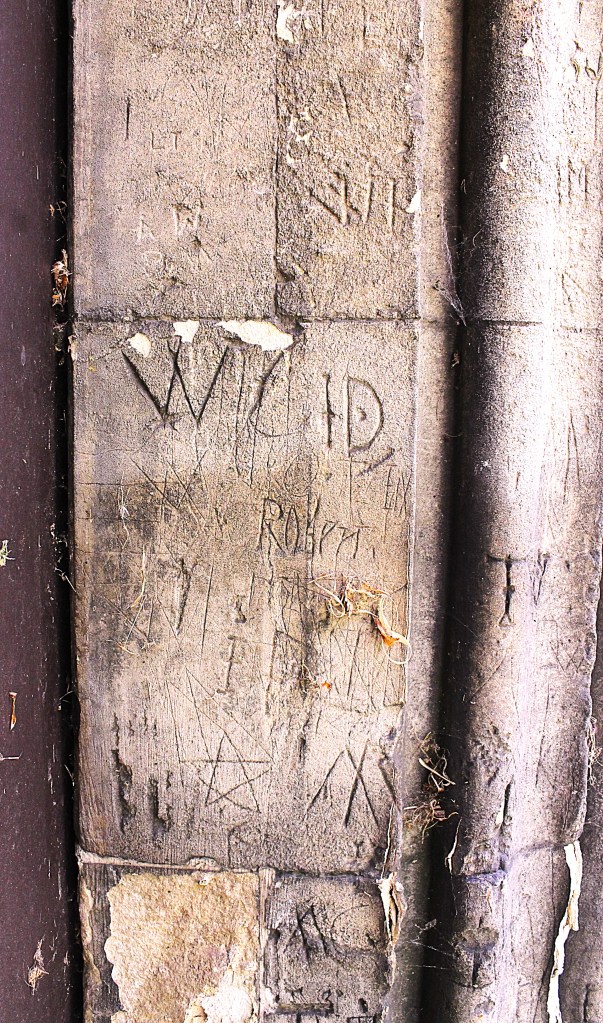
The remaining graffiti comprises initials, dates and several ‘confused’ or ineligible palimpsests that are not considered to be of great importance.
It can be seen that the survival of graffiti is greatest around the west end of the church. The tower was added in the 15th century to the earlier 12th and 13th century configuration. The tower was built upon the main axis through the church, which would have been used more regularly than it is nowadays. In recent times, many churches tend to only use the west door for weddings, so that the couple can walk through the entire church towards the altar.
It is difficult to explain why the graffiti has survived at the west end of church whilst it is absent from the wall surfaces and piers, apart from a few random marks and initials. The west door was, for some time, symbolically the most important portal into the church and would therefore have been the point at which people gathered for ceremonial events until the south door took precedence.
Wayne Perkins
June 2026
References
Augé, C R (2014) ‘Embedded Implication of Cultural Worldviews in the Use and Pattern of Magical Material Culture’ in, Historical Archaeology, 2014, 48(3):165–177
Champion, M. J. (2015). Medieval Graffiti. London: Ebury.
CRSBI (2026) St Peter, South Weald, Essex
https://www.crsbi.ac.uk/view-item?i=2739
Easton, T. (1999). Ritual marks on historic timber. Weald & Downland Magazine, Spring edition: 22–28.
HE (Historic England) (2026) Church of St Peter
https://historicengland.org.uk/listing/the-list/list-entry/1297216?section=official-list-entry
Perkins, W (2024) Shoot That Poison Arrow
Perkins, W (2026) A Consensus of Symbols: Patterns in Ritual Building Protection. Aeon Books.
https://spirit.aeonbooks.co.uk/product/consensus-of-symbols/95394
RCHME (1921) ‘South Weald’, in An Inventory of the Historical Monuments in Essex, Volume 2, Central and South west
Scott, J H (2018) ‘Pictorial and Symbolic Graffiti at Rochester Cathedral’ in, Archaeologia Cantiana , Volume 139. Maidstone: Kent Archaeological Society
Stemp, R. (2010). The Secret Language of Churches and Cathedrals: Decoding the Sacred Symbolism of Christianity’s Holy Buildings. London: Duncan Baird.


1 Comment