
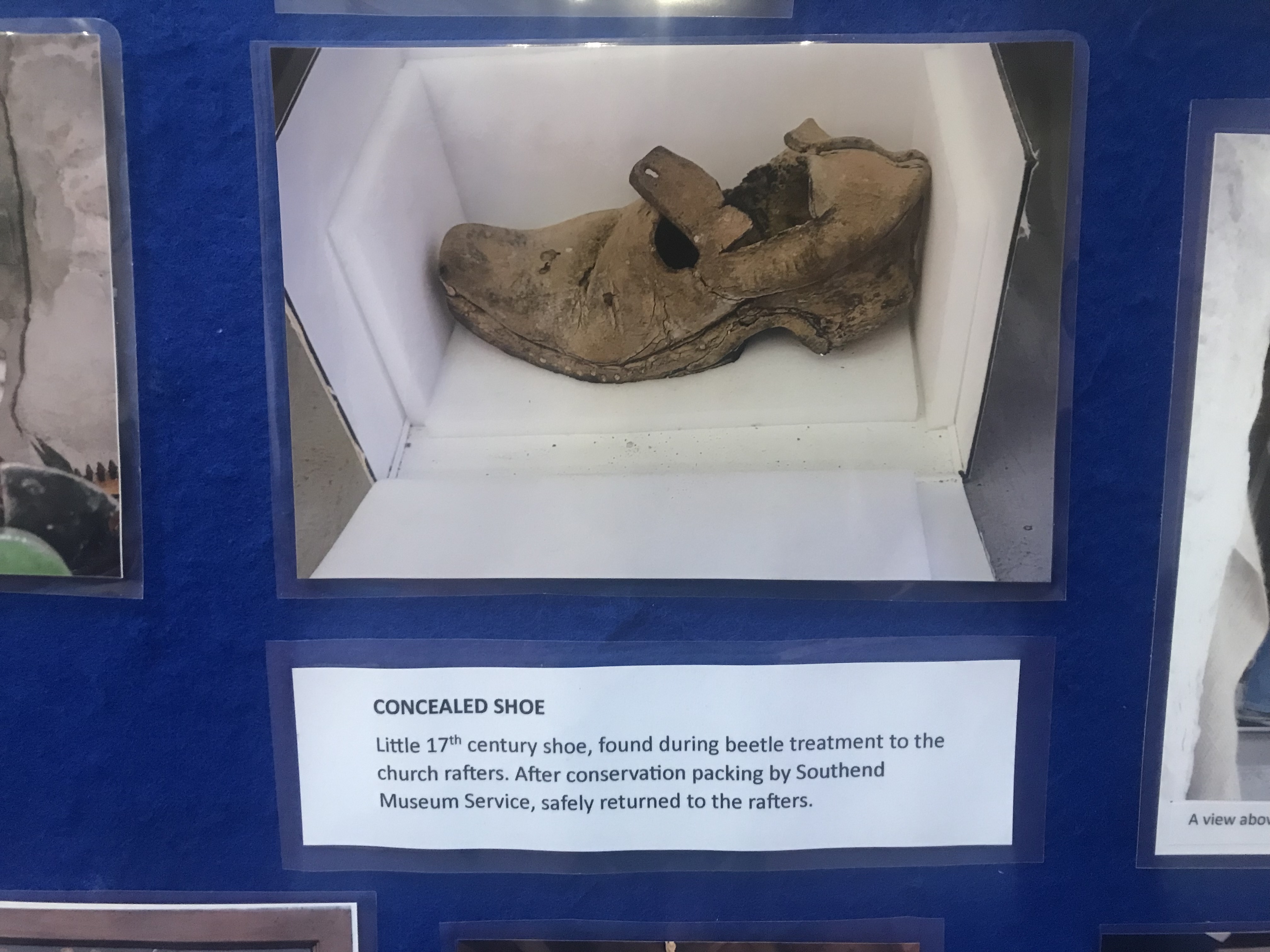
Main photo: A rare example of a concealed shoe from a church context of Holy Trinity, Raleigh, Essex. Photo: Southend Museums Service.
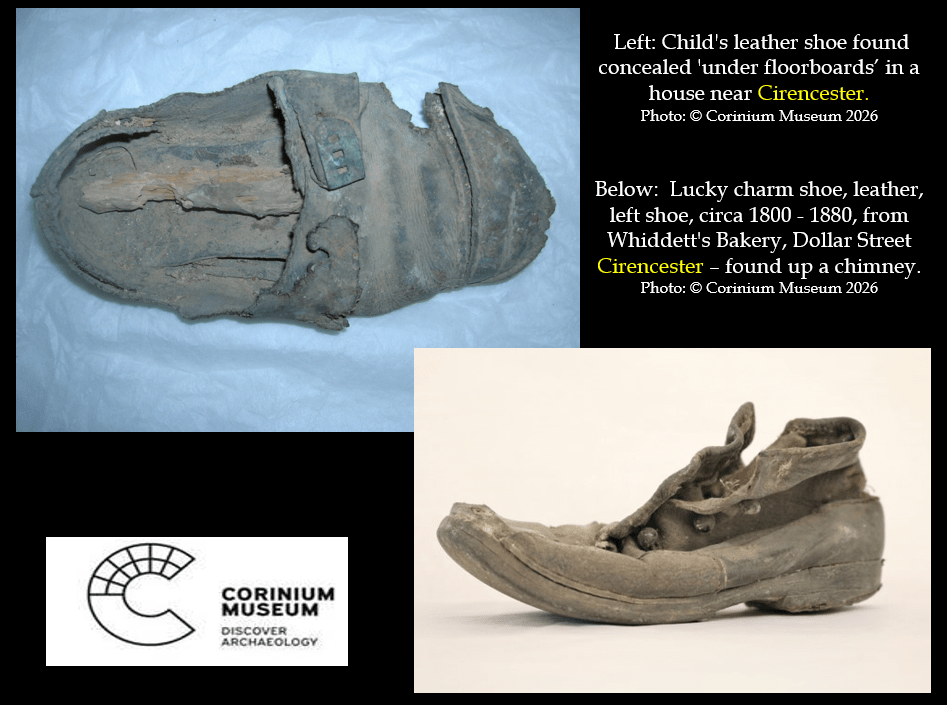
Form and characteristics
The phenomenon of old, worn-out leather shoes having been deliberately concealed within ancient buildings is now an attested practice acknowledged by archaeologists. Evidently, they were placed there by householders in the belief that they would act variously as a prophylactic
(a kind of all-purpose measure taken to fend off disease and infestation), to harbour good luck, or to ward off the evil eye.
Concealed shoes have been found in building contexts all over the English-speaking world and archaeological finds of concealed footwear are widespread across Europe. They were by far the commonest charm employed to protect buildings in post-medieval times (Merrifield, 1987, p. 131).
Most shoe concealments follow the usual pattern of having been lodged in a domestic chimney on the smoke shelf, within the integral ovens, or within voids around an inglenook fireplace.
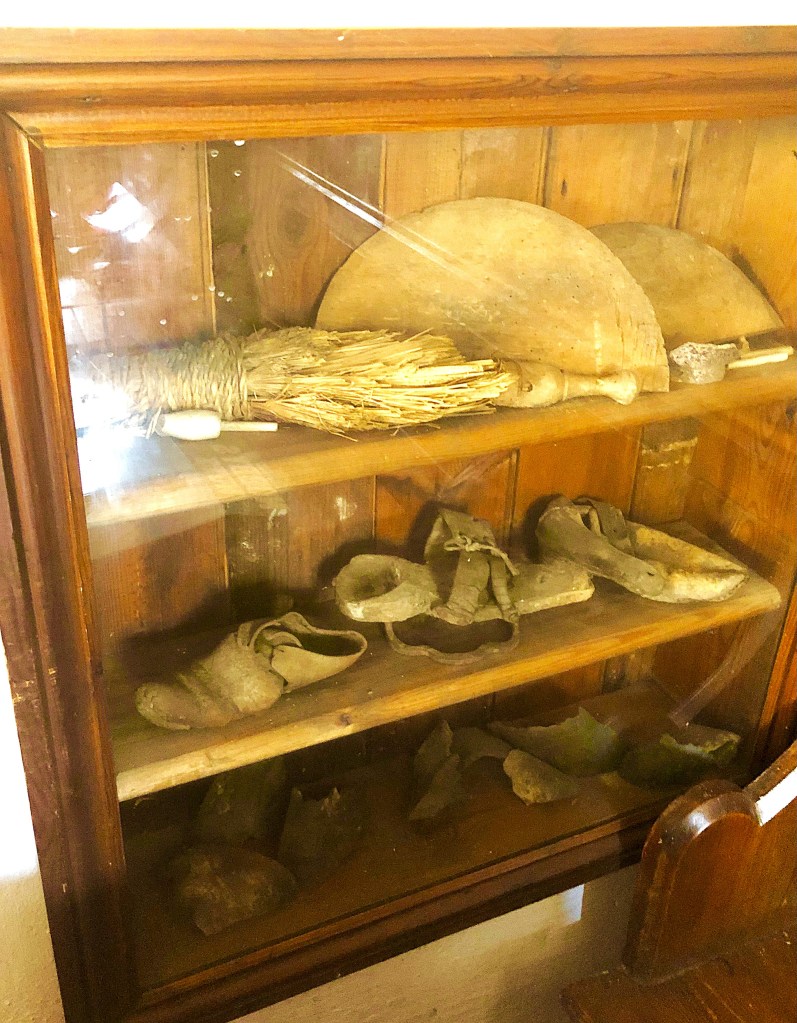
To date, concealed shoes have been found in farm houses, manor houses, palaces, chapels, churches, cathedrals, monasteries, and synagogues. Shoe and clothing caches have been found in chimneys, under floors, above ceilings (between the joists), and guarding “danger” points such as doors, windows, and stairs.
Case study: “The Little Blue Lady”: an illusory correlation
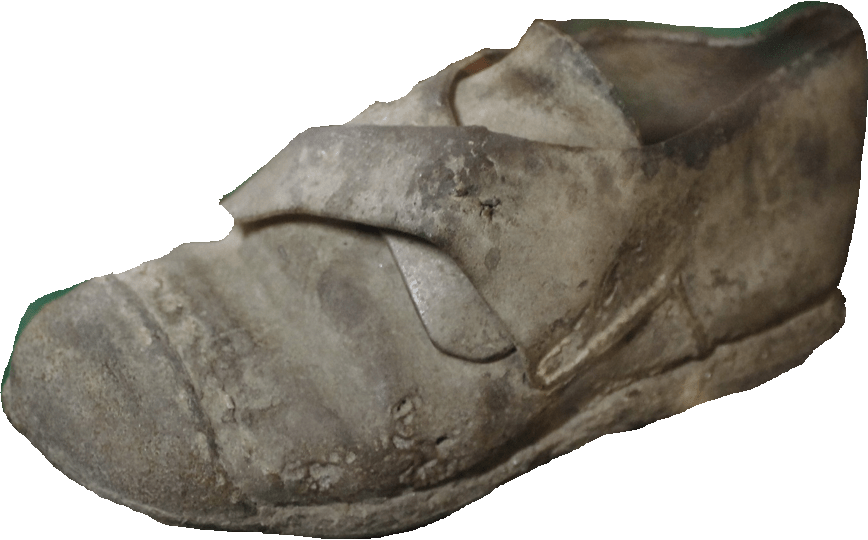
A single shoe was found under the floorboards of Milstead Manor, near Sittingbourne, Kent, by workmen who noted that it looked as though it had been carefully placed there, in the upright position. By the nineteenth century, the legend (or ghost story) of the “Little Blue Lady” had become historically attached to the shoe. The story recounts the death of a six-year-old girl who had lost a precious shoe then fallen down the stairs in the night while searching for it, and died.
In fact, the shoe predated the legend by some time as it had been placed there in the seventeenth century. The story (and therefore the legend) was added to explain the phenomenon of a concealed shoe. It is another classic example of an “illusory correlation”, where a story has been created after the event to explain the discovery.
Read more about deliberately concealed objects in:
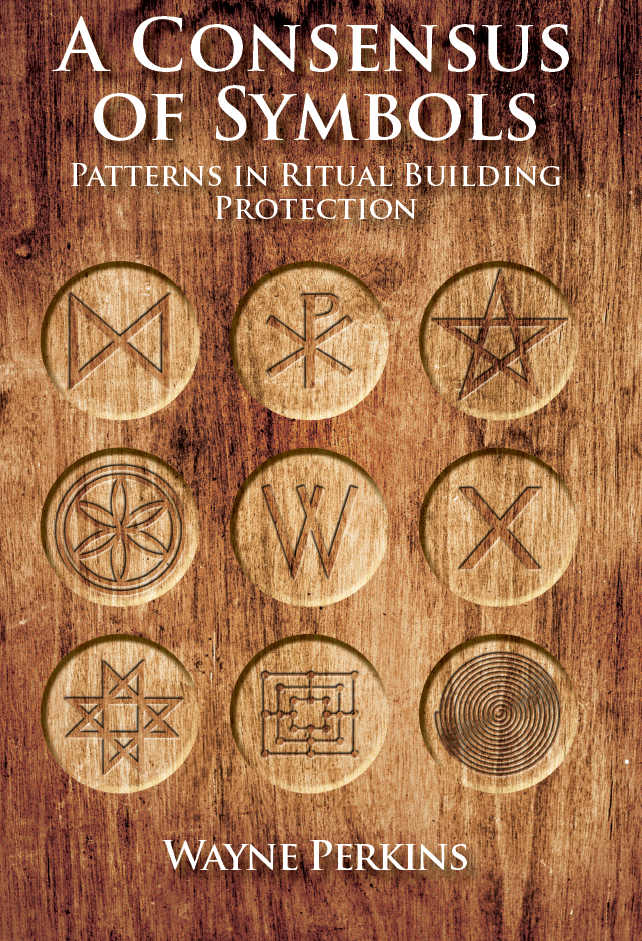
Book launch tour & illustrated talks:
Reference
Merrifield, R (1987) ‘The Archaeology of Ritual & Magic.’ Batsford books.

 Ritual Protection Marks & Ritual Practices
Fascinating!
LikeLike