
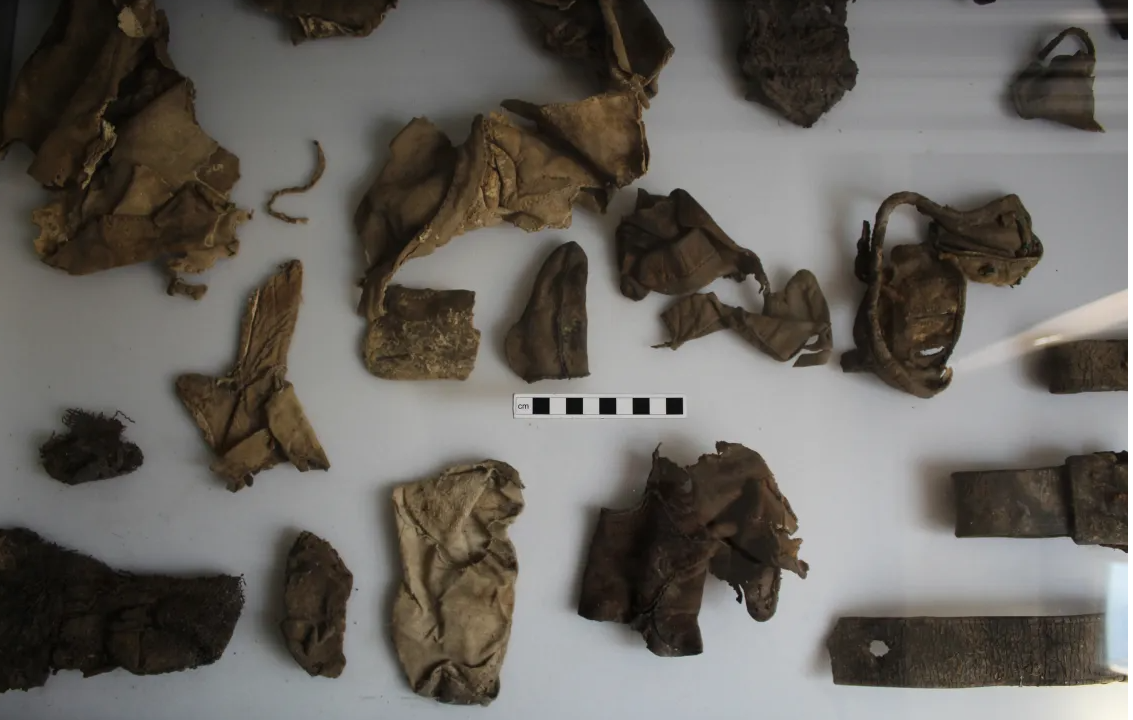
Main image: A small sample of the 500 items rescued from the Sittingbourne ‘Cache’ discovered in former The Plough public house, in Kent. Many of the scraps of fabric had been tied into a knot prior to deposition.
Archaeologists regularly discover large collections or ‘caches’ of clothing deliberately concealed within the voids of 16th & 17th century buildings.
Much of the clothing is heavily worn, soiled and patched, showing numerous repairs whilst many of the objects have been deliberately broken or ritually ‘killed.’
The term ‘spiritual midden’ was coined for such a collection of objects by historian and archaeologist Timothy Easton whilst recording houses in the east of England.
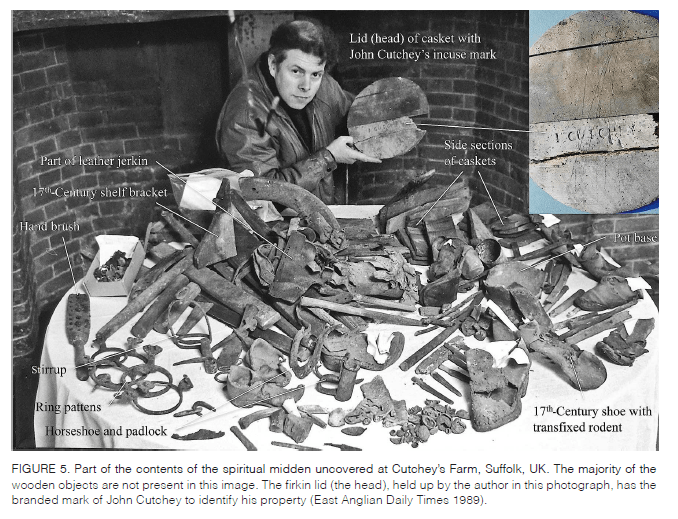
A well-documented cache was discovered during the demolition of the Old Plough Public House in Sittingbourne, Kent by two members of the Sittingbourne Museum team. Over 500 objects were recovered which included old & patched clothing, tools & children’s toys.
What do spiritual middens constitute? Foundation deposits? Sympathetic Magic? Apotropaic evil-averting agents? Were they considered to possess a protective function against incoming malevolent forces? Were they created to counter the witch’s familiar?
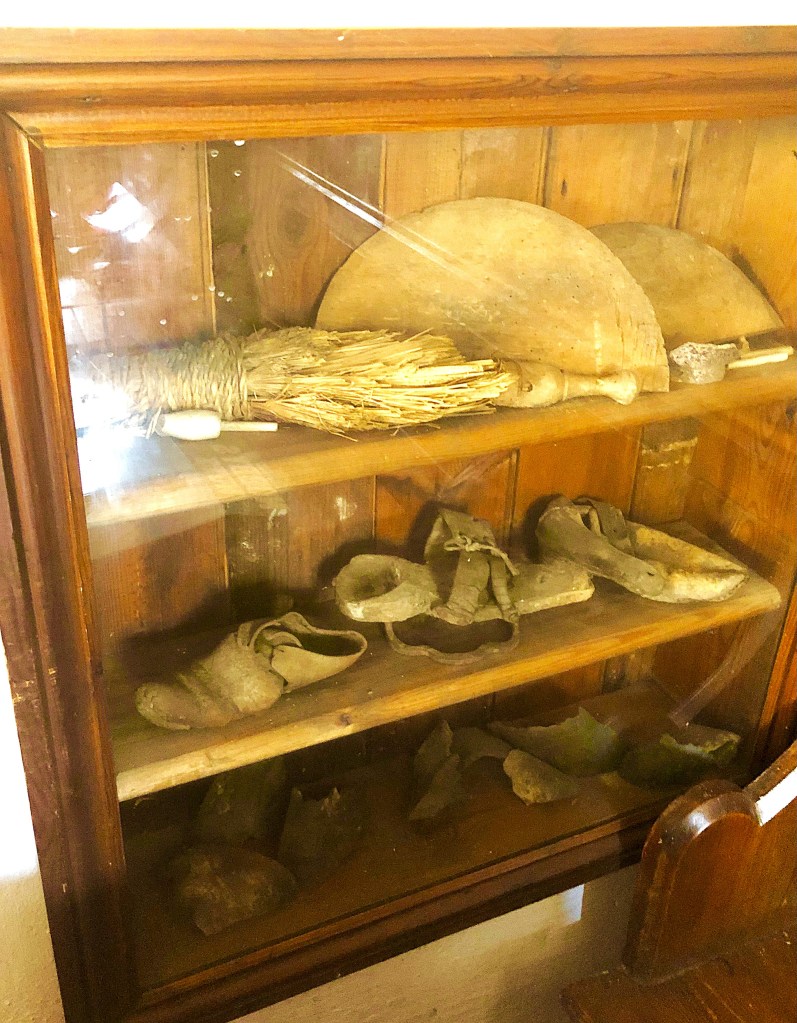
In an archaeological context, the word ’midden’ is used to denote not only a ‘rubbish heap’ but a deposit composed of specifically chosen and curated objects. Often, such deposits exhibit signs of structured deposition or of having been created through the act of fragmentation. In some instances, different objects are juxtaposed against one another to create new ‘meanings’ or ‘symbols.’
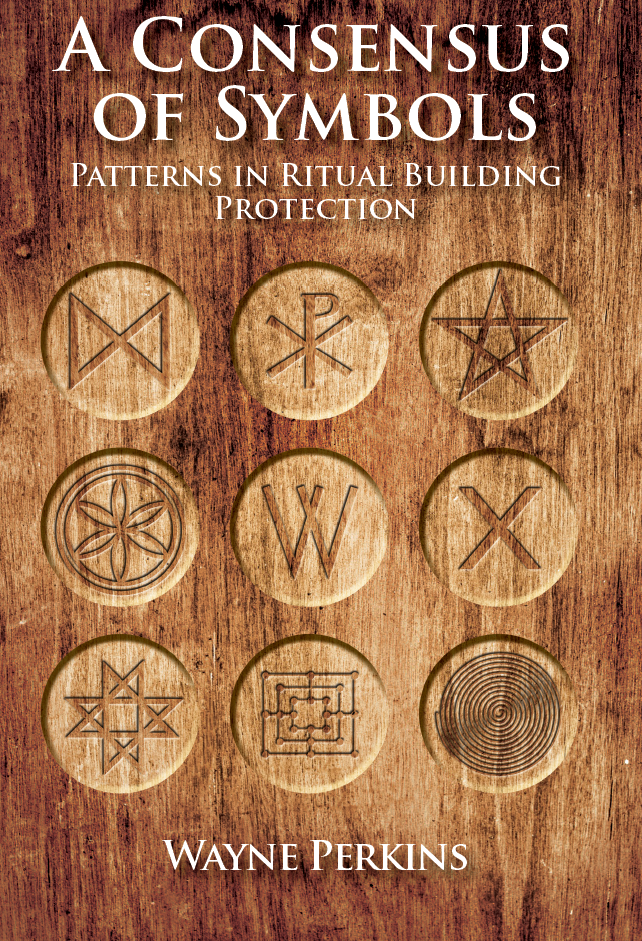
In chapter 5 of my book I discuss the phenomenon of ‘spiritual middens’ and present a number of different case studies.
Links
Easton, T (2014) ‘Four Spiritual Middens in Mid Suffolk, England, ca. 1650 to 1850’ in, Historical Archaeology, 2013, 47(1):10–34.
Society for Historical Archaeology


