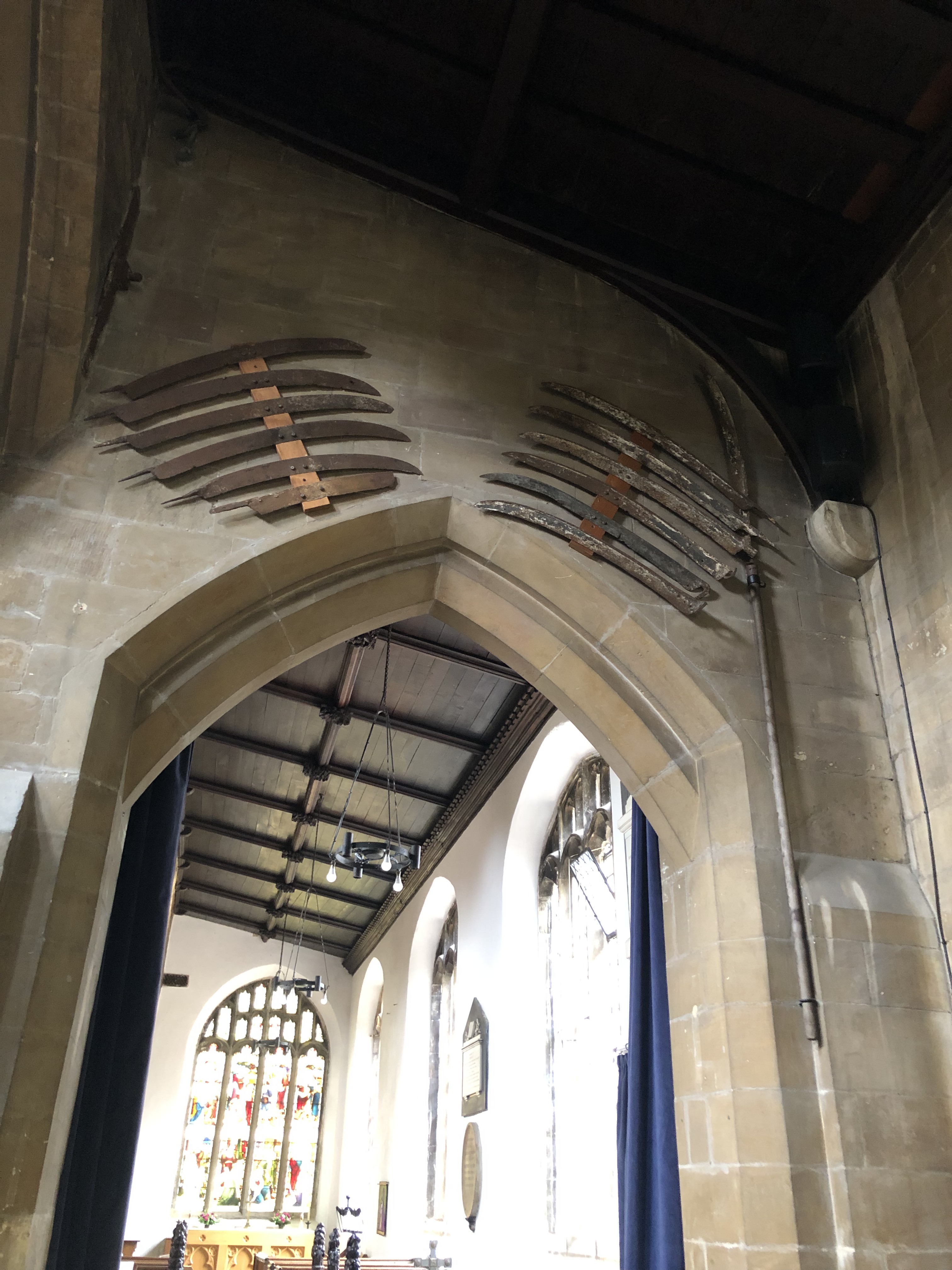
High above an arch leading to the Lady chapel of St Mary’s, Horncastle, Lincolnshire is a collection of 13 agricultural scythes. Local legend states that the scythes had been used as weapons during the Lincolnshire Rising of 1536, an unsuccessful bid by local farmers to roll back the tide of the Dissolution of the Monasteries (Ross 2026). The story goes that the rebels coerced (or convinced) the local gentry to support their cause and they marched on Lincoln. The Rising faltered in the face of government troops, and the ringleaders were executed for treason (Ross 2026).
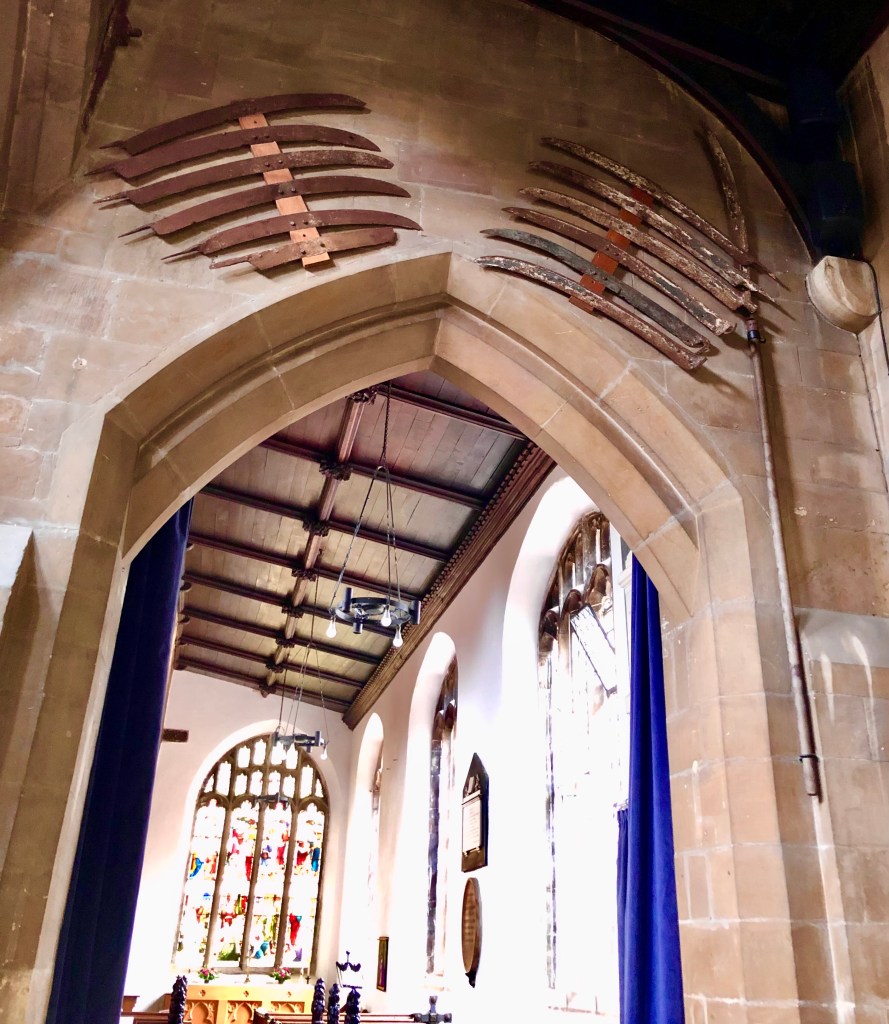
However, the legendary links to both the battle of Winceby and to the Lincolnshire Rising of 1536 have been questioned (Lincoln Heritage Explorer 2021). It is believed that six of the thirteen scythe blades were found along with ‘some skeletons’ (in some accounts referred to as a ‘mass grave’) at the top of Langton Hill, Horncastle in 1845 (Lincoln Heritage Explorer 2021). The remains of the individuals and the scythes were duly repatriated to the church (St Mary’s 2026).
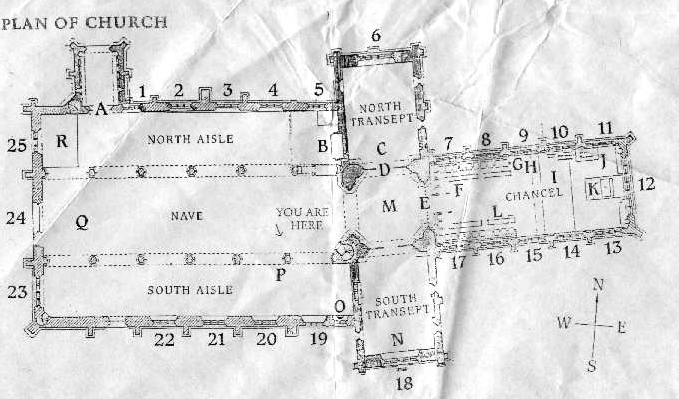
Alongside this evocative tale is one relating to the church’s architecture. It suggests that the pronounced lean (towards the south) of the arcade piers signifies the leaning of Christ’s head on the Cross. This sounds very much like a variation on the ‘weeping chancel’ motif, whereby the alignment of the chancel differs to the axis of the nave of the church in some buildings, “represents our Lord’s body and the deflected chancel His head fallen sideways in death” (Hando 1958). The phenomenon of weeping chancels has been written about at length by Ian Hinton (2006) but the idea has not gained much ground in recent years.
According to the Churches Trust, “If this had been a design feature in ancient churches, this would mean the Master Builder had deliberately contrived the pillars to be built out of true, which is absurd” (Churches Trust 2026). The lean is, in fact, due to stresses caused when the Perpendicular style clerestory and heavy wooden roof were added in the 15th century (Churches Trust 2026).
St Mary’s parish church is mainly early 13th century with 15th century additions but was ‘heavily restored’ in 1859-61 by Ewan Christian (Historic England 2026). This is a diplomatic way of saying that his over-enthusiasm almost obliterated the earlier qualities of the chancel and removed many of the interesting ancient elements of the building.
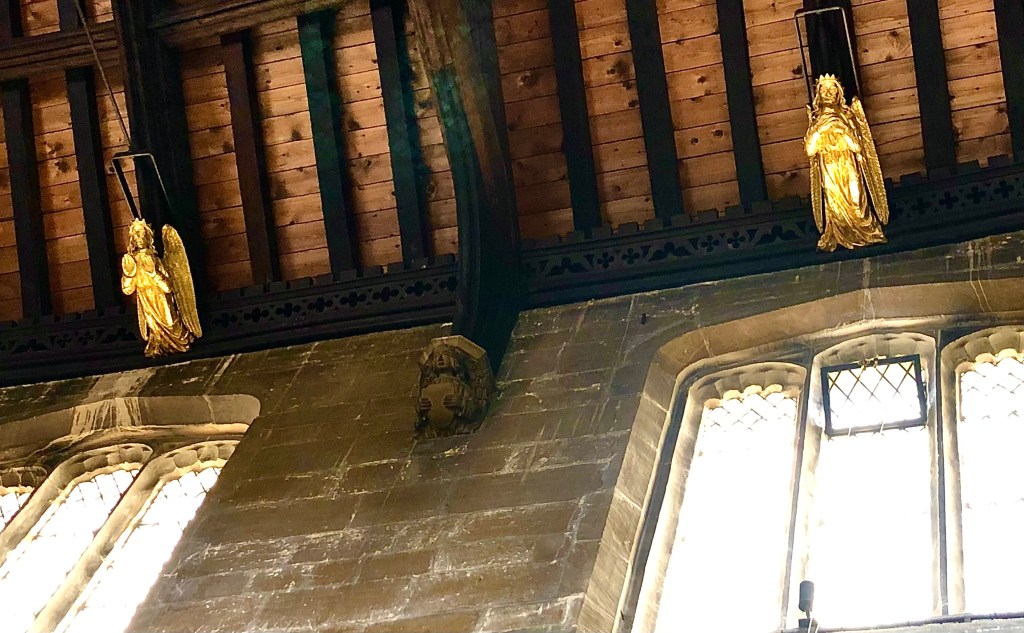
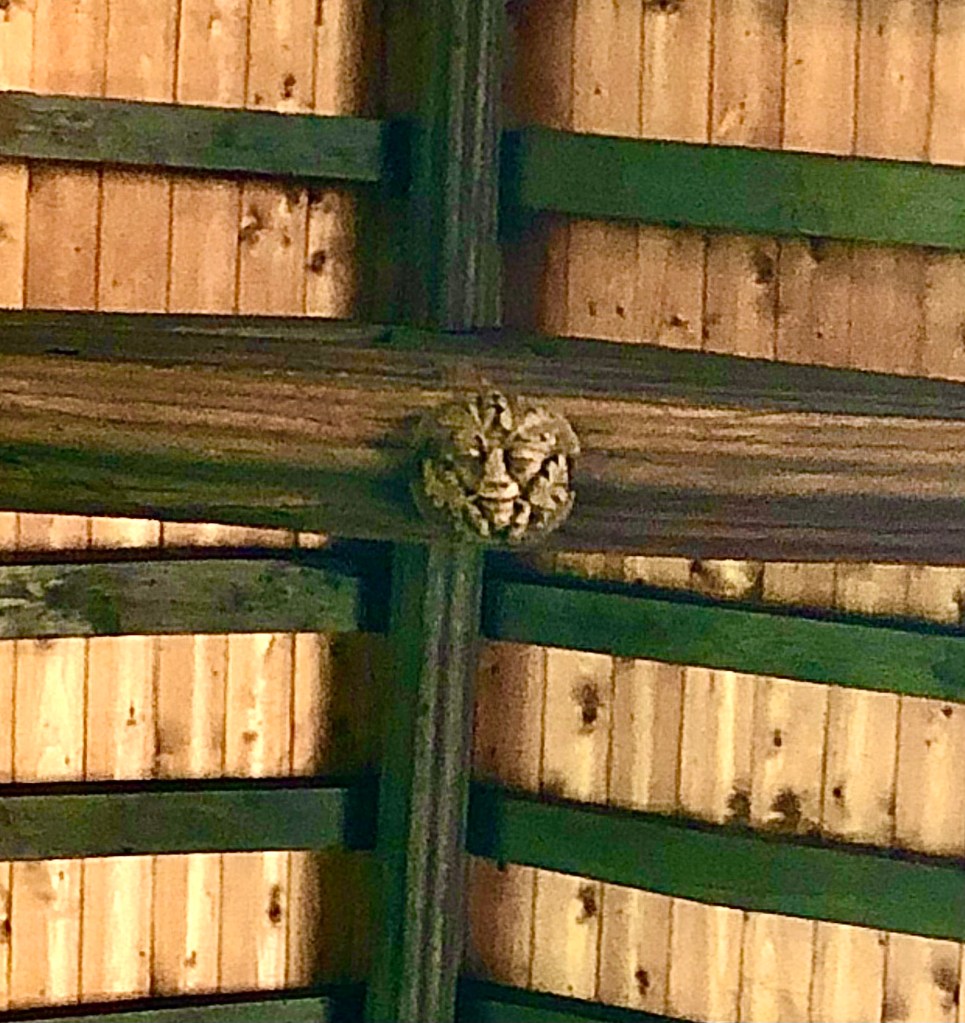
When entering St Mary’s, perhaps the most stunning feature is the ten gilded angels cut out of the timber roof supports (St Mary’s 2026).
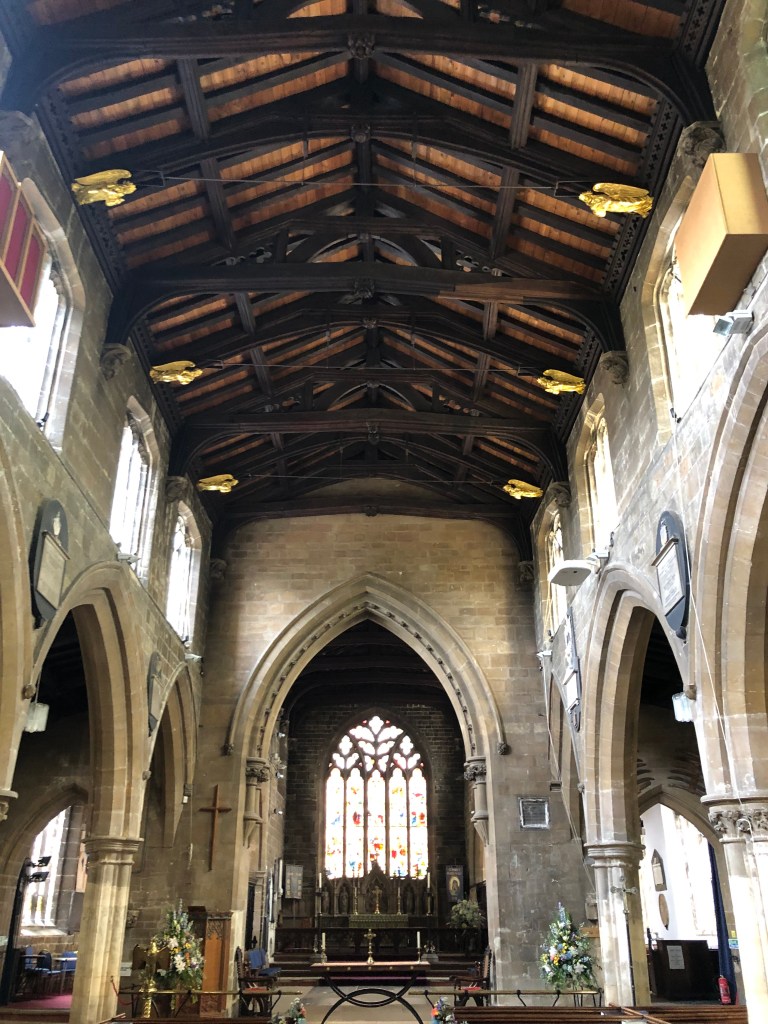
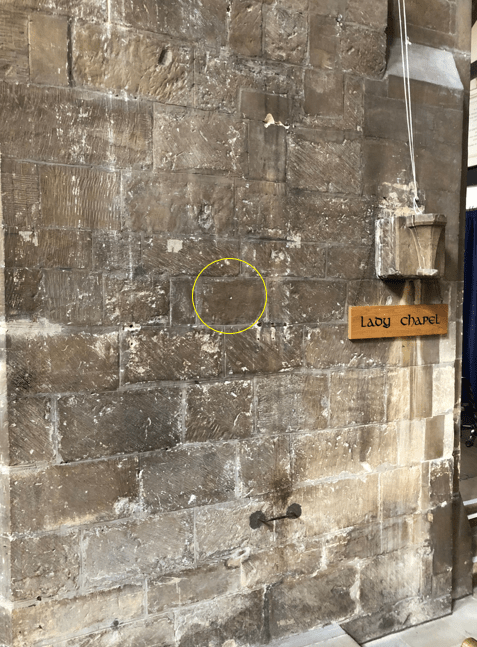
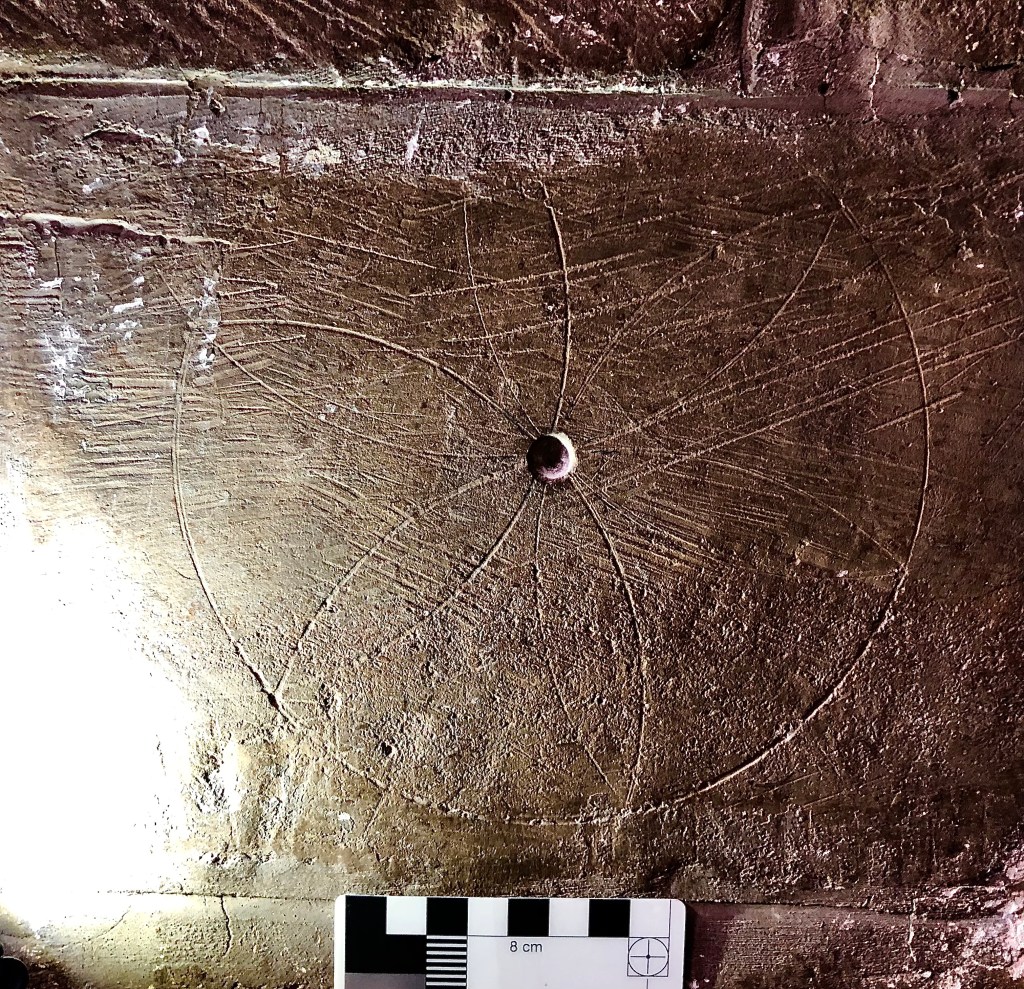
During a cursory survey of the building, only one example of apotropaic graffito was recorded; a large (c.20cm diameter) six-petal rosette (daisy wheel), cut neatly and cleanly into the masonry on the south side of the chancel arch. There has been some discussion once again within graffiti circles that compass-drawn circles can also be considered as possible masons’ marks. This is complete nonsense, particularly in this case where the motif cuts the mortar bed at the top of the block. Like many apotropaic devices it was added long after the stone blocks were in place.
That said, two possible masons’ marks were recorded on the chancel arch but were not found to repeat on other blocks in the feature.
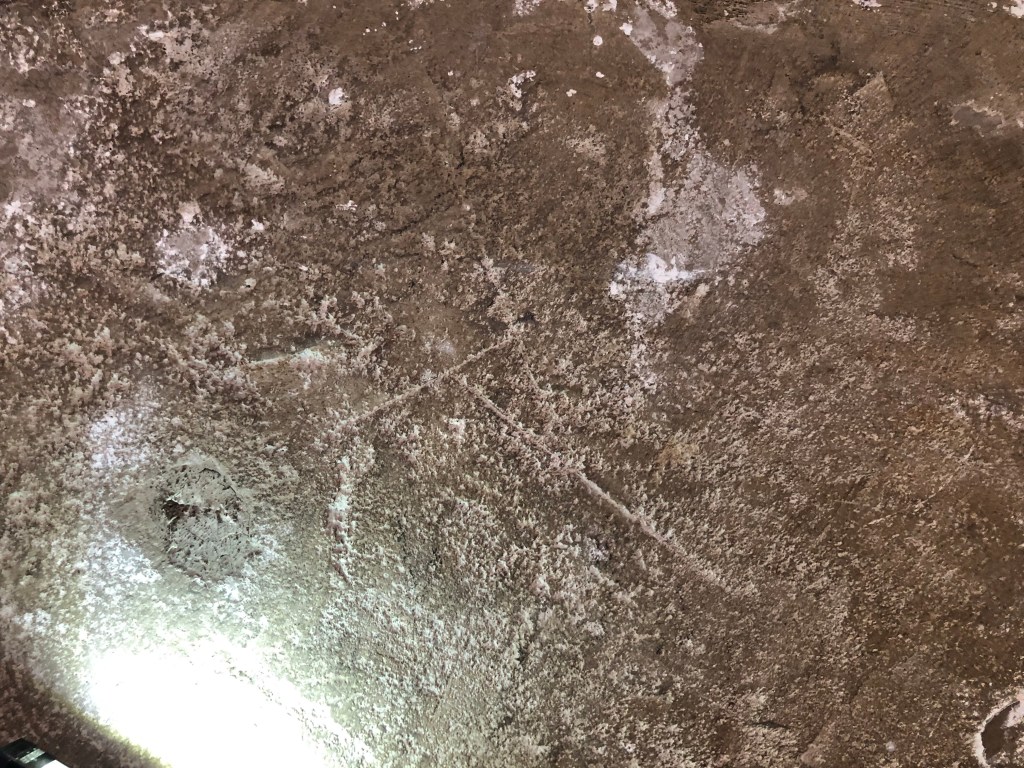
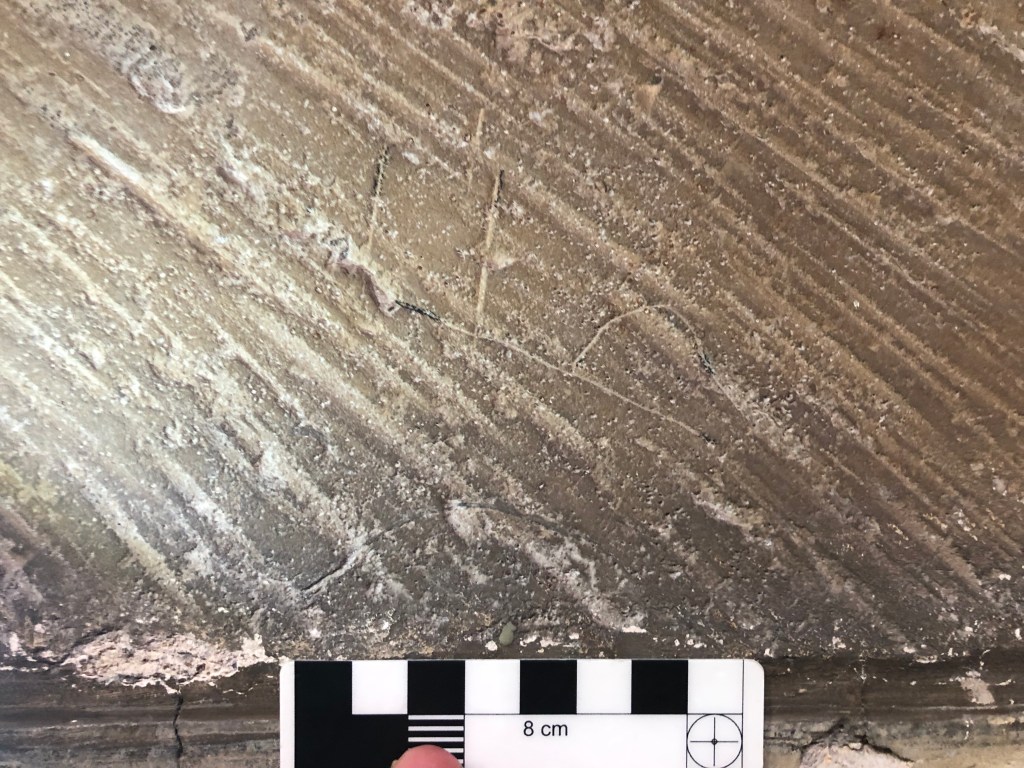
A second, possible graffito of a plague arrow was also present on the chancel arch but it was difficult to be sure in this instance. Arrow graffiti rendered in its simplest form is usually composed of three straight (or almost straight) lines converging on a point. This motif has often been overlooked within the corpora of medieval graffiti. Firstly, they have often been misinterpreted; thought to be the ‘positioning’ marks made by the stone mason, secondly, they have been interpreted as simply representing a physical arrow (presumably inspired by the belief that archery practise was once undertaken in the local churchyard) or thirdly, that, due to their often rudimentary rendering, they were considered of little import. However, I have written at length about this motif and the symbolism which it carries and it can be a potent apotropaic in some circumstances (Perkins 2024).
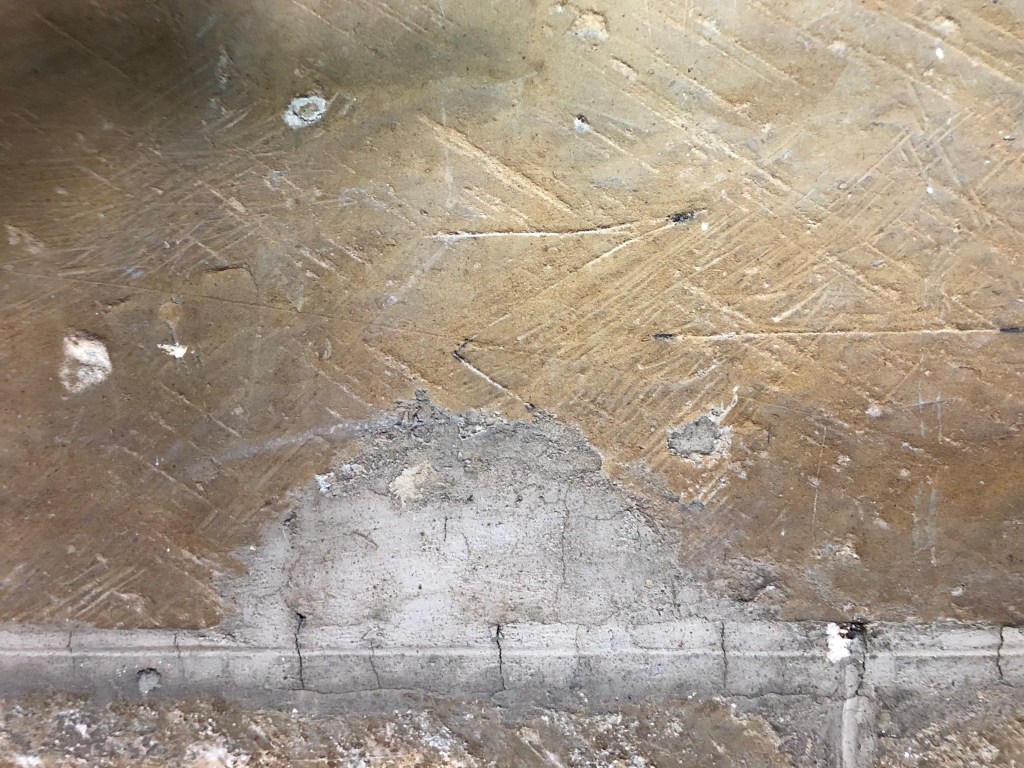
An interesting church but it is hard to account for so little graffiti within the building when compared with some of the smaller parish churches of the surrounding villages.
Wayne Perkins
August 2026
References
Hando, F (1958). Out and About in Monmouthshire. Newport: R. H. Johns Ltd.
Hinton, I (2008) Church Alignment and Patronal Saint’s Days in, The Antiquaries Journal 86:206-226
Historic England (2026) St Mary’s Church, Horncastle, Lincs
Innes-Mulraine, J (2018) Weeping Chancels and the Easter Sunrise
https://jamesmulraine.wordpress.com/2018/04/01/weeping-chancels-and-the-easter-sunrise/
Lincolnshire Heritage Explorer (2021) St Mary’s church, Horncastle, Lincs
https://heritage-explorer.lincolnshire.gov.uk/Monument/MLI42216
National Churches Trust (2026) St Mary’s church, Horncastle, Lincs
Perkins, W (2024) Shoot That Poison Arrow: Apotropaics to Counter the Plague
Ross, D (2026) St Mary’s church, Horncastle, Lincs
St Mary’s Church (2026) St Mary’s church, Horncastle, Lincs
https://horncastlehistory.co.uk/portfolio-item/history-of-st-marys-church


