
Photo: © W Perkins 2026
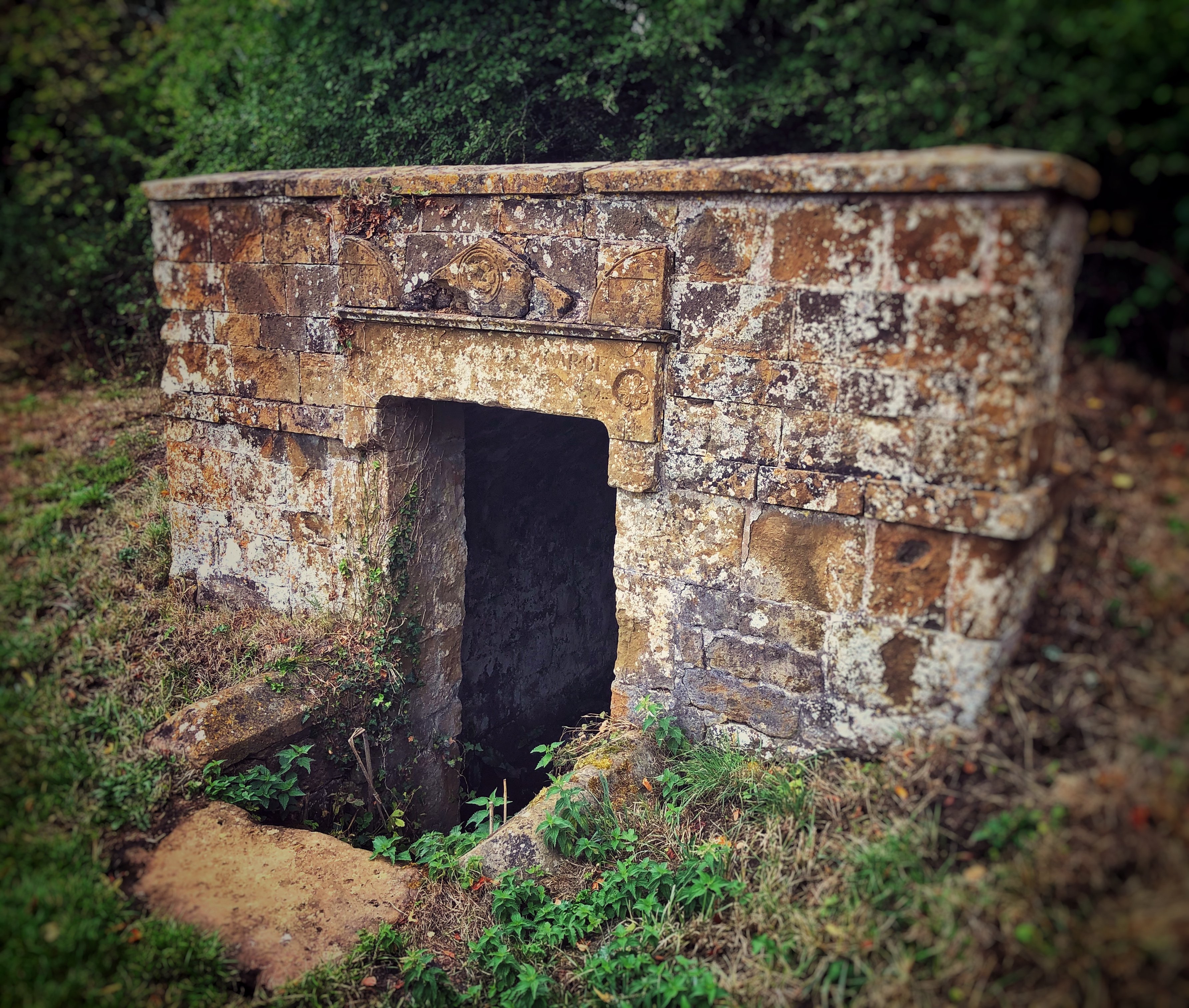
Here at Ritual Protection Marks we do include the study Holy Wells – alongside churches, shrines and other religious centres – which once provided a foci for prayer, devotion and – of course – an opportunity to make graffiti. The Holy Well is adjacent to the church of All Saints, Burton Dassett, Warwickshire. The church itself possesses a wide corpus of graffiti which will be covered in a separate article.
Unusually, Burton Dassett’s Holy Well has had very little written about it and neither have legends adhered to it. Even basic information – such as the efficacy (or not) of the waters – has not been recorded by the antiquarians of the county.
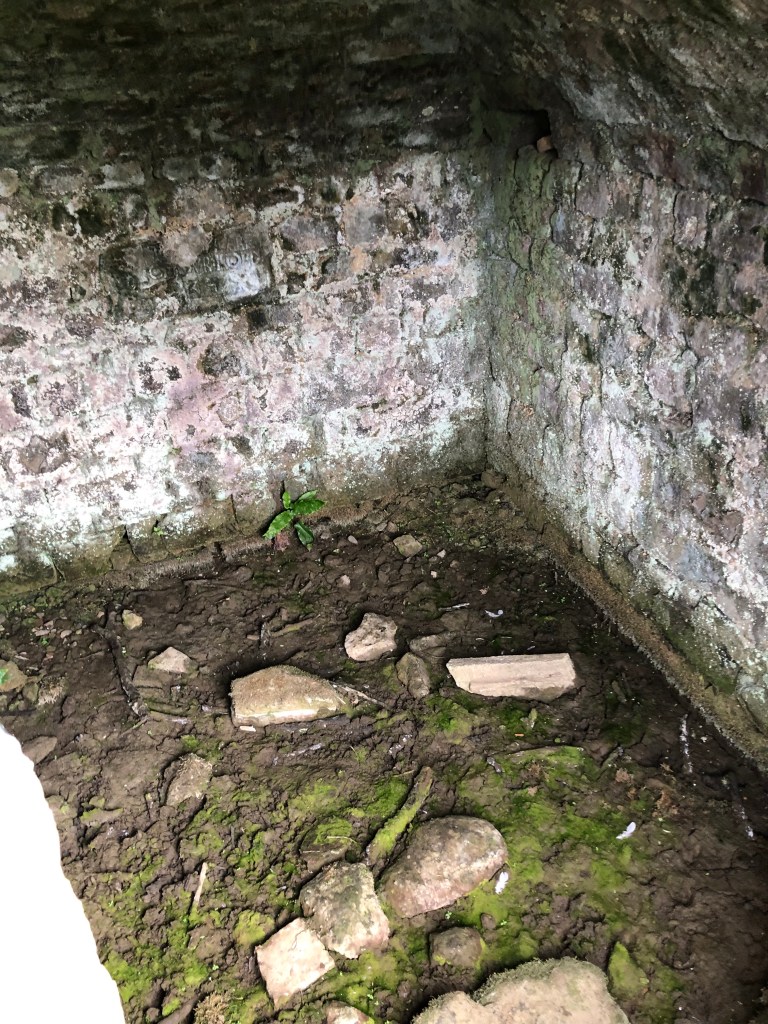
Photo: © W Perkins 2026
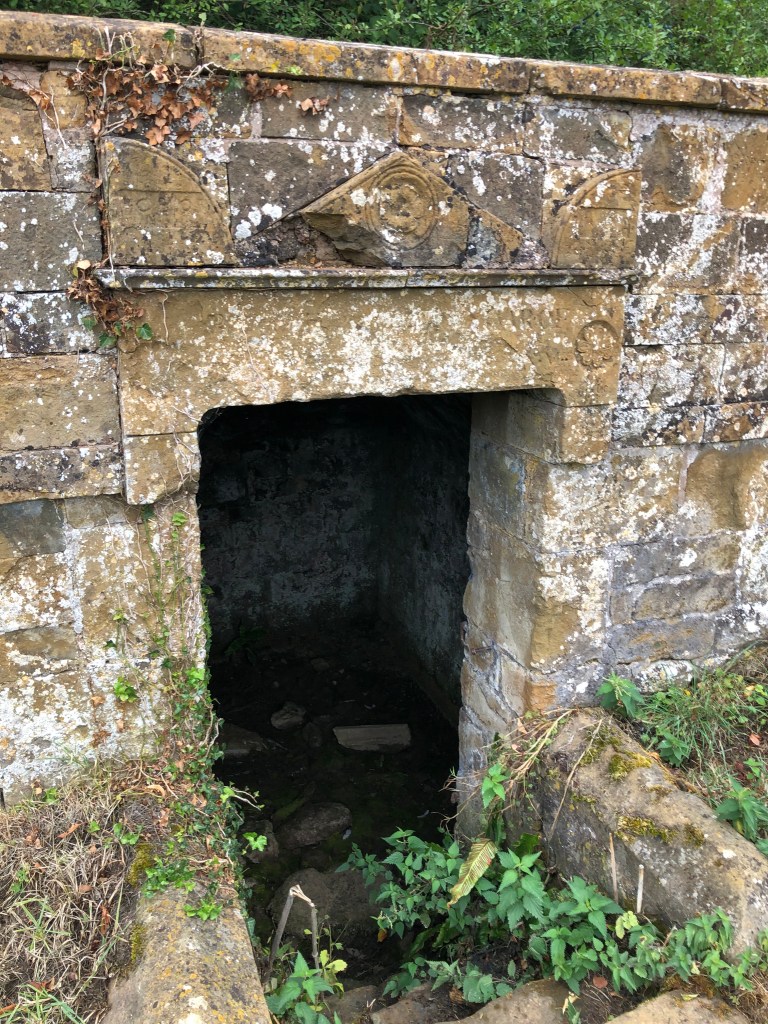
There are few marks on the masonry structure of the wellhead itself, restrcted to the entrance jamb. This is likely due to the structures late date which t appears to be of the 19th century. This ‘late’ period generally sees graffiti on ecclesiastical structures diminish. The style of construction has been described as ‘classical Greek with medievalising touches’ (Pevsner & Wedgewood 1865) which has led many to think that it is of much earlier fabric than it really is.
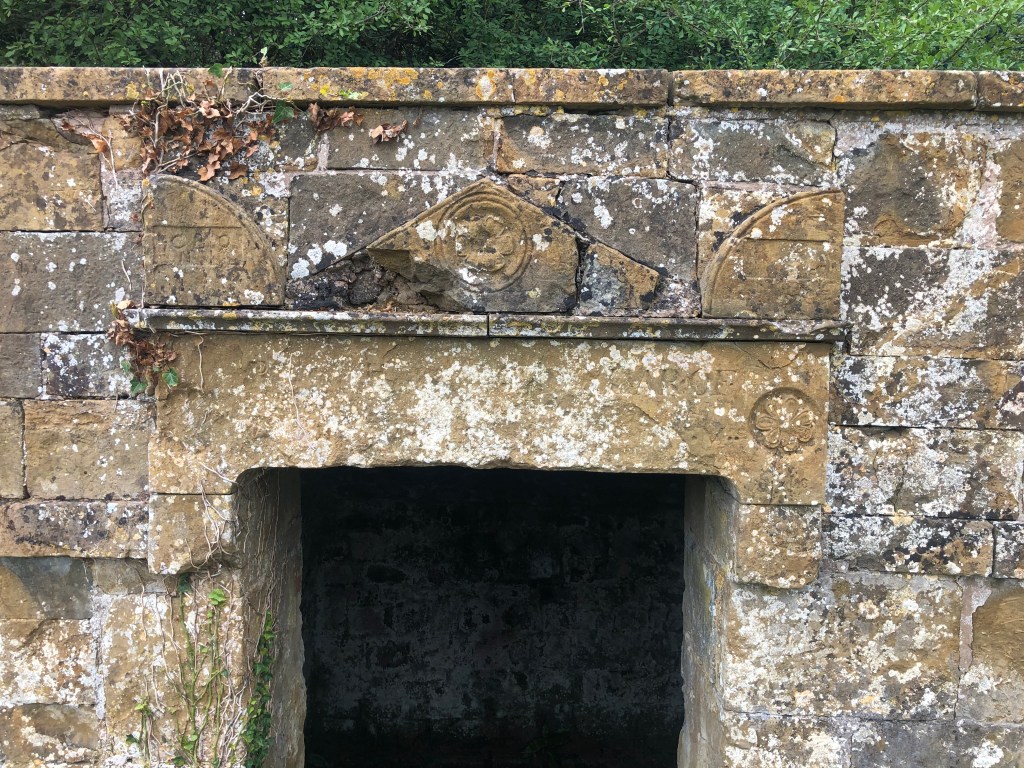
Photo: © W Perkins 2026
The wellhead is described as, “a stone-vaulted well chamber formed from local ironstone ashlar with moulded string course and cornice and coped parapet. It possesses a shaped lintel with an illegible inscription, roundels of carved flower antefixae” (Historic England 2026). Errors over the date of the masonry have crept in, as the commemorative plaque at the rear of the structure has been vandalised. A 16th century date was suggested by antiquarian C J Ribton Turner – who read it as 1534 – but later interpretations have re-dated it to about 1840. The latter date seems more the correct of the two (BHW, Historic England 2026).
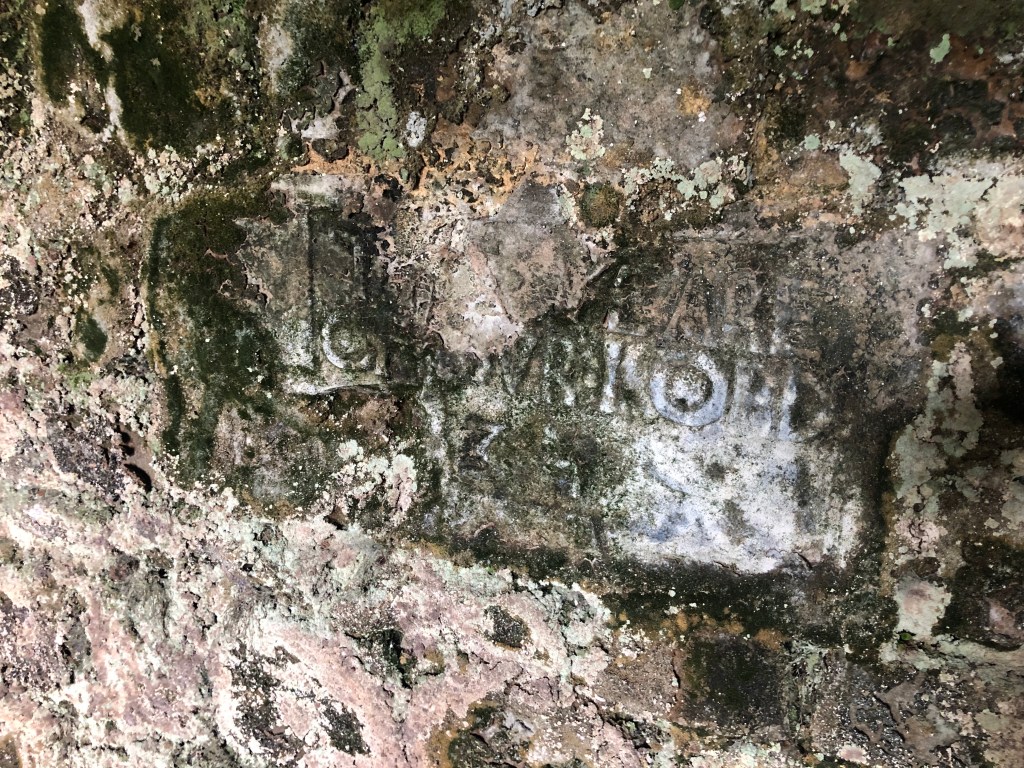
Photo: © W Perkins 2026
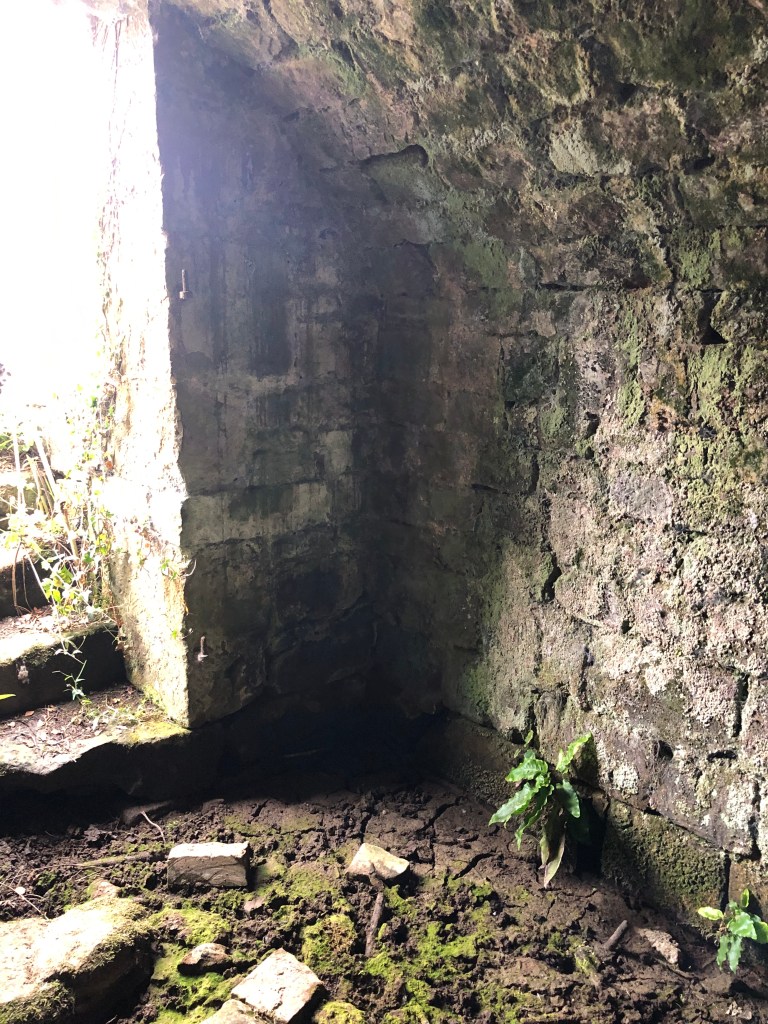
Photo: © W Perkins 2026
Unlike many springs or holy wells which lack a superstructure, Burton Dassett’s well has an impressive building-like edifice which contains the well. The waters (when present) can only be accessed via by a series of stone steps. Its sunken nature is suggestive of a pool, which has led many to speculate that the wellhead had been built to allow for ‘total immersion’ style baptisms to have taken place (Burgess, Hope 1893). Whilst there is no evidence for this, it has been suggested that it had ‘certainly been used for baptisms’ even though the Church of England never endorsed the doctrine of “baptism by full immersion” (BHW 2026).
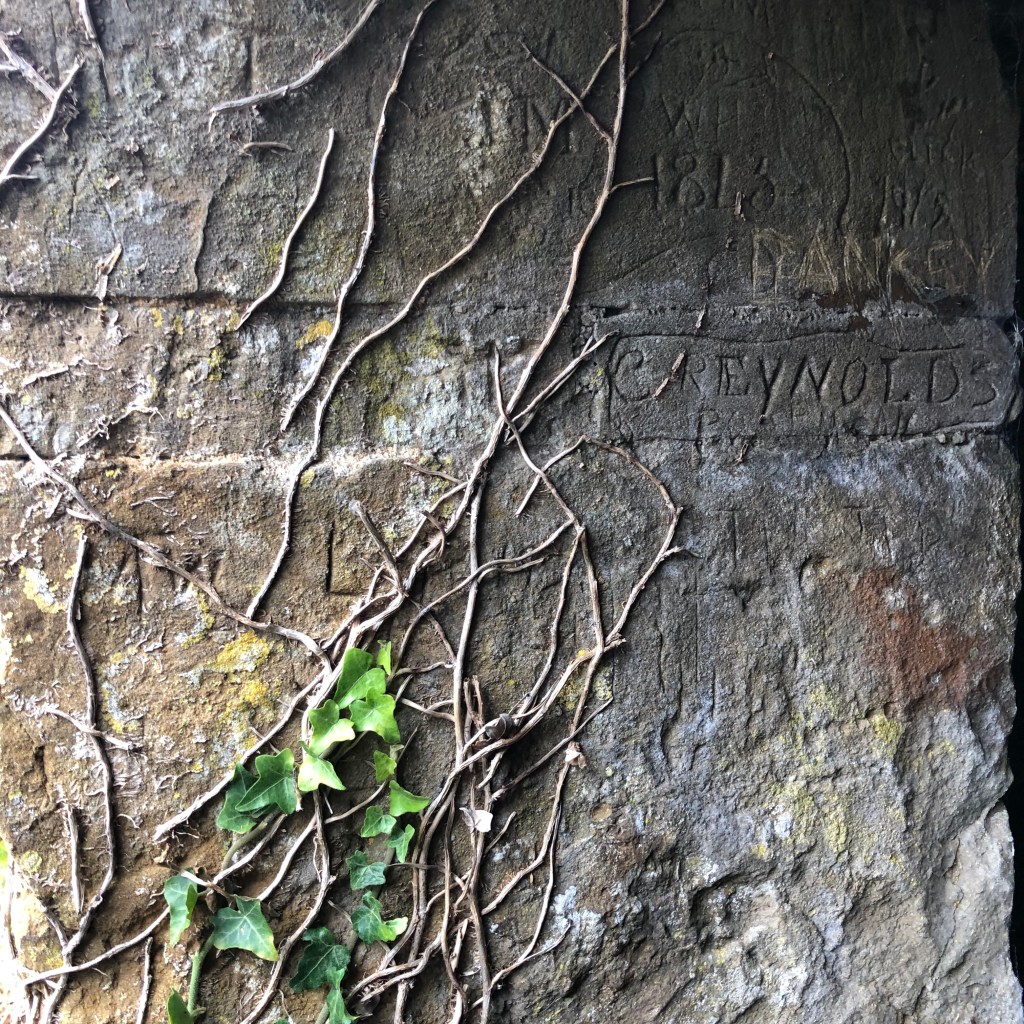
Photo: © W Perkins 2026
The graffiti is composed mainly of dates and initials, the most legible being –
Left side:
IM ?
WH
1815
1915
C Reynolds (impressed into the mortar)
TW
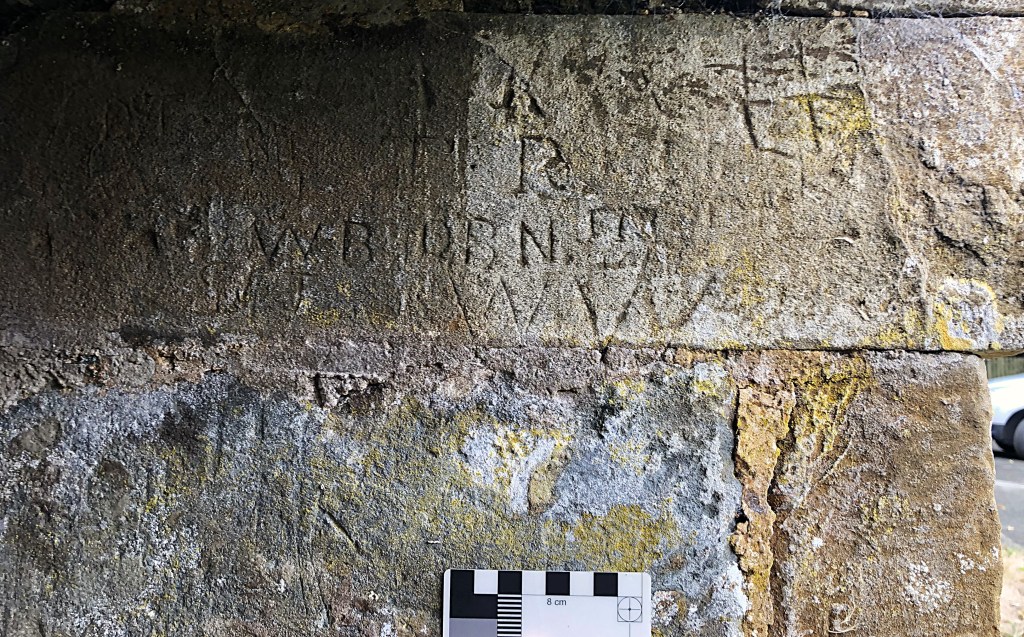
Photo: © W Perkins 2026
Right side:
TR
WB
DBN
IN ?
VV VV
It is of course the later double ‘V’s that are of interest here as they do resemble the classic ‘Marian mark’ or cipher, often interpreted as invoking the protection of the Virgin. If they did prove to be an apotropaic, they would be considered a very late example although not unknown from structures of the 19th century. A range of apotropaic graffiti is present in the adjacent church, with several clear ‘Marian mark’ motifs present in the nave.
The location of both the well and the ironstone church of Burton Dassett sits isolated and brooding on the valley side under a canopy of trees. The population dissipated through either the plague, enclosure or a mix of the two.
Read more about the Marian mark motif in ‘A Consensus of Symbols: Patterns in Ritual Building Protection’ out now, published by Aeon Books.

Wayne Perkins
August 2026
References
British Holy Wells (BHW) (2026) Holy Well, Burton Dassett
Burgess, J T (1893) Historic Warwickshire. 2nd Edition Joseph Hill (Ed) Simpkin, Marshall, Hamilton, Kent, and Co, Limited.
Historic England (2026) Holy Well, Burton Dassett
Hope, R C (1893) The Legendary Lore of the Holy Wells of England. Publisher London : Elliot Stock
Pevsner, N & Wedgewood, A (1865) Warwickshire (Pevsner Architectural Guides: Buildings of England). Yale University Press


 Ritual Protection Marks & Ritual Practices
England has so many beautiful places
LikeLike